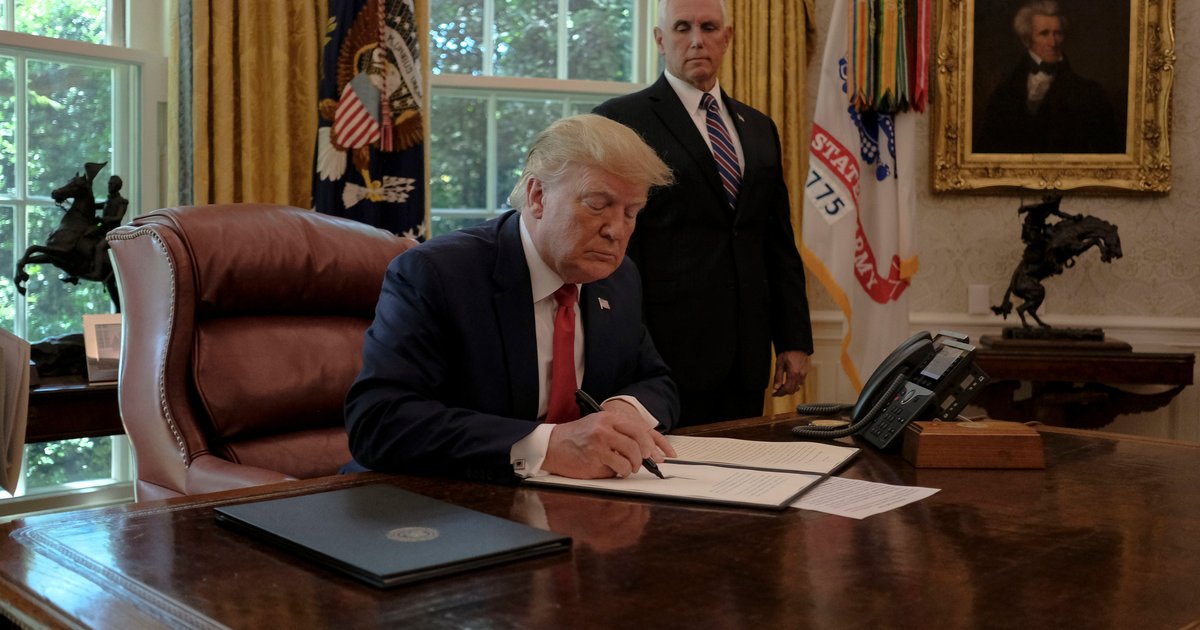
U.S. President Donald Trump has declared the intention to impose tariffs of up to 50% on any country that supplies arms to Iran. These remarks come at a time when tensions between the United States and Iran are escalating, with Washington aiming to enhance its pressure on Tehran.
During a press conference, Trump emphasized that this move is intended to prevent Iran from acquiring weapons that could threaten regional and international security. He pointed out that the United States will take strict measures against any nation cooperating with Iran in this regard.
Details of the Announcement
Trump's statements come at a sensitive time, as concerns grow that Iran may continue to develop its military programs, including its nuclear program. Trump indicated that these tariffs would be part of a broader strategy to pressure Tehran, which Washington accuses of destabilizing the Middle East.
He further clarified that the United States will work to strengthen its alliances with countries that share similar stances towards Iran, potentially leading to the formation of a united front against Iranian destabilizing activities.
Background & Context
Historically, U.S.-Iran relations have been strained since the Islamic Revolution in 1979. These relations have seen a notable escalation in recent years, especially following the U.S. withdrawal from the Iranian nuclear deal in 2018, which aimed to reduce Iranian nuclear activities in exchange for sanction relief.
Since then, the United States has imposed a series of economic sanctions on Iran, significantly impacting its economy. These new tariffs are seen as part of the U.S. administration's efforts to increase pressure on Tehran in an attempt to force it to change its behavior in the region.
Impact & Consequences
This move could escalate tensions between the United States and countries that may cooperate with Iran, creating a state of instability in global markets. Additionally, the imposition of tariffs may negatively affect economic relations between the United States and other nations, particularly those reliant on trade with Iran.
On the other hand, Iran may find itself compelled to seek new partners in arms and trade, potentially leading to shifts in regional and international alliances.
Regional Significance
Arab nations are part of the regional landscape affected by Trump's statements. Countries cooperating with the United States in countering Iran may find themselves in a stronger position, while others could face increasing pressure from Washington.
This step may also lead to a reshaping of alliances in the region, as some nations might seek to bolster their relations with Iran in response to U.S. pressures.
In conclusion, Trump's statements represent a new step in the maximum pressure policy towards Iran, complicating the regional landscape and affecting international relations in the area.