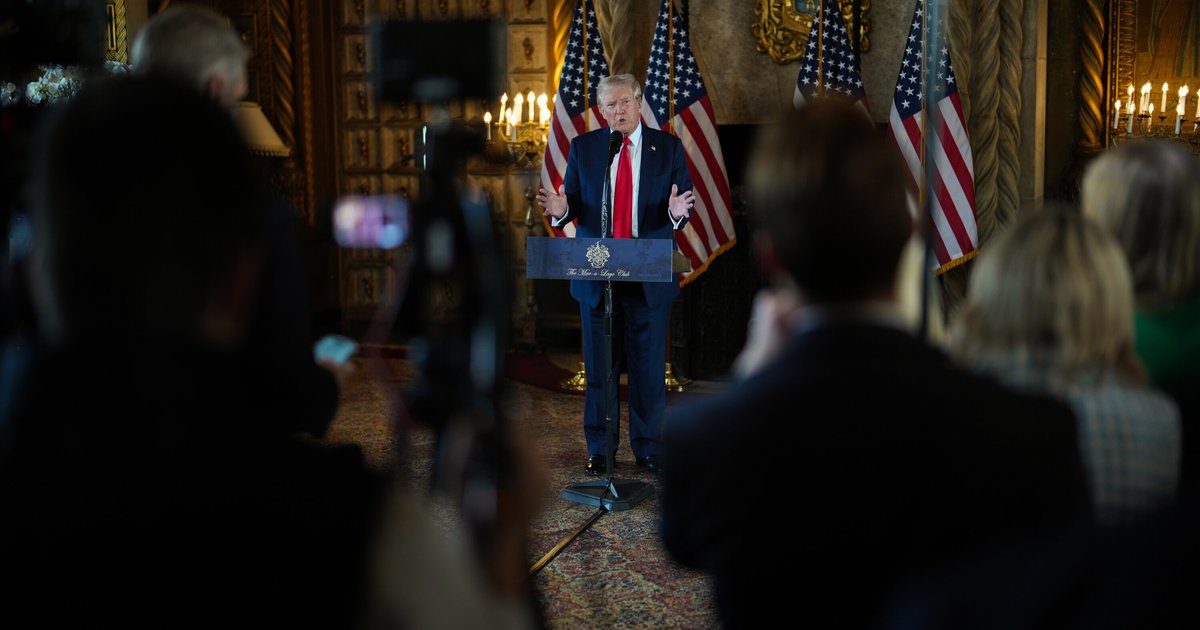
During a press conference held on Monday, U.S. President Donald Trump threatened to imprison a media outlet whose name he did not disclose if it fails to reveal the identity of the source leaking information about an American military pilot missing in Iran. Trump stated that this matter pertains to national security, saying, "Either you disclose the information or you will be jailed."
Trump's remarks came at a sensitive time, as concerns grow regarding the fate of the American pilot who went missing during a mission in Iranian airspace. This issue has sparked widespread debate in political and media circles, with some considering Trump's threats as an overreach of the known boundaries of press freedom.
Details of the Incident
During the conference, Trump underscored the importance of information related to national security, indicating that leaking such information could endanger the pilot's life. He expressed his dissatisfaction with the lack of cooperation from the media outlet in revealing the source, which complicates the situation further. He noted that the U.S. government would take legal action if the media outlet continued to refuse cooperation.
It is worth mentioning that this is not the first time journalists have faced threats from government officials in the United States. In recent years, tensions have escalated between the U.S. administration and the media, raising concerns about press freedom in the country.
Background & Context
The roots of this issue trace back to the rising tensions between the United States and Iran, especially after the U.S. withdrawal from the Iranian nuclear agreement in 2018. Since then, relations between the two countries have significantly deteriorated, leading to increased risks for American military personnel in the region.
In this context, information related to U.S. military operations in Iran is extremely sensitive, as it can impact the American government's strategies in the area. Reports have indicated that the missing pilot was part of a sensitive mission, further emphasizing the importance of information regarding his fate.
Impact & Consequences
Trump's threats indicate the possibility of legal actions against the media, which could spark a debate about freedom of expression in the United States. If these threats are carried out, it may lead to negative repercussions on the relationship between the government and the media, potentially shrinking the space for public discourse on sensitive issues.
This case may also affect the United States' image abroad, where press freedom is viewed as one of the core values of democracy. Any regression in this freedom could negatively impact relations with other countries that closely monitor how the United States handles the media.
Regional Significance
This issue is particularly significant for the Arab region, as tensions between the United States and Iran directly affect security and stability in Middle Eastern countries. Any escalation in these tensions could lead to negative repercussions for neighboring countries, especially those suffering from instability.
Moreover, press freedom in the Arab world faces numerous challenges, and any decline in this freedom in the United States could be used as a pretext by repressive regimes in the region to tighten their grip on the media.
In conclusion, the case of the missing American pilot in Iran and its implications for press freedom in the United States remains a topic worthy of follow-up, as it could influence many political and social aspects in the region.