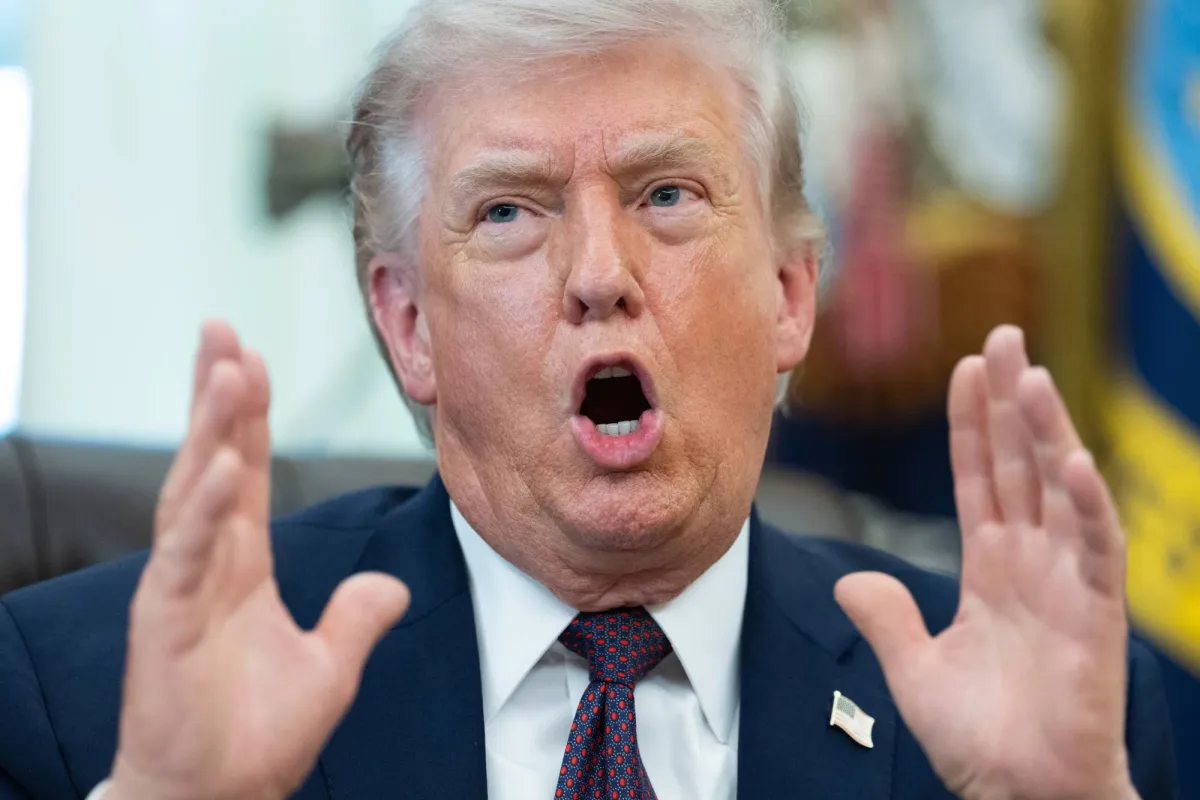
U.S. President Donald Trump disclosed in an interview with the British newspaper 'The Telegraph' that he is seriously contemplating the possibility of withdrawing the United States from the North Atlantic Treaty Organization (NATO). These statements come amid the alliance's failure to respond to his calls for sending warships to reopen the Strait of Hormuz, reflecting a decline in American trust in European allies.
Trump described the alliance as a "paper tiger," indicating that the issue of the United States exiting the mutual defense treaty is no longer up for discussion. This statement serves as the strongest indication yet that the White House no longer views Europe as a reliable defense partner, especially after allies failed to meet his requests.
Details of the Event
In his remarks, Trump emphasized that he has never been convinced of NATO's effectiveness, stating: "I have always known it to be a paper tiger, and Russian President Vladimir Putin knows that too." He particularly criticized the United Kingdom, directing his ire at British Prime Minister Keir Starmer for refusing to participate in the war, suggesting that the "Royal Navy is unqualified for this mission."
When asked if he would reconsider the United States' membership in NATO after the conflict ends, Trump replied: "Certainly, I say it is irreversible." He expressed his frustration over the lack of support from allies for American interests, noting that the United States has always been present to support allies, including Ukraine.
Background & Context
Trump's statements come at a sensitive time, as the region is experiencing increasing tensions due to the ongoing war with Iran. This conflict began on February 28 when the United States and Israel launched an attack on Iran, leading to military responses from Tehran against American bases and its allies in the region.
This war marks a turning point in American relations with its European allies, as pressure has mounted on Washington to end the conflict. Iran has closed the Strait of Hormuz, significantly impacting global oil prices and causing economic crises in several countries.
Impact & Consequences
Concerns are growing that a U.S. withdrawal from NATO could destabilize Europe and strengthen Russia's position in the region. Additionally, the lack of support from allies in facing Iranian threats could weaken the United States' ability to influence regional politics.
At the same time, experts have warned that any retaliatory action from Iran or its proxies in the region could have significant repercussions on energy prices and the global economy. This could escalate the conflict, further complicating relations between the United States and its allies.
Regional Significance
This situation poses a significant challenge for Arab countries, as a U.S. withdrawal from NATO could alter the balance of power in the region. The rising tensions with Iran may threaten regional security and increase the likelihood of new conflicts.
In conclusion, Trump's remarks appear to reflect a significant shift in American policy towards its allies, raising questions about the future of NATO and its role in addressing global threats.