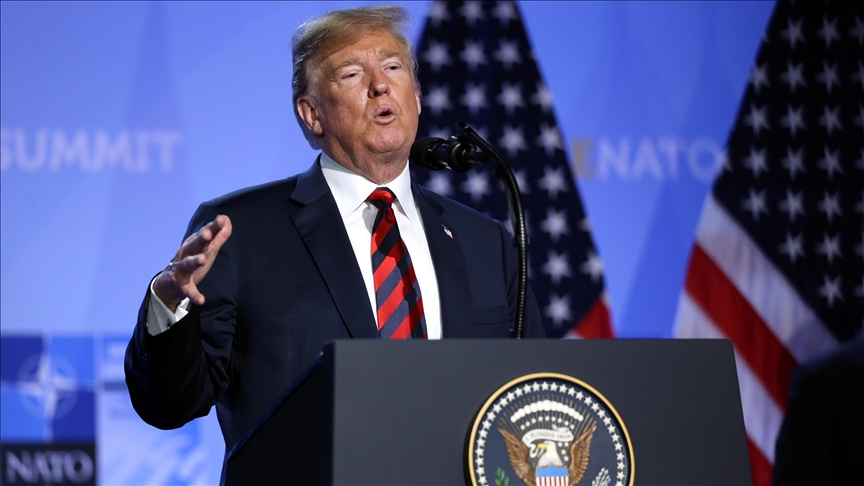
US President Donald Trump announced the possibility of withdrawing the United States from the North Atlantic Treaty Organization (NATO) due to what he considers a lack of support from allies in the war against Iran. In his statements, Trump described the alliance as a 'paper tiger', indicating that his country's membership in NATO has 'exceeded the stage of reconsideration'.
These remarks come at a sensitive time when international relations are experiencing increasing tensions, especially with the escalation of conflict in the Middle East. Trump's statements have elicited mixed reactions in political circles, with some considering that this move could destabilize the military alliance, which is one of the most significant coalitions in the world.
Details of the Event
During a press conference, Trump criticized European allies for not providing sufficient support to the United States in facing Iranian threats, pointing out that some NATO member countries do not contribute enough to the alliance's budget. He emphasized that this situation is unacceptable, prompting him to consider reevaluating the United States' commitment to NATO.
Historically, NATO was established in 1949 as a military alliance for mutual defense against Soviet threats, and in recent years it has faced new challenges related to cybersecurity and terrorism. However, Trump's remarks reflect a significant shift in American policy towards the alliance, raising questions about the future of military cooperation among member states.
Context and Background
The US relationship with NATO spans decades, with the United States always considering the alliance a fundamental part of its security strategy. However, in recent years, criticisms from Trump towards NATO have intensified, as he has urged member states to increase their defense spending. In this context, Trump's recent statements come as part of his strategy to negotiate with allies.
It is worth noting that tensions with Iran have notably escalated since the United States withdrew from the nuclear agreement in 2018, exacerbating conditions in the region. This escalation has led to calls from some European countries for diplomatic solutions, which contrasts with Trump's stance that leans towards military action.
Consequences and Impact
If the United States indeed decides to withdraw its forces from NATO, it could lead to radical changes in the balance of power globally. This could encourage other countries to reevaluate their alliances, potentially leading to the disintegration of the alliance or at least diminishing its effectiveness. Additionally, this may open the door for other powers, such as Russia, to rise in the international arena.
On the other hand, this decision could increase tensions in the Middle East, where Arab countries may find themselves in a difficult position between supporting the United States or seeking new alliances. The absence of American support could also encourage Iran to expand its influence in the region, complicating security situations further.
Impact on the Arab Region
Arab countries are considered a part of the global security equation, and any change in US policy towards NATO could directly impact the stability of the region. Gulf countries, for example, heavily rely on American military support in facing Iranian threats. If the United States withdraws from NATO, these countries may have to seek alternatives, potentially leading to a new arms race in the region.
In conclusion, Trump's statements regarding NATO remain a focal point of significant interest, reflecting a shift in American policy that could impact global security. As tensions continue in the Middle East, the question remains about how Arab countries will respond to this change and how these dynamics will affect the future of the region.