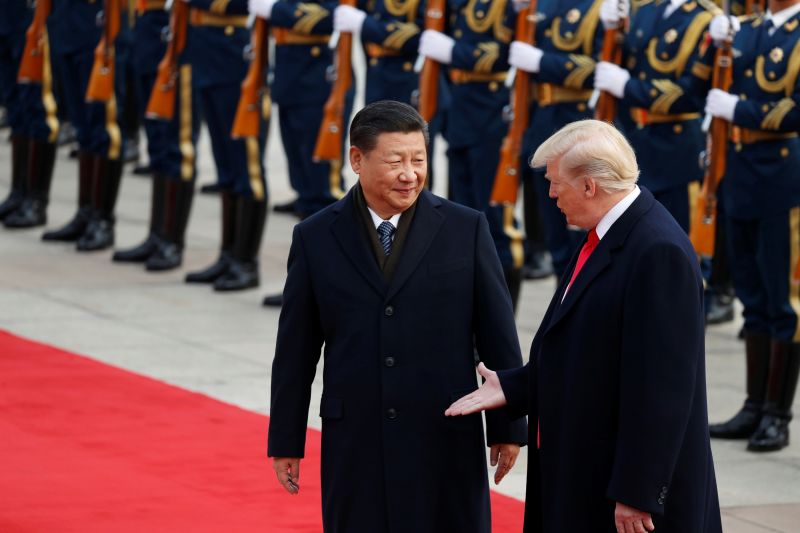
U.S. President Donald Trump has announced an upcoming visit to Beijing on May 14 and 15, following a previous delay that was scheduled earlier. The postponement was a result of the ongoing war in Iran, which has impacted Trump's international agenda. This visit represents a new opportunity to strengthen relations between the United States and China amid current geopolitical tensions.
The timing of Trump's visit to China is critical, as both the United States and China seek to reassess their economic and political relationships. The discussions are expected to address issues such as trade, climate change, regional security, and the tensions arising from the conflict in Iran.
Details of the Event
The previous visit by Trump to China was postponed due to escalating situations in Iran, where the region is experiencing increasing tensions due to military conflict. The new visit comes at a time when Trump is looking to bolster his international standing, especially with the upcoming presidential elections in the United States.
During the visit, Trump is expected to meet with Chinese President Xi Jinping to discuss important issues related to the global economy and security. Relations between the United States and China have seen significant tensions in recent years, making this visit a crucial opportunity to ease those tensions.
Background & Context
Historically, U.S.-China relations have fluctuated between cooperation and competition. Since Trump took office, relations between the two countries have deteriorated significantly, particularly in the areas of trade and technology. The trade war that erupted between the two nations in 2018 marked a turning point in these relations, as the United States imposed tariffs on Chinese goods, leading to reciprocal reactions from China.
The war in Iran adds a new dimension to these relations, as the United States views Iran as a threat to regional security, while China seeks to maintain its relationships with Tehran. This dynamic directly influences how Trump will engage with China during his upcoming visit.
Impact & Consequences
Trump's visit to China could lead to changes in economic and trade policies between the two countries. If Trump succeeds in making progress in the discussions, it could alleviate trade tensions, benefiting the global economy. On the other hand, if the visit does not yield the desired results, tensions may escalate once again.
The potential impacts of this visit are not limited to the United States and China but extend to other countries in the region. Arab nations, in particular, are closely monitoring these developments, as any changes in U.S.-China relations could affect regional stability.
Regional Significance
U.S.-China relations are of particular importance to Arab countries, as both nations have strategic interests in the region. The United States is considered a key ally to many Arab states, while China is an important trade partner. Any changes in these relations could impact investments and economic projects in the region.
Given the current circumstances, it is crucial for Arab countries to closely observe the outcomes of Trump's visit to Beijing, as any advancements in U.S.-China relations could open new avenues for economic and trade cooperation in the region.