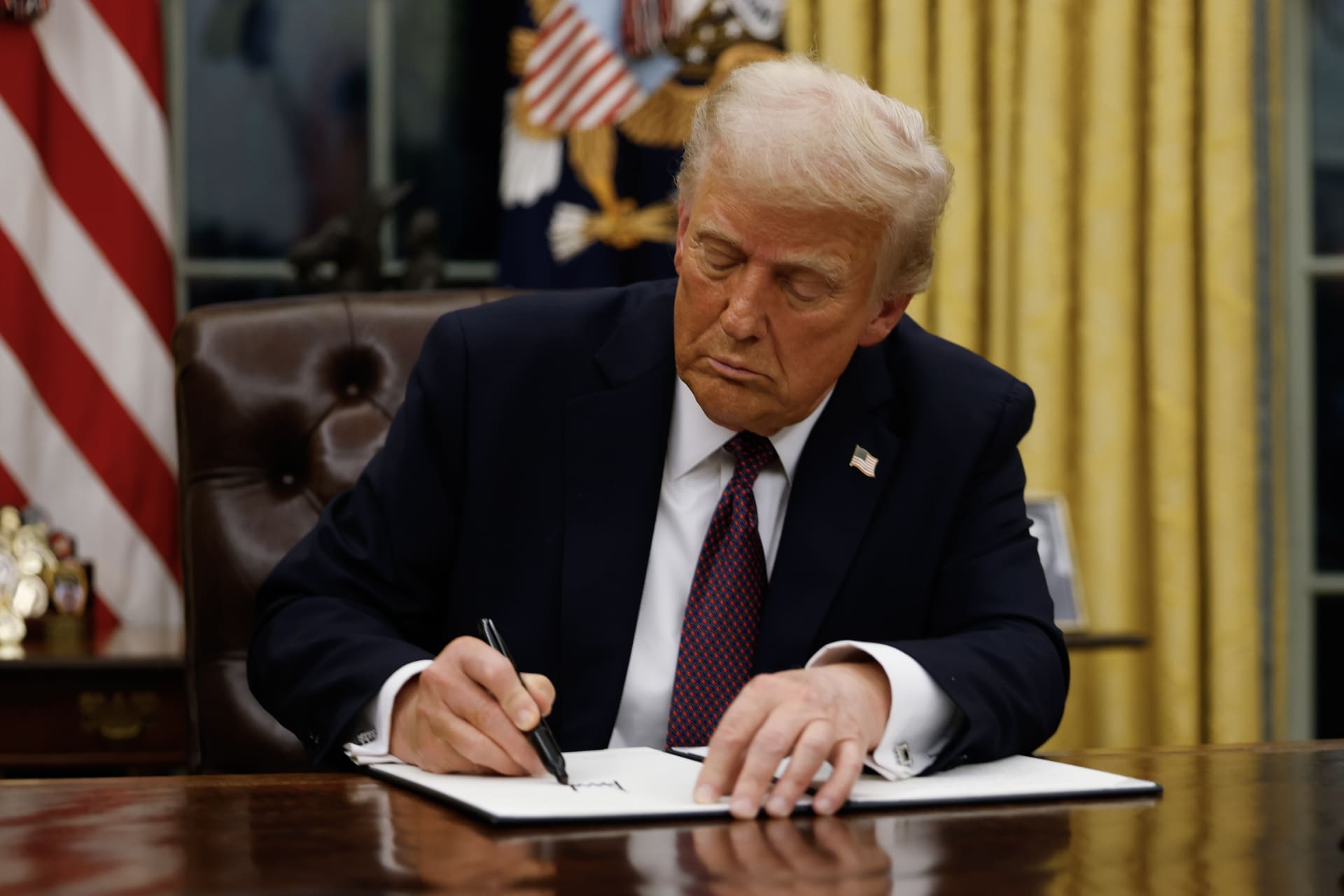
President Donald Trump's approval rating has notably declined, reaching 36%, the lowest level since his return to the White House. According to a survey conducted by Reuters-Ipsos, the four-day poll closed last Monday, showing a drop from the 40% recorded in a previous survey.
This decline comes at a time when the United States is experiencing a sharp rise in fuel prices, adversely affecting the lives of citizens. Additionally, Trump is facing widespread discontent regarding the war he initiated against Iran on February 28, which has sparked significant controversy in political and public circles.
Details of the Event
The Reuters-Ipsos survey revealed that Trump's approval rating has significantly decreased, with only 36% of Americans expressing satisfaction with his performance, reflecting a decline in his popularity amid challenging economic conditions. Many observers have noted that the rise in fuel prices could have a substantial impact on public opinion, as citizens are concerned about its effect on their daily budgets.
Furthermore, the war on Iran, initiated by Trump, has elicited mixed reactions; some view it as a necessary step to protect American interests, while others consider it an unjustified escalation that could worsen the situation in the region.
Background & Context
Historically, the United States has faced numerous economic and political challenges that have affected the popularity of its presidents. In Trump's case, the rise in fuel prices is one of the sensitive issues that directly impact citizens' lives, as many rely on cars for their daily commutes. The war on Iran is also set against a backdrop of long-standing tensions between the two countries, which date back many years.
It is worth noting that Trump has faced numerous criticisms during his presidency, but the drop in approval to 36% reflects a state of general dissatisfaction that could impact his chances in the upcoming elections.
Impact & Consequences
The decline in Trump's approval rating could influence his political strategy in the coming period, as he may seek to take steps to bolster his popularity. He is likely to consider measures aimed at alleviating economic pressures on citizens, such as providing financial assistance or implementing measures to curb rising fuel prices.
Moreover, the increasing discontent regarding the war on Iran may prompt Trump to reassess his military strategy in the region, as the continuation of the current situation could exacerbate conditions and increase pressure on him from political opposition.
Regional Significance
American policies, particularly those related to wars and conflicts, directly affect the Arab region. The war on Iran could escalate tensions in the Gulf region, which may negatively impact security and stability in neighboring Arab countries. Additionally, rising fuel prices could affect Arab economies that heavily rely on energy imports.
In conclusion, Trump's declining approval rating reflects a state of political and economic instability in the United States, which could have wide-ranging implications for American policy in the region and the world.