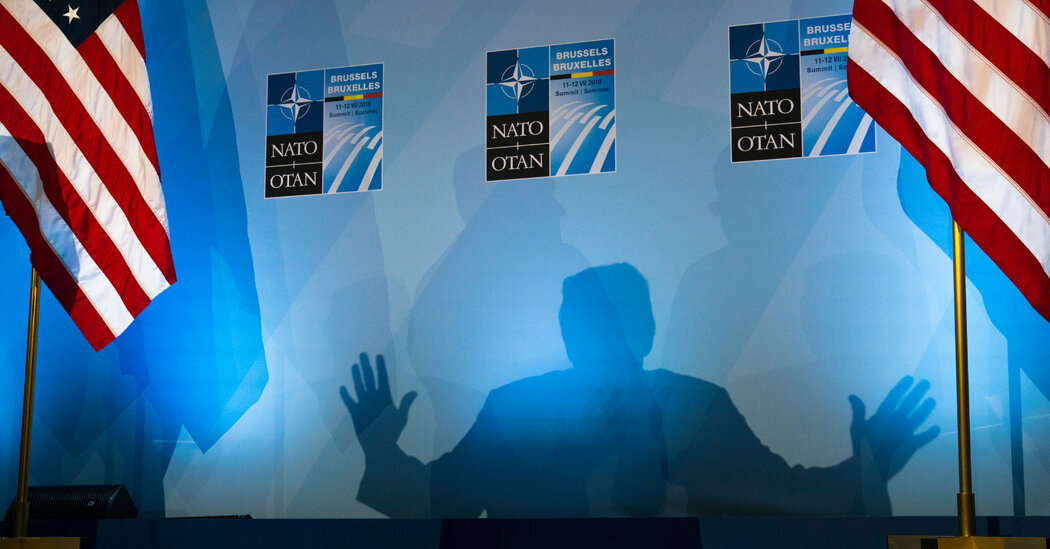
President Donald Trump's threat to dissolve NATO has raised alarm in political and military circles, with some considering that this threat could jeopardize the stability of the military alliance established after World War II. This threat comes at a time when global economies are suffering from the repercussions of the closure of the Strait of Hormuz, which is one of the most important maritime passages for global oil trade.
In his recent statements, Trump indicated that NATO member countries must bear more financial burdens, threatening that the United States may reassess its commitments to the alliance if this does not happen. This statement comes at a sensitive time, as Iran continues to carry out its threats to close the Strait of Hormuz, further escalating tensions in the region.
Details of the Event
Trump's remarks serve as a wake-up call for NATO, as any withdrawal of U.S. support for the alliance could lead to the disintegration of the coalition comprising 30 countries. Some analysts have pointed out that this threat could open the door for other countries like Russia to strengthen their influence in Eastern Europe.
At the same time, the global economy faces significant challenges due to rising oil prices resulting from tensions in the Gulf region. The closure of the Strait of Hormuz, through which approximately 20% of global oil passes, could lead to a substantial increase in prices, affecting major economies.
Background & Context
NATO was established in 1949 as a military alliance aimed at countering Soviet threats during the Cold War. Since then, the alliance has evolved to encompass a wide range of missions, including counter-terrorism and cybersecurity. However, current threats from countries like Iran and Russia may reshape the alliance's priorities.
Historically, the United States has been the driving force behind NATO, providing military and financial support to member countries. However, in recent years, some European countries have begun to rely more on themselves, raising concerns in Washington about its commitment to the alliance.
Impact & Consequences
If Trump's threat is realized, it could lead to the disintegration of NATO, creating a security vacuum in Europe. This vacuum could be exploited by countries like Russia, which seeks to expand its influence in the region. Additionally, any decline in military cooperation among member states could lead to increased military tensions in conflict areas.
Moreover, the impact of the closure of the Strait of Hormuz on oil prices could negatively affect the global economy, potentially leading to economic recession in many countries. This situation may increase pressure on governments to provide swift and effective responses to address these challenges.
Regional Significance
Arab countries, especially those located in the Gulf region, are among the most affected by the current tensions. The closure of the Strait of Hormuz could directly impact oil exports from countries like Saudi Arabia and the UAE, potentially leading to a decline in government revenues.
Furthermore, any escalation in tensions between the United States and Iran could affect stability in the region, raising concerns about regional security. Under these circumstances, Arab countries must be prepared to deal with any potential repercussions.