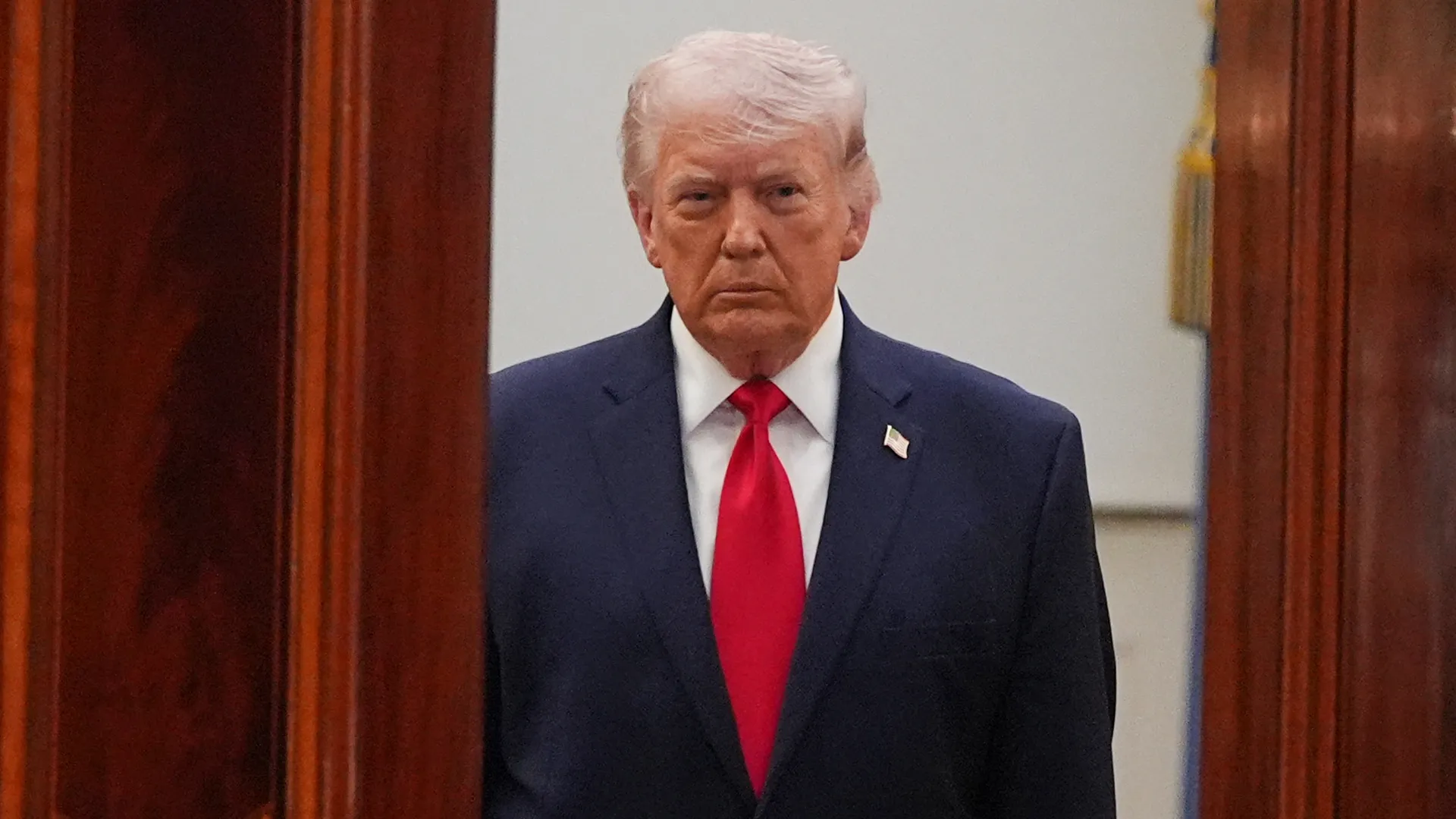
Experts and political analysts have revealed that President Donald Trump's speech to the nation did not present any notable new information; rather, it was a repetition of what had been announced in previous weeks, albeit in a different style. While Iran continues to execute its missile strikes, the equation of attrition against Israel persists, raising questions about the lingering objectives that could push Trump toward ground military operations in Iran.
Dr. Kenneth Katzman, a researcher in strategic studies and international security, noted that the speech did not include any progress in talks with Iran, nor did it present a clear plan regarding the Strait of Hormuz. He pointed out that Trump merely reiterated what he had said before, with a new formulation aimed at influencing American public opinion and highlighting military achievements.
Details of the Event
Katzman added that Trump's promise to take action within two weeks is unconvincing, as he had previously made a similar promise that did not materialize. For his part, Dr. Hussein Royouran, a researcher specializing in regional issues, asserted that Trump is looking for a way out of the war without acknowledging defeat, relying on a sociopolitical principle that suggests that recounting the past and justifying events in speeches reflects a genuine crisis within the United States.
Royouran indicated that energy prices rose by 5% immediately after the speech, reflecting that Trump's speeches have begun to produce a counterproductive effect in the markets due to the accumulated distrust. He outlined the Iranian conditions for any serious negotiation in three axes, indicating that Washington's unmet demands on the ground will not be fulfilled at the negotiation table.
Background & Context
In a related context, Katzman speculated that lingering objectives such as the stockpile of enriched uranium and the opening of the Strait of Hormuz could drive Trump toward limited ground military operations by special forces at Iranian ports like Bandar Abbas. He confirmed that he does not doubt the occurrence of ground operations before the end of this war.
Regarding the Israeli situation, Imad Abu Awad, an expert on Israeli affairs, confirmed that Israel is under severe pressure and is experiencing paralysis at economic, educational, and air traffic levels. He explained that 78.5% of Israelis supported the war at its outset, but two-thirds of them expected it not to exceed one month, which could create a ticking time bomb internally that may explode at any moment in protest against the prolonged duration of the war.
Impact & Consequences
Abu Awad warned that ending the war without resolving any of its fronts would create a deeper crisis for Israelis than continuing it, as the Israeli public would question the reason for prolonging the war without results. This keeps the pressure for a military resolution ongoing despite the increasing discontent.
He noted that Trump's speech may have relieved the Israeli government, which feared a surprise move toward stopping the war, as it aligned with the current Israeli rhetoric that combines the vision of Prime Minister Benjamin Netanyahu, who is wanted by the International Criminal Court, and religious Zionism.
Regional Significance
This speech emerges in the context of increasing tensions in the region, where Iran remains a key player in regional equations. The continuation of military and economic pressures could affect the stability of the entire region, necessitating careful monitoring by Arab countries.
In conclusion, it appears that Trump's speech did not offer any new solutions but rather complicated the situation further, raising concerns about what may happen in the near future.