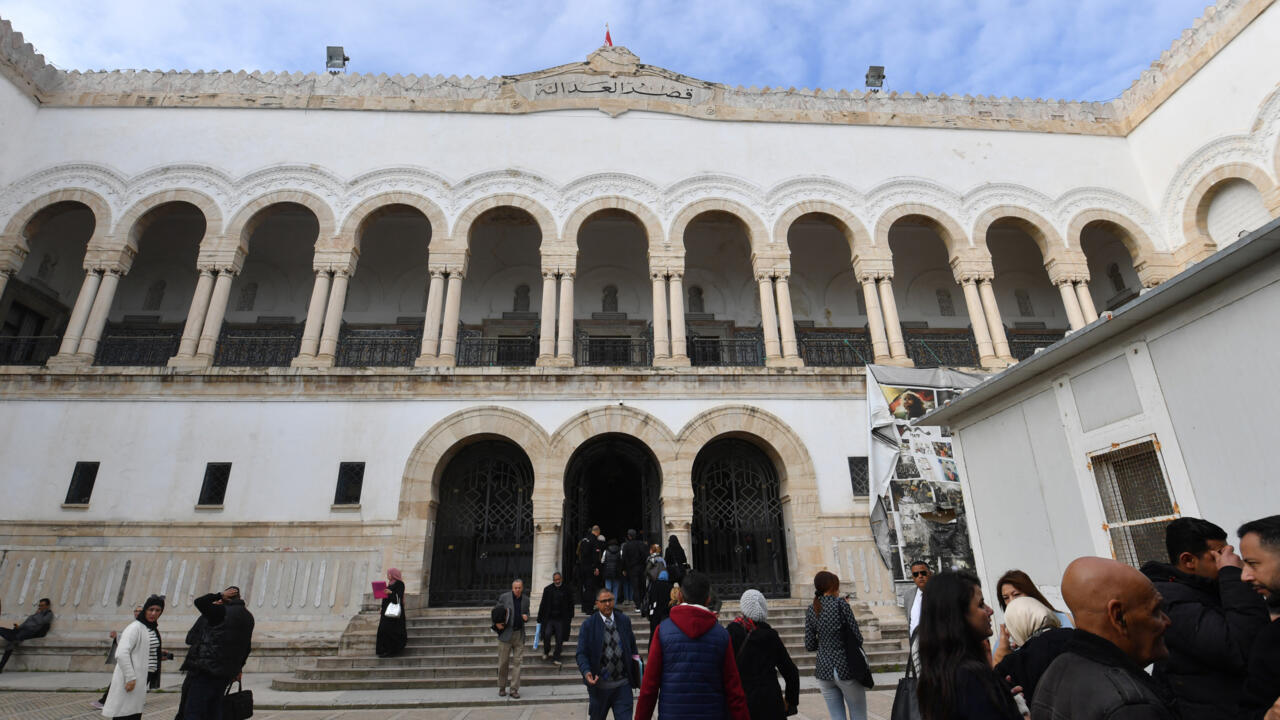
In a controversial judicial ruling, a Tunisian court has sentenced journalist Ghassan Ben Khalifa to two years in prison. This decision comes at a time when freedom of expression in Tunisia is under increasing pressure, with the Tunisian Journalists' Syndicate deeming this ruling a troubling escalation against critical voices in the country.
Ghassan Ben Khalifa, who serves as the editor-in-chief of the website (Inhayaz), faced charges related to publishing news deemed false, stemming from a case over three years ago. In response to these allegations, Ben Khalifa denied all charges against him, describing the case as fabricated and evidence of the authorities' failure to handle criticism.
Details of the Ruling
The sentence against Ben Khalifa occurs within a growing context of repression faced by dissenting voices in Tunisia. The Tunisian Journalists' Syndicate issued a statement asserting that the ruling represents a systematic targeting of journalists and activists who seek to express their opinions freely. This ruling coincides with heightened criticism from international human rights organizations, which indicate that the Tunisian government is conducting a crackdown that includes opponents, such as politicians, journalists, and civil activists.
On the other hand, President Kais Saied continues to deny allegations of restricting press freedom, asserting that all freedoms are guaranteed in Tunisia and that he will not become a dictator. However, many observers believe that the measures taken by Saied since dissolving the parliament in 2021 have led to a significant erosion of democratic guarantees in the country.
Background & Context
Following the popular uprising in 2011, Tunisia experienced a period of openness regarding freedom of expression, with independent media growing and thriving. However, the increasing control of President Saied over power since 2021, including issuing decrees to govern the country, has led to a substantial decline in these freedoms. Activists point out that these practices have allowed authorities to pursue journalists on vague charges, exacerbating concerns within civil society.
In January, another court issued prison sentences against other journalists on charges of tax evasion, which critics viewed as a means of retaliation against their reporting and an intimidation tactic against independent voices. These events reflect a troubling trend towards restricting freedom of expression in Tunisia.
Impact & Consequences
The ruling against Ghassan Ben Khalifa serves as a wake-up call regarding the future of press freedom in Tunisia, reflecting the increasing repression faced by journalists and activists. This situation may lead to a decline in trust in judicial institutions and heighten political polarization in the country. Additionally, this ruling could negatively impact Tunisia's image in the international community, where freedom of expression is considered a fundamental criterion for democracy.
Concerns are growing that these policies may lead to a decrease in foreign investments in Tunisia, as the business environment heavily relies on political stability and freedom of expression. Furthermore, the deterioration of human rights could exacerbate social and economic crises in the country.
Regional Significance
Tunisia's situation is seen as a model in the Arab region, where it was considered a beacon of freedom and democracy following the Arab Spring. However, the decline of freedoms in Tunisia may have negative repercussions on other countries striving for democracy. Such practices may encourage repressive regimes in other nations to take similar actions against dissenting voices.
Ultimately, the future of freedom of expression in Tunisia remains threatened and requires support from the international community to ensure the protection of journalists' and activists' rights. Promoting freedom of expression is essential for building a democratic and stable society.