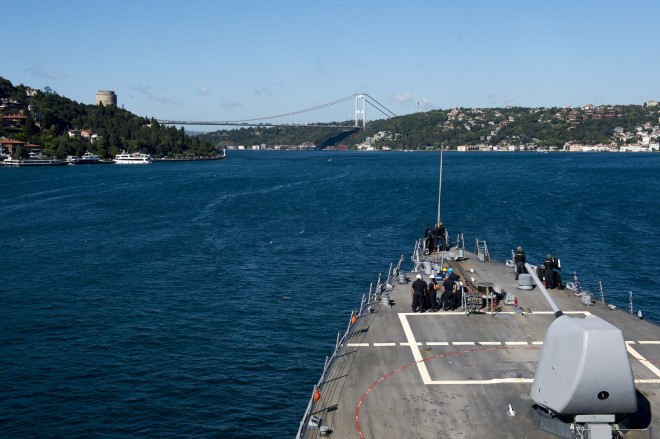
Turkey has announced the closure of the Bosporus and Dardanelles straits to Russian warships, reflecting the rising tensions in the region. This move is part of Turkey's policy aimed at enhancing its national security amid changing geopolitical circumstances.
This action by Ankara is seen as a reaction to the rapidly unfolding events in the region, where fears of escalating military conflicts are increasing. This measure comes at a time when relations between Russia and Turkey are experiencing heightened tensions, particularly due to the ongoing conflict in Ukraine.
Details of the Event
Official sources reported that Turkey informed Russian warships that they would not be allowed to transit through the straits, marking an unprecedented action in maritime relations between the two countries. This step is considered part of Turkey's new policy aimed at protecting its strategic interests.
It is noteworthy that the Bosporus and Dardanelles straits are among the most important maritime passages in the world, connecting the Black Sea to the Sea of Marmara, making them vital for international shipping. This decision has elicited mixed reactions from the international community, with some viewing it as a bold step by Turkey.
Background & Context
Historically, Turkey has played a pivotal role in controlling maritime passages, with the Bosporus and Dardanelles under its control since the Ottoman era. Turkish-Russian relations have seen numerous fluctuations over the years, with periods of cooperation and periods of tension.
In recent years, tensions between the two countries have intensified due to conflicts in Syria and Ukraine, prompting Turkey to take more decisive steps to safeguard its interests. The closure of the straits is a strategic move aimed at strengthening Ankara's position in the face of regional challenges.
Impact & Consequences
This decision is expected to have a significant impact on maritime navigation, as the restrictions imposed on Russian warships will affect military operations in the Black Sea. Additionally, this could lead to increased tensions between Russia and Western countries, which may perceive this action as an escalation by Turkey.
Moreover, this decision may affect economic relations between Turkey and Russia, as Ankara relies on cooperation with Moscow in various fields, including energy and tourism. Therefore, this decision could place Turkey in a difficult position if tensions continue to rise.
Regional Significance
This step is significant for the Arab region, as it may affect regional balances. Amid the multiple crises facing Arab countries, escalating tensions between Turkey and Russia could have indirect effects on Arab nations, especially those with ties to either party.
Furthermore, these developments may reshape regional alliances, as some Arab countries might seek to strengthen their relations with Turkey amid rising tensions with Russia. It is crucial to closely monitor these events to understand how they will impact regional stability.
In conclusion, Turkey's closure of the Bosporus and Dardanelles straits to Russian warships represents a bold move reflecting geopolitical changes in the region. The international community must carefully observe these developments, as they may lead to significant changes in international relations.