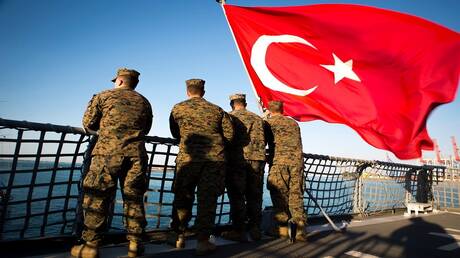
According to Turkish newspaper 'Hurriyet', Turkey could take responsibility for coordinating NATO's ground forces in the event of a crisis, according to security sources. This step reflects Turkey's increasing role in regional and international security affairs.
This announcement comes at a time when geopolitical tensions are rising in various parts of the world, placing NATO in front of new challenges that require a swift and effective response. Turkey, which is considered one of the key members of the alliance, plays a pivotal role in enhancing regional security, especially in light of the multiple crises affecting the Middle East and Eastern Europe.
Details of the Event
As reported by the newspaper, Turkey may lead incoming NATO units, reflecting NATO's confidence in Ankara's ability to manage military operations. This role may require Turkey to coordinate with other member states to ensure the effectiveness of responses to potential crises.
This step is seen as a reinforcement of Turkey's position within the alliance, as Ankara seeks to enhance its military capabilities and expand its leadership role in security affairs. In recent years, Turkey has shown an increasing desire to be a key player in global security policy.
Background & Context
Historically, Turkey has always been an essential part of NATO since its accession in 1952. However, its role has evolved significantly in recent years, especially with the rising tensions in the Middle East, including conflicts in Syria and Iraq.
Turkey aims to strengthen its relationships with Western countries by presenting itself as a reliable ally in facing security challenges. Additionally, the increasing tensions with Russia, particularly following events in Ukraine, have prompted Turkey to enhance its cooperation with its NATO allies.
Impact & Consequences
If this scenario materializes, it could change the power dynamics within NATO. Turkey, with its substantial military capabilities, could contribute to enhancing the alliance's effectiveness in addressing crises. Furthermore, this role could bolster Turkey's position in political negotiations with Western countries.
On the other hand, this may raise concerns among some NATO member states that might view the strengthening of Turkey's role as a threat to their interests. Therefore, balancing the enhancement of Turkey's military capabilities while maintaining good relations among member states will be crucial.
Regional Significance
These developments are particularly significant for the Arab region, as they could affect security balances in the Middle East. If Turkey can enhance its leadership role in NATO, it may lead to changes in how Arab countries deal with security threats.
Moreover, strengthening military cooperation between Turkey and its NATO allies could open the door to further security collaboration between Arab countries and Turkey, which may contribute to addressing common challenges such as terrorism and regional conflicts.
In conclusion, Turkey appears to be preparing to take on a larger role in international security affairs, which could alter the balance of power within NATO and impact the Arab region as a whole.