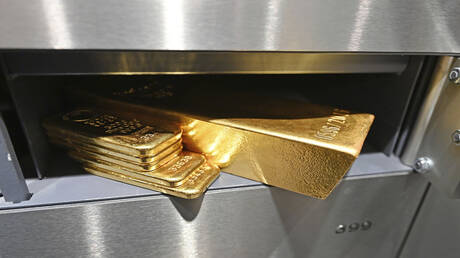
Official sources announced today a significant decline in the gold reserves of the Central Bank of Turkey, recording the largest weekly drop in over a decade. This decline occurs at a time when Turkish authorities are working to address the repercussions of the Iranian war and its effects on financial and economic markets.
Data shows that gold reserves decreased by 10 tons over the past week, reflecting the increasing pressures Turkey faces amid regional crises. This drop serves as a wake-up call regarding the economic situation in the country, as the Turkish economy heavily relies on the stability of its gold reserves as a means of maintaining the value of the local currency.
Details of the Event
Gold reserves are considered one of the key indicators of economic strength, playing an important role in enhancing confidence in the national currency. With increasing economic pressures due to regional tensions, Turkey seems to be facing significant challenges in maintaining the stability of its reserves. Reports have indicated that the Central Bank of Turkey has taken steps to reduce reliance on gold, in an attempt to alleviate pressures on its cash reserves.
This move comes at a sensitive time, as Turkish markets are experiencing sharp fluctuations due to political and economic crises in the region. With rising tensions between Iran and neighboring countries, Turkey must take urgent measures to ensure the stability of its markets.
Background & Context
Over the past few years, Turkey has witnessed significant economic fluctuations, directly affected by political events in the region. Consecutive crises have led to a decline in the value of the Turkish lira, increasing the importance of gold reserves as a means of maintaining financial stability. In this context, the decline in gold reserves serves as an indicator of the challenges faced by the Turkish government in managing the economy.
Historically, Turkey has been one of the largest holders of gold in the world, using it as a means of protection against market fluctuations. However, the current challenges may compel the government to reassess its economic strategies.
Impact & Consequences
The decline in gold reserves could have widespread effects on the Turkish economy, potentially increasing pressures on the lira and reducing investor confidence. Under current conditions, Turkey may struggle to attract foreign investments, which could negatively impact economic growth.
Furthermore, the drop in gold reserves may lead to increased prices of essential goods, affecting citizens' purchasing power. In light of these circumstances, the Turkish government must take urgent actions to ensure market stability.
Regional Significance
The economic situation in Turkey is an important indicator for many Arab countries, as the economies of some of these countries are closely linked to strong trade relations with Turkey. Therefore, any decline in the Turkish economy could impact trade and investments in the region.
Additionally, the regional tensions arising from the Iranian war may affect the stability of Arab markets, necessitating proactive measures to ensure regional economic stability.
In conclusion, the decline in gold reserves in Turkey is a sign of the economic challenges facing the country, and Turkish authorities must take urgent steps to ensure market stability and protect the national economy.