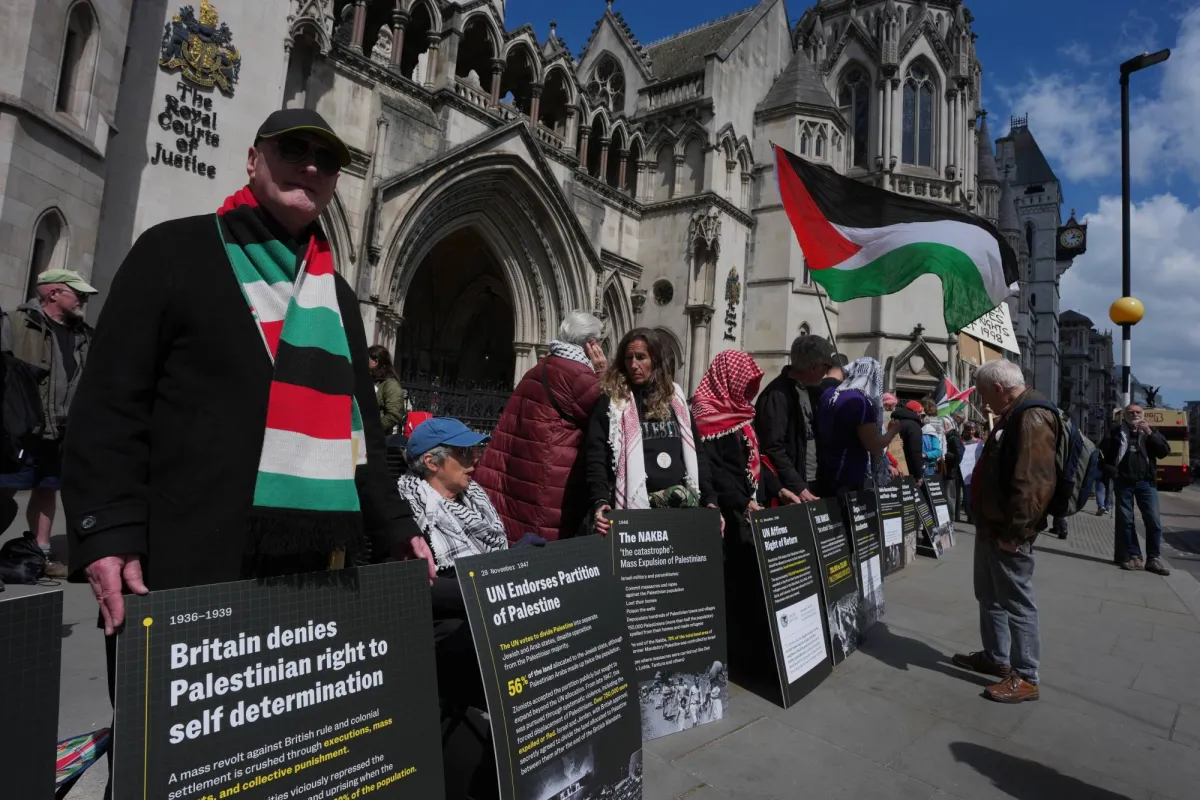
On Tuesday, the British government aimed to uphold the ban on the pro-Palestinian group 'Palestine Action', which has been designated as a terrorist organization. This effort follows a ruling from the High Court in London that found the ban constitutes an unlawful interference with freedom of expression, according to Reuters.
'Palestine Action' was established in 2020 and has notably targeted defense companies linked to Israel in the UK, focusing particularly on the largest Israeli defense firm, 'Elbit Systems'. The group was banned under anti-terrorism laws last year, sparking widespread debate about individuals' rights to express their views.
Details of the Event
In February, the High Court in London ruled that the ban on the group was illegal; however, the British government has appealed the decision, meaning the ban remains in effect until the appeal is resolved. Lawyers for British Home Secretary, Shabana Mahmood, asserted that the court's conclusion that the ban significantly impacts freedom of expression is "exaggerated and incorrect".
On the other hand, Huda Amouri, one of the founders of 'Palestine Action', stated that the ban has imposed severe restrictions on fundamental rights to freedom of expression and assembly for many individuals. The ban was enacted following a raid on the 'Brize Norton' airbase of the Royal Air Force in June, where activists vandalized two military aircraft.
Background & Context
This ban arises amid escalating tensions regarding Palestinian rights in the UK, where 'Palestine Action' is considered one of the leading organizations advocating for support of the Palestinian cause. The ban has elicited mixed reactions, with some viewing it as a necessary step to combat terrorism, while others see it as a violation of human rights and freedom of expression.
Since the imposition of the ban, over 2,700 individuals have been arrested for supporting the group, raising concerns about the use of anti-terrorism laws in matters related to political freedom. The London police announced they would temporarily halt arrests following the High Court's decision, but later resumed enforcement of the ban.
Impact & Consequences
This issue raises questions about how governments balance counter-terrorism efforts with the protection of human rights. While the British government seeks to maintain security, there are growing concerns that the measures taken may restrict freedom of expression and assembly.
If the High Court's ruling is upheld, it could lead to the lifting of the ban, allowing other groups to advocate for similar causes without fear of arrest. This decision may also influence how European governments address similar issues in the future.
Regional Significance
The 'Palestine Action' case is part of the broader struggle over Palestinian rights and may provoke reactions from Arab countries that support the Palestinian cause. Any actions taken by the British government could impact relations between the UK and Arab nations, especially amid ongoing tensions in the Middle East.
Ultimately, the 'Palestine Action' issue exemplifies the challenges governments face in attempting to balance security with human rights, making it a significant topic for discussion on the international stage.