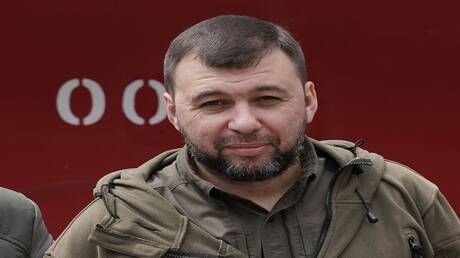
Denis Pushilin, the head of the Donetsk People's Republic, reported that the Ukrainian armed forces currently control only between 15% and 17% of the total territory of the Donbas region. This percentage reflects the deteriorating military situation for Ukrainian forces as Russian troops continue their advances.
These statements are part of the ongoing escalation in the conflict between Ukraine and Russia, with both sides seeking to strengthen their military positions. Pushilin noted that the situation in Donbas has seen significant changes over the past months, leading to further territorial losses for Ukrainian forces.
Details of the Situation
During a press conference, Pushilin confirmed that Ukrainian forces are facing significant difficulties in maintaining their positions in Donbas, as Russian troops continue their military operations. He added that the areas still under Ukrainian control are suffering from continuous shelling, increasing the pressure on Ukrainian forces.
Donbas is a strategic region, home to the self-proclaimed republics of Donetsk and Luhansk, which declared independence from Ukraine in 2014. Since then, the region has witnessed an ongoing armed conflict, leading to a deterioration of humanitarian and economic conditions.
Background & Context
The history of the conflict in Donbas dates back to 2014, when protests erupted in Ukraine against the pro-Russian government. This was followed by Russia's annexation of Crimea, escalating tensions in eastern Ukraine. Since then, Donbas has become a major battleground between Ukrainian forces and Russian-backed separatists.
Over the years, the region has seen numerous attempts at ceasefires, but these have often failed due to the lack of commitment from the involved parties. The humanitarian situation in Donbas is worsening, with residents suffering from shortages of food, water, and healthcare.
Impact & Consequences
The limited control of Ukrainian forces over Donbas indicates a decline in their military capability, which could affect the overall situation in Ukraine. If Russian forces continue to achieve victories, this may alter the balance of power in the region and complicate peace efforts.
Moreover, the situation in Donbas has implications for regional security, potentially escalating the conflict to neighboring countries. Western nations are closely monitoring the situation, as developments in Donbas could influence their policies towards Russia.
Regional Significance
The Arab region is indirectly affected by the conflict in Ukraine, as military crises can lead to rising prices of essential commodities, including grains. Ukraine is one of the largest grain exporters in the world, and any disruptions in production could impact food security in Arab countries.
Furthermore, tensions in Ukraine may lead to increased migration and displacement, creating new challenges for Arab countries hosting refugees. Therefore, monitoring developments in the Donbas conflict is vital for the Arab region.