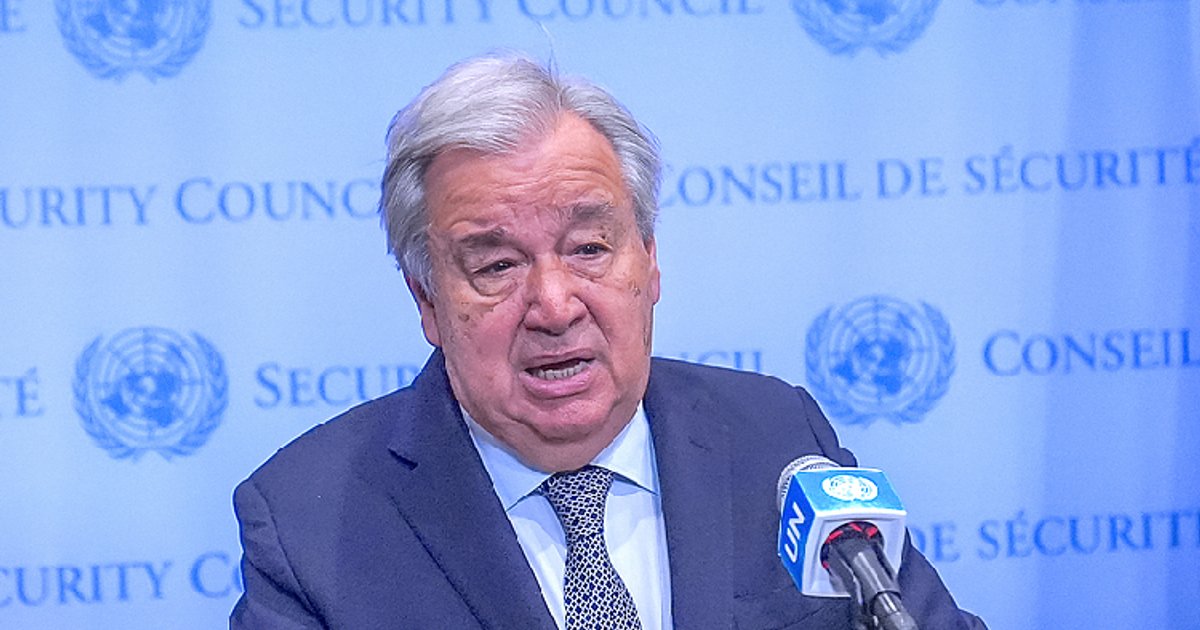
UN Secretary-General Antonio Guterres urged the United States, Israel, and Iran today to halt mutual attacks, warning of the risks of a wider war. These statements come at a time when the Middle East is witnessing increasing tensions, with growing fears that these conflicts could escalate further, threatening regional and international security.
Guterres, who made his remarks during a press conference, emphasized the importance of dialogue and negotiation as a means to resolve disputes, noting that the continuation of attacks could lead to dire consequences for all parties involved. He also expressed concern over the humanitarian impact that escalating violence in the region could entail.
Details of the Event
The relationship between Iran and the United States has been increasingly strained since Washington's withdrawal from the Iranian nuclear deal in 2018. Mutual attacks between Iranian and American forces in the region have intensified, raising fears of an all-out war. In this context, Guterres called on all parties to take concrete steps to de-escalate tensions and return to the negotiating table.
Guterres pointed out that military escalation would only exacerbate the humanitarian situation in the region, where civilians are suffering from the effects of the ongoing conflict. He urged the international community to support peace efforts and enhance dialogue among the concerned parties.
Background & Context
The roots of the conflict between Iran and the United States date back decades of political and military tensions. Since the Islamic Revolution in 1979, relations between the two countries have become increasingly strained, with the United States accusing Iran of supporting armed groups in the region, while Iran views the U.S. as seeking to interfere in its internal affairs.
In recent years, tensions have escalated significantly, especially following attacks that targeted oil facilities in Saudi Arabia, which Iran was accused of orchestrating. Additionally, hostile statements from both sides have heightened tensions, making it essential to seek peaceful solutions.
Impact & Consequences
If the escalation between Iran and the United States continues, it could lead to severe consequences for regional and international security. The conflict may cause an increase in oil prices, impacting the global economy, as well as worsening the humanitarian situation in the countries affected by the conflict.
Moreover, the continuation of the dispute could lead to the involvement of other countries in the conflict, complicating the situation further and making it difficult to achieve peace. Therefore, Guterres' call for de-escalation comes at a critical time when the world needs stability in the Middle East.
Regional Significance
The neighboring Arab countries of Iran and the United States are among the most affected by the current tensions. The conflict between these two countries could have negative repercussions on security and stability in the region, which may reflect on the economic and social conditions in Arab nations.
Furthermore, the continuation of the dispute could intensify sectarian and ethnic divisions in the region, threatening peace and regional security. Thus, international efforts to achieve peace and stability in the region are deemed essential at this stage.