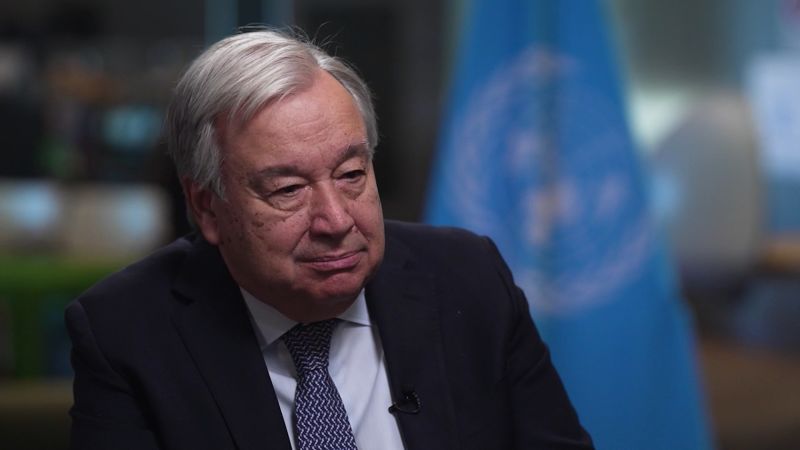
UN Secretary-General Antonio Guterres has emphasized the urgent need to halt military escalation in the Middle East, warning of the danger of a full-scale war that could impact the stability of the region and the world. This call was made during a press conference held on Thursday, where Guterres highlighted the ongoing military operations between the United States and Israel against Iran, affirming that the current situation requires immediate steps towards de-escalation.
Guterres stated, "The world stands on the brink of a wider war that could encompass the entire Middle East, which would have dramatic global repercussions." He also stressed the need to end the cycle of death and destruction caused by ongoing conflicts, underscoring the importance of supporting efforts aimed at finding peaceful solutions to the dispute.
Details of the Incident
On February 28, the United States and Israel launched attacks on multiple targets in Iran, including the capital Tehran, resulting in significant damage and loss of life. In response, Iran carried out attacks on Israeli territory and US military installations in several countries across the Middle East, including Bahrain, Qatar, the United Arab Emirates, and Saudi Arabia.
This military escalation has led to the closure of the Strait of Hormuz, a vital passage for exporting oil and natural gas from Gulf countries to global markets, contributing to a noticeable rise in energy prices.
Background & Context
Historically, the Middle East has witnessed numerous armed conflicts that have had serious implications for regional and international stability. The current conflict between the United States and Iran comes amid long-standing tensions between the two parties, which have intensified following the US withdrawal from the Iranian nuclear deal in 2018.
Additionally, relations between Israel and Iran have seen increasing tension, with Iran viewing Israel as an existential threat, while Israel perceives Iran as seeking to enhance its influence in the region through support for armed groups.
Impact & Consequences
The current military escalation could lead to severe consequences for regional security, potentially sparking new conflicts and heightening tensions among nations. Furthermore, the continuation of military operations may exacerbate humanitarian conditions in the region, increasing the suffering of civilians.
On the economic front, the impact of this conflict could be significant, as rising energy prices may affect the global economy and increase pressure on oil-importing countries.
Regional Significance
For Arab countries, the rising tensions in the Middle East represent a direct threat to their security and stability. Many Arab nations rely on regional stability to ensure their economic and political security. Any military escalation could lead to an influx of refugees and increase the burdens on neighboring countries.
In conclusion, the current situation in the Middle East requires urgent action from the international community to halt military escalation and work towards peaceful resolutions to conflicts. The continuation of the dispute will only lead to further suffering and destruction, which must be avoided by all.