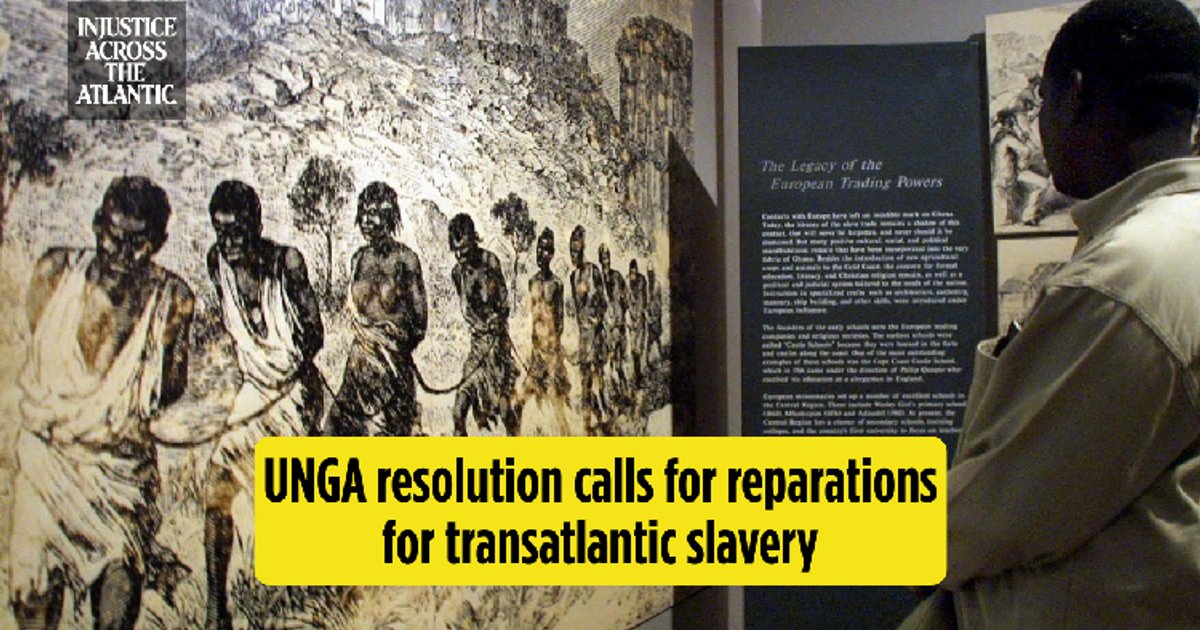
In a historic move, the UN General Assembly has declared that the transatlantic slave trade is one of the greatest crimes against humanity. This decision aims to address the ongoing impacts of slavery, serving as an international acknowledgment of the harm inflicted on African communities as a result of this trade.
This step follows decades of discussions and demands from countries and non-governmental organizations, where the official recognition of the slave trade as a crime against humanity is seen as a significant step towards achieving justice and compensation for the victims and their families. This decision reflects the international community's commitment to confronting historical challenges that continue to affect societies today.
Details of the Event
The resolution was voted on during a session of the General Assembly held in New York, where it received broad support from member states. Many delegates expressed the importance of this decision in raising global awareness about the impacts of slavery. They also highlighted the need for concrete steps to compensate affected communities.
The resolution includes a call for member states to acknowledge the history of slavery and the transatlantic trade, as well as the importance of educating about this issue in school curricula. This approach is part of broader efforts to promote human rights and combat racial discrimination.
Background & Context
Historically, the transatlantic slave trade began in the 16th century and continued until the 19th century, during which millions of Africans were transported to the Americas under harsh and inhumane conditions. This trade not only affected the individuals who were enslaved but also left deep scars on both African and American communities.
Over the years, numerous movements have emerged calling for recognition of the negative impacts of this trade, with international conferences and events organized to raise awareness about the issue. However, no official steps have been taken to compensate the victims until now, making this decision a pivotal step in that direction.
Impact & Consequences
This decision is seen as a turning point in how the international community addresses issues of slavery. It is expected to increase pressure on governments to provide reparations to victims, as well as to enhance educational efforts regarding the history of slavery. It may also lead to changes in public policies related to human rights.
Furthermore, this decision could encourage other countries to take similar steps in recognizing the historical crimes committed against their peoples. This could enhance international dialogue on social justice and human rights.
Regional Significance
For the Arab region, this decision serves as a call to reflect on the complex history of slavery and its impacts on Arab communities. Historically, there was a slave trade in the Arab world, making this topic highly relevant to the region.
This decision could foster dialogue on issues of justice and equality in the Arab world and encourage steps to address the legacies of slavery in Arab societies. It may also enhance cooperation between Arab and African countries in tackling these issues.
The UN General Assembly's decision is a significant step towards recognizing the ongoing impacts of the slave trade and indicates the necessity of taking concrete actions to achieve justice for the victims. This decision enhances global awareness of slavery issues and calls for further efforts to achieve justice and equality.