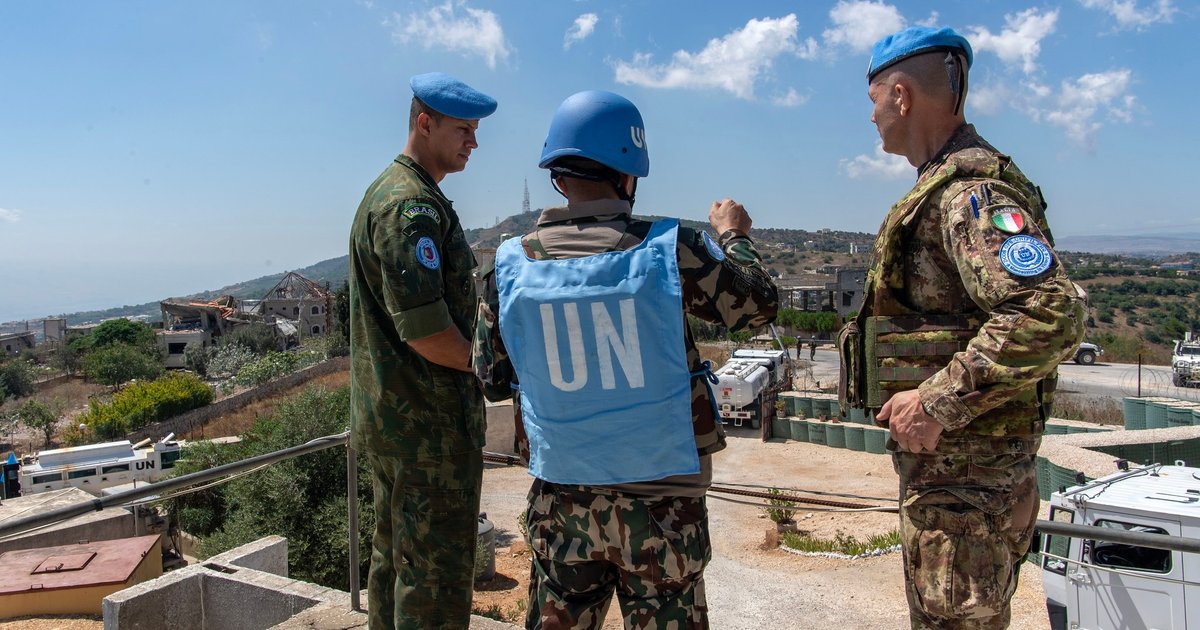
The United Nations has announced preliminary results concerning the deaths of three Indonesian peacekeepers in Lebanon, indicating that one was killed by an Israeli tank shell, while the other two fell victim to the explosion of an improvised explosive device believed to have been planted by Hezbollah.
In a press conference, Stéphane Dujarric, spokesperson for the UN Secretary-General, stated that these findings are based on initial physical evidence, noting that a full investigation is still underway, which includes communication with relevant parties.
Details of the Incident
The first incident occurred on March 29, when one soldier was killed due to the explosion of a projectile that struck a UN position in the town of Adchit, near the border with Israel, during clashes between Israeli forces and Hezbollah. Another soldier was seriously injured in the incident.
The following day, two more soldiers from the same unit were killed by an explosion that destroyed their vehicle near the town of Bani Hayyan, resulting in injuries to two other soldiers, one of whom was critically wounded. Preliminary investigations suggest that the projectile that hit the first site was a 120mm tank shell fired by an Israeli Merkava tank.
Background & Context
UNIFIL forces have been deployed in southern Lebanon since 1978, serving as a buffer between Lebanon and Israel. As tensions in the region have escalated, particularly following the outbreak of war between Hezbollah and Israel on March 2, peacekeeping forces have become targets of crossfire.
During this period, the international force's bases in southern Lebanon, which include around 8,200 troops, have faced increasing threats, reflecting the deteriorating security situation in the area. UNIFIL has informed Israeli forces of its positions to prevent any escalation.
Impact & Consequences
Attacks on UN peacekeeping forces are considered a blatant violation of international law and may amount to war crimes. Dujarric has called for national investigations to hold the perpetrators accountable and ensure they are brought to justice.
For its part, the Indonesian government has emphasized the importance of a thorough investigation into the incident, stressing the need to hold all involved parties accountable. It also stated that any attack on UNIFIL soldiers represents a violation of international law.
Regional Significance
These incidents highlight the ongoing tensions in the Middle East, where peacekeeping forces in Lebanon remain at risk amid escalating conflicts. These events reflect the urgent need for conflict resolution in the region and to avoid escalation that could have dire consequences for civilians.
In conclusion, this incident underscores the necessity of enhancing the protection of peacekeeping forces and ensuring they are not subjected to attacks, which calls for urgent international action to safeguard security and peace in the region.