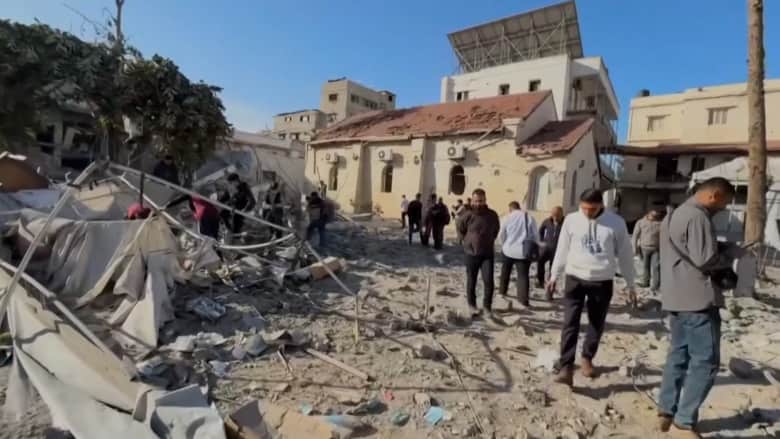
Nikolai Miladinov, the UN Special Coordinator for the Middle East Peace Process, revealed details of a comprehensive plan for disarming resistance groups and reconstructing the Gaza Strip during his briefing to the UN Security Council. This plan is part of the Council's efforts to achieve peace and stability in the region and has recently been presented to Hamas.
The plan consists of five main points, intended to be implemented in phases, reflecting a focus on addressing both security and humanitarian issues in Gaza. This was discussed in the context of the Council's listening session regarding the implementation of Resolution 2803, which emphasizes enhancing security and peace in the region.
Event Details
During the briefing, Miladinov clarified that the plan includes concrete steps for disarming armed factions in Gaza, emphasizing the necessity of achieving security and stability. He also highlighted the importance of reconstructing the region, which has suffered significant destruction due to ongoing conflicts, necessitating joint international and local efforts.
The five points disclosed include: first, establishing an international mechanism to oversee disarmament; second, providing financial support for reconstruction; third, enhancing cooperation among Palestinian factions; fourth, improving humanitarian conditions in Gaza; and finally, ensuring that weapons are not used in future conflicts.
Background & Context
This plan comes at a sensitive time, as tensions in the region have escalated due to the ongoing clashes between Palestinian factions and the Israeli occupation. Historically, Gaza has witnessed numerous wars and conflicts that have led to a deterioration of humanitarian and economic conditions. Several international entities, including the United Nations, have attempted to mediate for peace, but these efforts have often failed.
Miladinov's plan is seen as a new step in the attempt to find a comprehensive solution to the Palestinian crisis, as the international community seeks to achieve lasting stability in the region. However, questions remain regarding Hamas's acceptance of this plan and its ability to implement it under the current circumstances.
Impact & Consequences
If Miladinov's plan is successfully implemented, it could lead to improved humanitarian conditions in Gaza and enhance the prospects for peace in the region. It may also help reduce tensions between Palestinian factions and the Israeli occupation, opening the door for future negotiations that could lead to a comprehensive resolution of the Palestinian issue.
Nonetheless, the biggest challenge remains how to ensure that all parties commit to implementing the plan, especially in light of the internal political divisions among Palestinian factions. There are also concerns that any failure to implement the plan could lead to a new escalation in the conflict, exacerbating the deteriorating humanitarian situation in Gaza.
Regional Significance
The Palestinian issue is one of the most prominent matters affecting stability in the Arab region. Any progress in peace efforts in Gaza could have positive implications for neighboring countries, as it may contribute to enhancing regional cooperation and reducing tensions between Arab states and Israel.
Moreover, the success of the disarmament and reconstruction plan could pave the way for other initiatives in the region, thereby increasing the chances of achieving peace and stability in other conflict areas. Finding a solution to the Palestinian issue is considered a prerequisite for achieving security in the Middle East.
In conclusion, Miladinov's plan for disarming Gaza and its reconstruction is an important step towards achieving peace, but its success depends on the commitment of all parties involved and the cooperation of the international community in supporting these efforts.