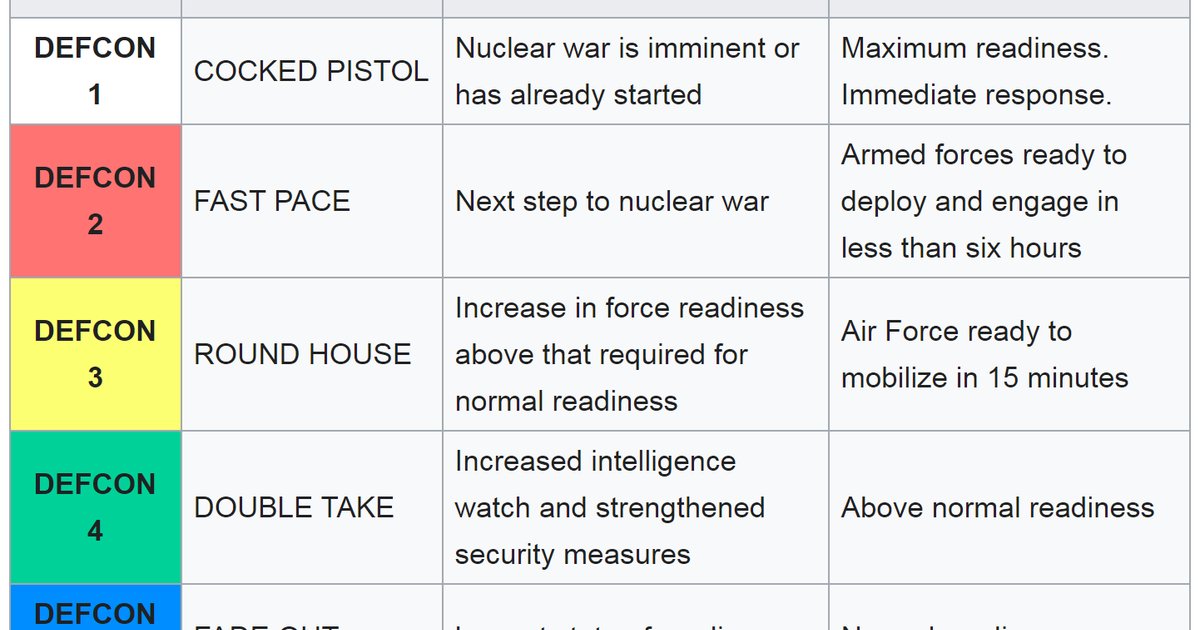
The Defcon war readiness system is one of the core elements of the national security strategy of the United States, as it determines the military readiness level of the country in the face of any potential threat. This system aims to unify military readiness levels and coordinate responses among various branches of the armed forces, in addition to organizing security measures and activating operational plans according to the severity and nature of the threat, whether it is a conventional or nuclear threat.
The Defcon system consists of five graduated levels, starting from Defcon 5, which is applied in peacetime, to Defcon 1, representing the highest level of readiness for an imminent nuclear war. As the Commander-in-Chief of the armed forces according to the Constitution, the U.S. President, in coordination with the Secretary of Defense and the Chairman of the Joint Chiefs of Staff, determines the appropriate Defcon level for each potential threat to ensure the armed forces are prepared to act swiftly and efficiently.
Details of the Defcon System
The U.S. war readiness system (Defcon) was developed and officially adopted in 1959 by the Joint Chiefs of Staff of the U.S. armed forces. This came as part of efforts to unify military leadership and establish a common framework for determining military readiness status. The system emerged in the context of the Cold War when tensions between the United States and the Soviet Union escalated, with nuclear weapons becoming a strategic threat.
The aim of adopting this system was to establish a clear mechanism for assessing the severity of military threats and organizing the deployment of forces and defensive measures in a graduated and unified manner, ensuring coordination among the various branches of the U.S. military. The Defcon system is a fundamental tool in the national security strategy of the United States, as it determines the readiness level of the U.S. armed forces to confront potential military threats against the country and its allies.
Background & Context
The graduated readiness levels in the Defcon system help the armed forces to gradually raise their readiness according to the severity of the threat, ensuring control over escalation and preventing any steps that could lead to unnecessary military confrontation. Despite the secrecy surrounding information related to the war readiness system, some published official documents indicate that the United States has reached level two (Defcon 2) only twice since the system's adoption in 1959.
The first instance was during the Cuban Missile Crisis in October 1962, when the world was on the brink of nuclear war, while the second occurred during the Gulf War in January 1991. The third level (Defcon 3) has been declared on several occasions, including the October War in 1973 and after the September 11 attacks in 2001.
Impact & Consequences
The Defcon system represents a vital tool in managing military risks, allowing U.S. leadership to make appropriate operational decisions to secure national interests and ensure immediate readiness to deal with any potential military threat. The system also forms part of the strategic deterrent mechanisms that ensure peace and prevent escalation during crises.
The readiness levels range from Defcon 5 in peacetime, where the armed forces continue their regular missions, to Defcon 1, which indicates an imminent nuclear threat. Each of these levels reflects a specific state of readiness, demonstrating the United States' ability to respond quickly and effectively to any threats.
Regional Significance
The levels of U.S. war readiness directly affect regional security in the Middle East, as Arab countries closely monitor developments in this system. In light of ongoing tensions in the region, any increase in the Defcon level could lead to changes in defense strategies and security cooperation between Arab countries and the United States.
In conclusion, understanding the Defcon system and its impact on U.S. national security provides deeper insight into the challenges associated with military threats and reflects the importance of coordination among various branches of the armed forces in facing crises. This system remains a vital tool for ensuring stability and peace in the world.