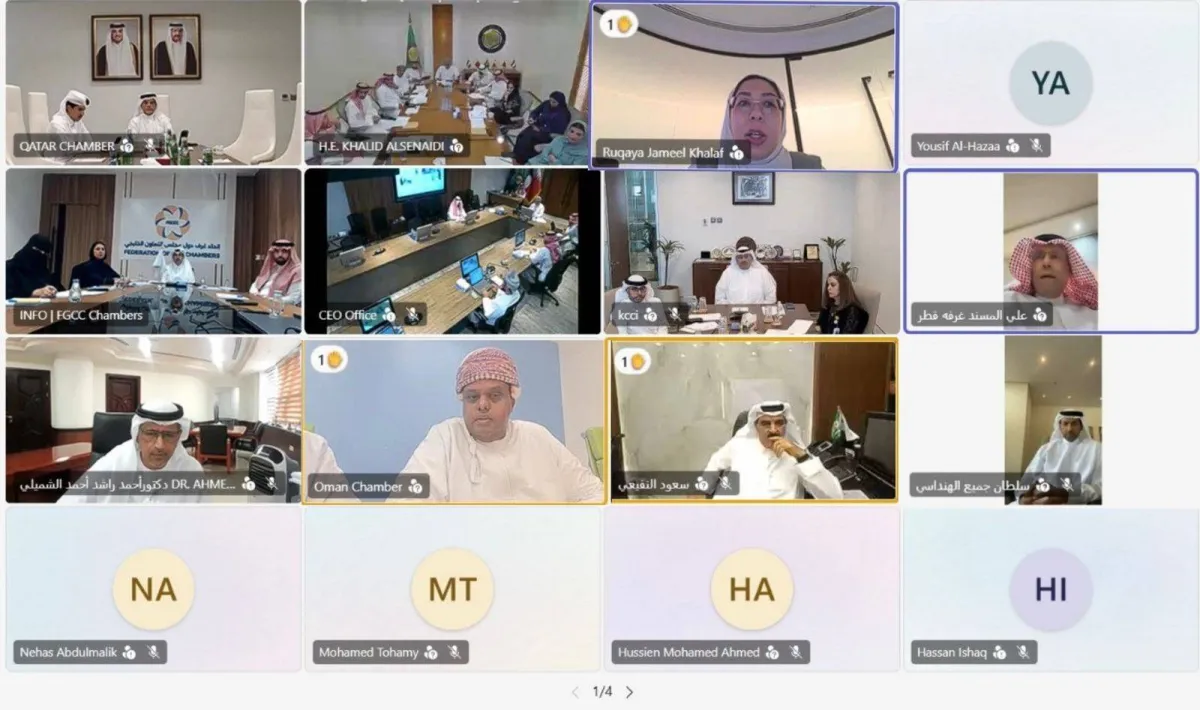
The Gulf Cooperation Council's Chamber Union has approved a joint mechanism in collaboration with the Council's General Secretariat and the Customs Union Authority. This initiative aims to address supply chain obstacles and enhance the fluidity of intra-regional trade, particularly in light of the unprecedented pressures on transportation, food security, and energy sectors due to current geopolitical challenges.
This mechanism was announced during an extensive virtual meeting that included heads of transportation and logistics committees from Gulf chambers, following up on the outcomes of an emergency meeting held on March 16. The discussions focused on practical ways to deal with the 'force majeure' that is hindering global and regional trade movements at present.
Details of the Initiative
The Secretary-General of the Gulf Chambers Union, Saleh Al-Sharqi, emphasized that the meeting comes at an 'exceptional time' that requires unifying visions between the public and private sectors to confront rapid changes. He stressed the necessity of collaborative efforts to formulate proposals that ensure the continuity of goods and services flow and the stability of Gulf markets.
Meanwhile, the Assistant Secretary for Economic Affairs at the General Secretariat of the Cooperation Council, Khalid Al-Sunaidi, expressed the Secretariat's full readiness to cooperate with the private sector to overcome all obstacles facing truck movements and intra-trade, thereby serving the Gulf economic security framework.
Background & Context
In a practical step to enhance business fluidity, the Executive Director of the Customs Union Authority, Dr. Suleiman Al-Ghafri, revealed the Authority's intention to launch the 'Tayseer' platform soon. This specialized digital platform aims to serve exporters and importers, enhancing the efficiency of customs ports and facilitating procedures under the current circumstances.
The meeting concluded with the formation of a joint and sustainable working mechanism to monitor and facilitate trade movements, focusing on improving land ports' efficiency and easing truck movements to compensate for the shortages caused by maritime navigation disruptions. These actions aim to enhance the resilience of Gulf economies and their ability to absorb global shocks while solidifying the private sector's role as a strategic partner in protecting vital supply chains.
Impact & Consequences
These efforts coincide with increasing pressures on the region's economies due to geopolitical tensions. Strengthening supply chains could contribute to improving market stability and enhance the Gulf states' ability to face economic challenges.
This joint mechanism may also improve trade relations among member states, thereby enhancing economic cooperation and creating new growth opportunities in the future. These steps are expected to have a positive impact on intra-trade movements, reflecting the Gulf states' commitment to enhancing economic integration.
Regional Significance
This initiative represents an important step towards enhancing economic cooperation among Gulf Cooperation Council countries and may inspire other nations in the region to adopt similar models. Amid global economic challenges, strengthening intra-trade could significantly impact the region's stability.
In conclusion, this joint mechanism represents an opportunity to enhance cooperation between the public and private sectors, contributing to sustainable development in Gulf states and strengthening their capacity to face future challenges.