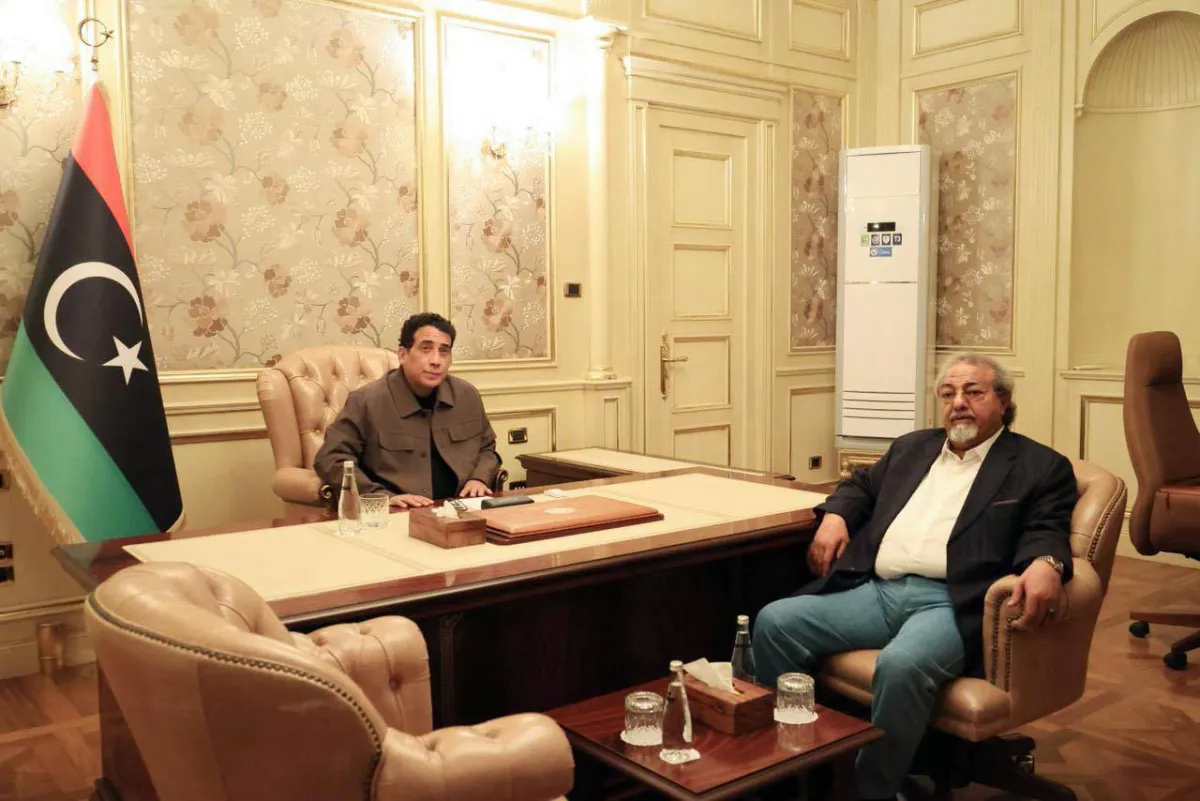
Mohamed Al-Menfi, the President of the Libyan Presidential Council, emphasized the importance of unifying the army and security forces as a fundamental step towards establishing the rule of law and achieving societal peace, paving the way for elections in the country.
This statement came during a series of military and security meetings held by Al-Menfi in the capital, Tripoli, where he stressed the necessity of concerted efforts among all security and military entities, and working with a spirit of national responsibility to solidify the foundations of security and stability.
Details of the Meetings
During these meetings, updates on the security and military situations in various western regions and cities were discussed, in addition to assessing the level of readiness and discipline among the relevant agencies. Reports concerning the progress of security operations and the existing coordination between military units and security agencies were also reviewed.
Al-Menfi, who is considered the supreme commander of the Libyan army, affirmed that establishing the rule of law is the cornerstone for building the state, pointing out the importance of enhancing the joint work system, which boosts citizens' trust in state institutions and prepares a suitable climate for comprehensive stability.
Context and Background
These statements come at a sensitive time for Libya, which has been suffering from political and military division since the overthrow of Muammar Gaddafi's regime in 2011. This division has led to chaos, negatively impacting security and stability in the country. In this context, unifying the army and security forces is considered a vital step towards regaining control over the security situation.
On the other hand, the Prime Minister of the interim unity government, Abdul Hamid Dbeibeh, resumed his work in Tripoli after a period of absence due to medical treatment. He held a meeting with the head of the Administrative Control Authority, Abdullah Qaderboh, to discuss the stages of implementing the national strategy for performance monitoring and combating corruption.
Implications and Effects
Unifying the army and security forces in Libya could contribute to improving security conditions and enhance the chances of holding elections, which is a fundamental demand of the Libyan people. If these efforts succeed, Libyans may regain trust in state institutions, contributing to the desired stability.
However, challenges remain, as it requires concerted efforts from all concerned parties, including the international community, to ensure these goals are achieved. Additionally, coordination between the government and the national army will significantly impact the course of events in the country.
Impact on the Arab Region
Libya is a pivotal point in North Africa, and any progress in unifying the army and security forces could positively affect the stability of neighboring countries. Given the security challenges facing the region, Libya's success in achieving stability could serve as a model for other countries suffering from internal conflicts.
In conclusion, unifying the army and security forces in Libya remains a crucial step towards achieving stability, but it requires continuous efforts and effective cooperation among all concerned parties.