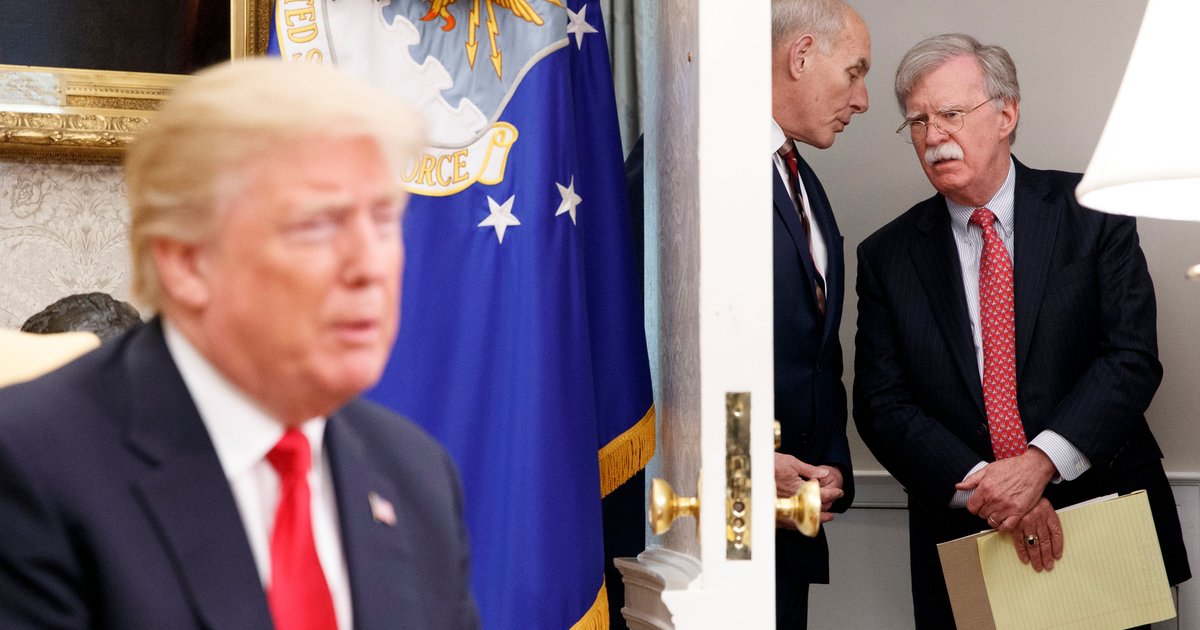
John Bolton, former U.S. National Security Advisor, stated that the United States will seek to activate the role of mediators in negotiations related to the conflict in Iran. These remarks come at a time when the region is experiencing increasing tensions, as Washington aims to enhance stability and reduce the intensity of the conflict.
This step is part of a broader U.S. strategy aimed at rebuilding relationships with its allies in the region and enhancing cooperation to face common security challenges. Bolton indicated that the United States hopes to use its diplomatic influence to facilitate dialogue among the involved parties.
Details of the Event
Bolton's statements coincide with rising tensions between Iran and the United States, as relations between the two countries have significantly deteriorated since Washington's withdrawal from the Iranian nuclear deal in 2018. Since then, the United States has imposed strict economic sanctions on Tehran, exacerbating the economic and social conditions in the country.
In this context, Bolton seeks to emphasize the importance of international mediation, stating that dialogue is the only way to resolve disputes. He expressed optimism about the possibility of making progress in negotiations if the role of mediators is activated effectively.
Background & Context
Historically, the United States has played a pivotal role in issues related to the Middle East, striving to achieve stability in the region by supporting its allies. However, the increasing tensions with Iran have led to a reassessment of this strategy.
Iran is considered one of the key countries in the region, with significant influence over many regional conflicts. Therefore, any diplomatic efforts aimed at resolving disputes in the region must take into account Iran's role and its impact on events.
Impact & Consequences
If the United States succeeds in activating the role of mediators, it could lead to a reduction in tensions in the region and open new avenues for dialogue. This could also contribute to improving relations between Iran and Western countries, positively reflecting on the economic and social situation in Iran.
However, challenges remain, as there are opposing forces within Iran that may resist any rapprochement with the United States. Thus, the success of these efforts depends on the ability of the involved parties to overcome political and cultural obstacles.
Regional Significance
The Arab region is an integral part of the Iranian-American conflict, as any developments in this context could directly affect Arab countries. If progress is made in negotiations, it could lead to reduced tensions in areas such as Iraq, Syria, and Lebanon, where Iranian influence is significant.
Conversely, some Arab countries may feel concerned about any rapprochement between the United States and Iran, as these countries view Iran as a threat to their national security. Therefore, balancing regional relations will be crucial in the upcoming phase.
In conclusion, the United States' efforts to activate the role of mediators in Iran negotiations represent an important step towards achieving stability in the region. However, success in these endeavors requires cooperation from all involved parties and overcoming existing political obstacles.