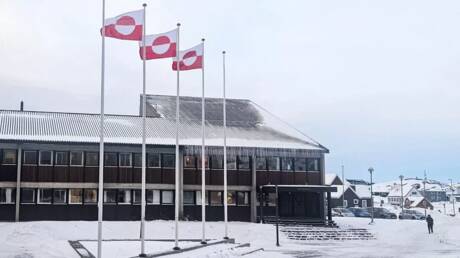
A report by the 'New York Times' reveals that the White House is coordinating with Greenland and NATO to draft a new agreement, expected to have remarkable implications for U.S. interests in the region. This move comes at a time when accusations of covert influence campaigns aimed at bolstering American control in the Arctic are on the rise.
The United States is seeking to enhance its presence in Greenland, which is considered a strategic point in the Arctic, where competition among major powers is intensifying. The potential agreement may encompass multiple areas, including security and defense, reflecting Washington's growing interest in securing its interests in the region.
Details of the Agreement
According to reports from the newspaper, negotiations between the White House, Greenland, and NATO include provisions related to enhancing military cooperation and intelligence sharing. This agreement is believed to strengthen the United States' ability to confront increasing security challenges in the region, especially with the rise of Russian military activities in the Arctic.
Reports also indicate that this step is part of a broader strategy aimed at enhancing American influence in strategic areas, as the Arctic is considered a region rich in natural resources, including oil and gas.
Background & Context
Historically, Greenland was part of Denmark but enjoys extensive self-governance. In recent years, the United States has increased its interest in Greenland, particularly after former President Donald Trump offered to buy the island, a proposal that was met with rejection from the Danish government.
The strategic importance of the Arctic is increasing due to climate change, as melting ice opens new shipping routes and enhances access to natural resources. This situation has made Greenland a focal point in the geopolitical struggle among major powers.
Impact & Consequences
If the agreement is reached, it could shift the balance of power in the region, as the United States would bolster its military and economic presence in Greenland. This could also lead to heightened tensions with Russia, which considers the Arctic part of its sphere of influence.
Furthermore, this agreement may affect relations between the United States and Denmark, as Washington will need Copenhagen's support to achieve its goals in Greenland. There are also concerns that this move could escalate regional disputes in the Arctic.
Regional Significance
Although Greenland is far from the Arab region, events in the Arctic could impact global security and stability, reflecting on Arab nations. Amid rising tensions between major powers, Arab countries may find themselves in a position that requires them to reassess their security and diplomatic strategies.
Additionally, increased interest in natural resources in the Arctic could affect global energy prices, which is significant for oil-producing Arab nations. In this context, Arab countries must closely monitor developments in the Arctic, as these events may open new avenues for cooperation or competition.