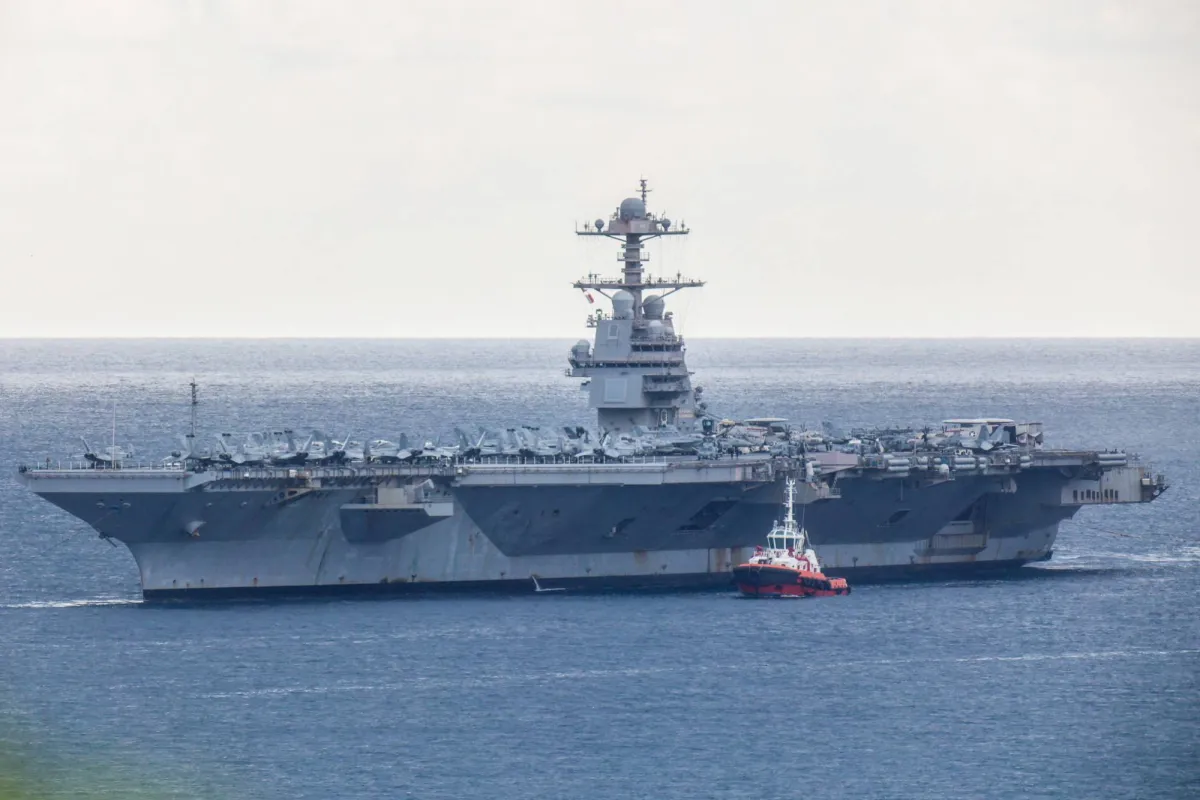
The U.S. aircraft carrier USS Gerald Ford, considered the largest in the world, has arrived at the port of Split in Croatia for maintenance work onboard. This visit follows its involvement in military operations in the Middle East, and the U.S. embassy in Croatia has confirmed that the visit was pre-scheduled.
The carrier, which was deployed in the Mediterranean Sea prior to the U.S.-Israeli attack on Iran on February 28, returned to a naval base on the island of Crete this week after a fire broke out onboard on March 12. The fire caused significant damage, destroying approximately 100 beds and leading to major issues with the toilet system, resulting in long lines at restrooms.
Details of the Incident
Journalists from the Associated Press witnessed the carrier's arrival at the port of Split on Saturday morning. The U.S. embassy statement confirmed that the visit aims to strengthen the strong and enduring alliance between the United States and Croatia, with officials expected to visit the carrier during its stay in port.
The United States had deployed both the Gerald Ford and the Abraham Lincoln carriers to the region before the attack on Iran, where the two ships played a role in military strikes. The Ford has spent about 9 months at sea, participating in U.S. operations in the Caribbean, including strikes against suspicious drug smuggling boats and intercepting oil tankers under sanctions.
Background & Context
The USS Gerald Ford is part of the U.S. military strategy in the region, representing a deterrent force against potential threats from countries like Iran. The fire that broke out onboard presents a challenge to its operations and reflects the risks faced by U.S. naval forces while conducting missions in conflict zones.
Historically, U.S. carriers have played a pivotal role in military operations, serving as launch platforms for military aircraft and providing logistical support. However, incidents like the recent fire raise questions about the readiness of these ships and their ability to meet challenges in complex environments.
Impact & Consequences
These events come at a sensitive time for the United States, which is witnessing widespread protests against President Donald Trump regarding his military and economic policies. The protests reflect a sharp division in American society, with growing concerns about involvement in new wars in the Middle East.
Criticism directed at Trump relates to escalating tensions with Iran, with many Americans believing that war is not a solution and could exacerbate economic and social conditions in the country. These political dimensions reflect the impact of military operations on domestic U.S. affairs, complicating the political landscape further.
Regional Significance
Events surrounding the Gerald Ford aircraft carrier have implications for the Arab region, reflecting military tensions between the United States and Iran. These tensions could lead to escalated conflicts in the Middle East, affecting the stability of Arab nations and intensifying existing conflicts.
In light of these circumstances, Arab countries remain on alert, as their domestic and foreign policies are influenced by military developments in the region. Additionally, regional and international alliances may shift based on how the situation in the Middle East evolves, necessitating strategic positions from Arab nations to address upcoming challenges.