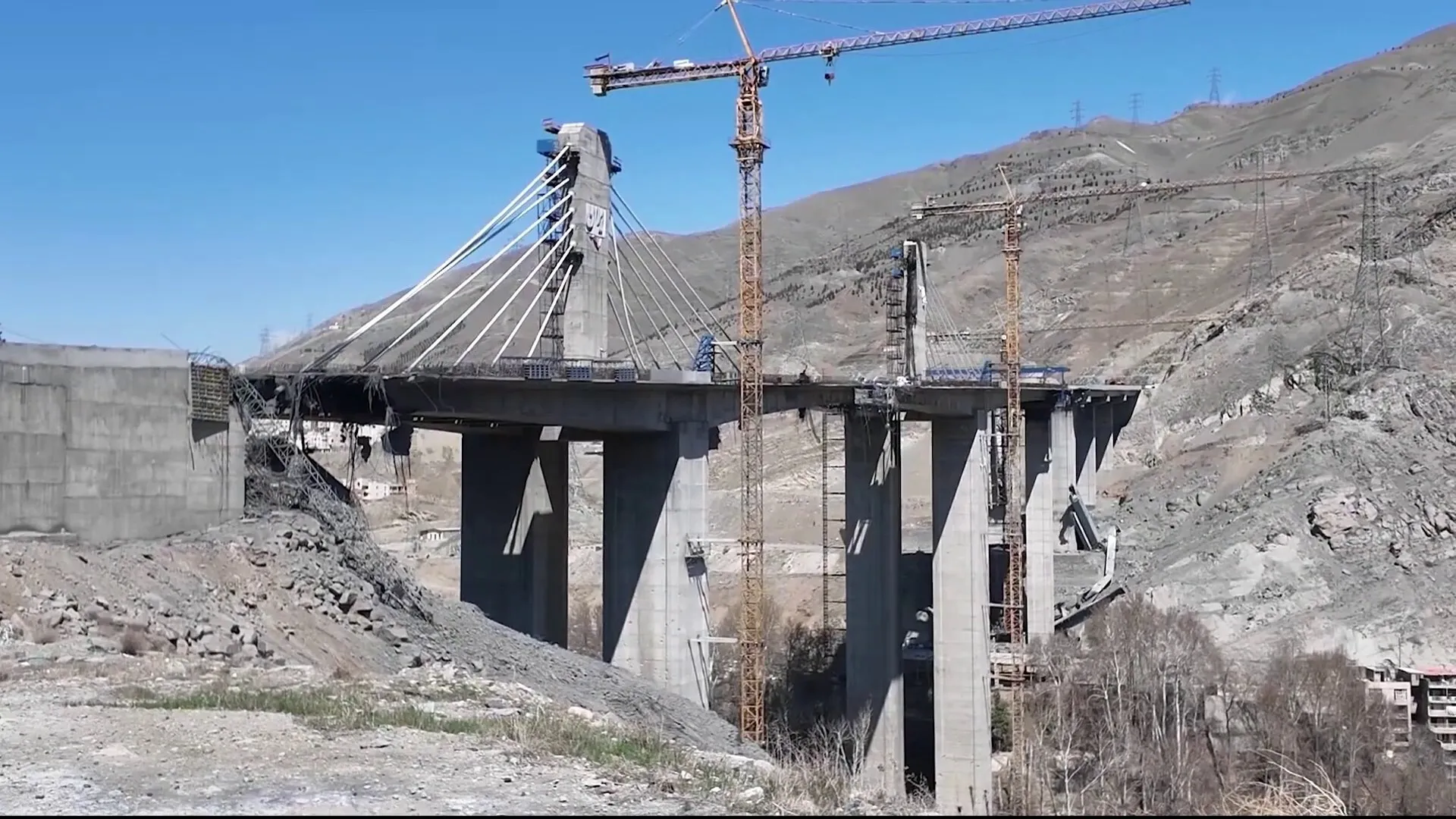
Two U.S. airstrikes have caused extensive damage to the 'B1' bridge in the city of Karaj, west of Iran's capital Tehran, leading to numerous civilian casualties. The attacks, which occurred on the same day, resulted in the deaths of 8 people and injuries to approximately 100 others, highlighting the scale of human losses among civilians.
The bridge, which was considered a strategic project nearing completion, was scheduled to open in June. It was designed to be one of the largest and tallest bridges in Iran, connecting Karaj to the capital Tehran. However, the U.S. airstrikes have turned the construction site into a scene of devastation, with heavy machinery and cranes halted amidst the rubble, indicating a sudden stop to the project.
Details of the Incident
According to Al Jazeera reporter Amer Lafi, the bridge was targeted twice on the same day, increasing the number of casualties. The second attack occurred while civil defense teams were on-site, which further raised the number of injuries and sparked widespread criticism regarding the targeting of civilians.
One of the officials overseeing the project confirmed that the bridge had no military significance, emphasizing that it was built with purely Iranian expertise. He explained that targeting it reflects discomfort with Iran's ability to execute advanced infrastructure projects, asserting that work will resume to rebuild the bridge despite the damage it has sustained.
Background & Context
These airstrikes come at a sensitive time, as tensions between Iran and the United States are escalating. Tehran condemned the attack, describing it as a moral collapse that reflects confusion on the part of the attacking side. Iranian Foreign Minister Abbas Araghchi stated that such strikes would not lead to the surrender of Iranians but would strengthen their resolve to rebuild what has been destroyed in a more resilient manner.
Data from the Iranian Red Crescent indicates that approximately 120,000 residential and commercial units have been targeted since the beginning of the war, reflecting the extensive damage inflicted on the country's civilian infrastructure.
Impact & Consequences
These airstrikes raise questions about the U.S. strategy in the region, especially amid growing international criticism regarding the targeting of civilian objects. The attack reflects the increasing tensions between Iran and the United States and complicates the humanitarian situation in the region.
The U.S. airstrikes could exacerbate the humanitarian conditions, as civilians continue to suffer from the effects of the ongoing conflict. This incident serves as a renewed reminder to the international community of the necessity to protect civilians in armed conflicts.
Regional Significance
Developments in Iran have a direct impact on the situation in the Arab region, as these events raise concerns among many Arab countries closely monitoring the tensions between Iran and the United States. Additionally, targeting civilian objects may lead to increased tensions among various factions in the region.
In conclusion, these U.S. airstrikes underscore the urgent need for dialogue and negotiation to resolve conflicts in the region and avoid escalation that could lead to further suffering for civilians.