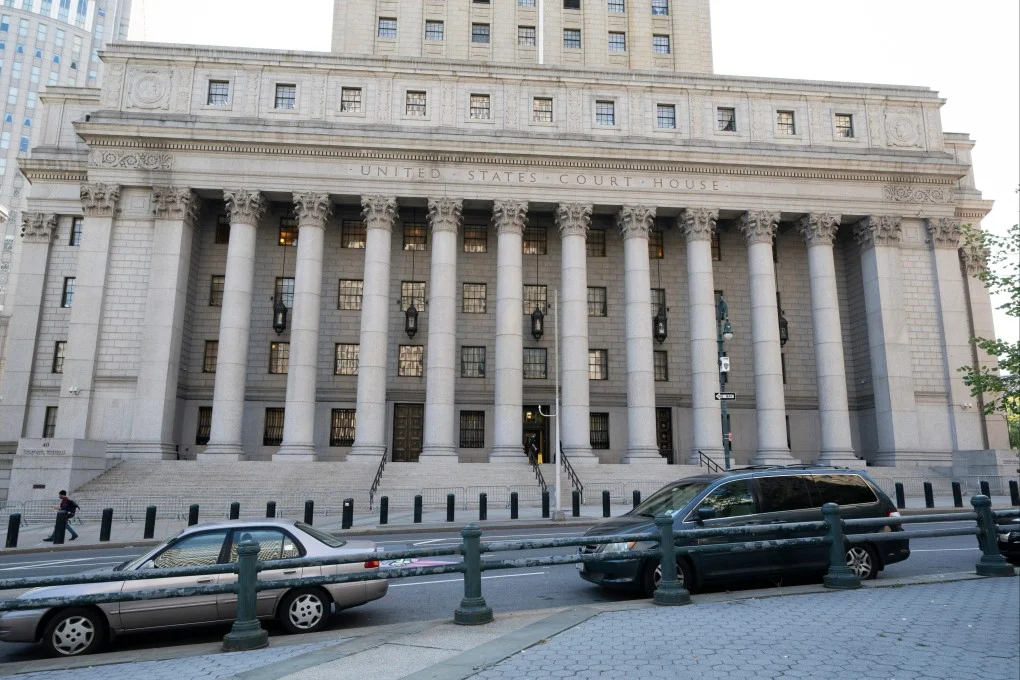
A U.S. appeals court in the Second Circuit has reinstated a previous judgment of $656 million against the Palestinian Authority and the Palestine Liberation Organization. This ruling follows a decision by the U.S. Supreme Court that favored families of Americans who were killed or injured in attacks that occurred within Israel. This decision marks a significant turn of events, coming a decade after a prior judgment against these entities was annulled, based on the premise that U.S. courts could not adjudicate lawsuits against foreign groups for attacks that took place outside the United States.
This case is considered one of the most controversial in the American legal landscape, raising questions about the ability of U.S. courts to hold foreign entities accountable for their actions abroad. The new ruling has elicited mixed reactions; some view it as a victory for justice, while others see it as a step that complicates relations between the United States and the Palestinian Authority.
Details of the Ruling
The reinstated judgment pertains to lawsuits filed by Americans who were victims of attacks in Israel. Evidence was presented indicating that the Palestine Liberation Organization and the Palestinian Authority were aware of these attacks or contributed to them in some manner. This case was brought before the court following a Supreme Court decision that allowed for the continuation of these lawsuits.
In recent years, relations between the United States and the Palestinian Authority have become increasingly strained, particularly following controversial political decisions made by the previous U.S. administration. This ruling may further complicate these relations and impact U.S. financial aid to the Palestinian Authority.
Background & Context
The roots of this case extend back many years into the Israeli-Palestinian conflict, which has seen numerous attacks resulting in the deaths and injuries of many civilians. In this context, the Palestine Liberation Organization and the Palestinian Authority are seen as part of the struggle, seeking to achieve Palestinian rights in the face of Israeli occupation.
Over the years, U.S. courts have taken varying stances on cases involving the Palestinian Authority, with many lawsuits concerning attacks that occurred in Israel being reviewed. However, the recent ruling reflects a shift in how U.S. courts are handling these cases, raising questions about the future of U.S.-Palestinian relations.
Impact & Consequences
This ruling could have far-reaching implications for U.S.-Palestinian relations. It may increase pressure on the Palestinian Authority from the United States and complicate the acquisition of financial aid. Additionally, it could affect the Palestinian Authority's position in political negotiations with Israel.
Moreover, this ruling may bolster hardline positions within Palestinian society, as it could be perceived as evidence of a lack of justice in the American legal system regarding the Palestinian cause. This could escalate tensions in the region and impact future peace efforts.
Regional Significance
This ruling is not merely a legal matter; it has political and social ramifications across the Arab region. It may influence the stance of Arab countries towards the Palestinian issue and strengthen their support for the Palestinian Authority in the face of U.S. pressures.
Furthermore, this ruling could provoke reactions in the Arab street, where it may be used as a tool to raise awareness about the Palestinian cause and increase popular support for Palestinian rights. In the current climate, this ruling serves as a reminder of the importance of Arab unity in confronting the challenges facing the Palestinian issue.
In conclusion, the new ruling against the Palestinian Authority and the Palestine Liberation Organization reflects the complexities of the Israeli-Palestinian conflict and increases the challenges faced by the Palestinian Authority in its pursuit of the rights of the Palestinian people. At the same time, this ruling opens the floor for further discussions on how the international community addresses issues related to the Middle East.