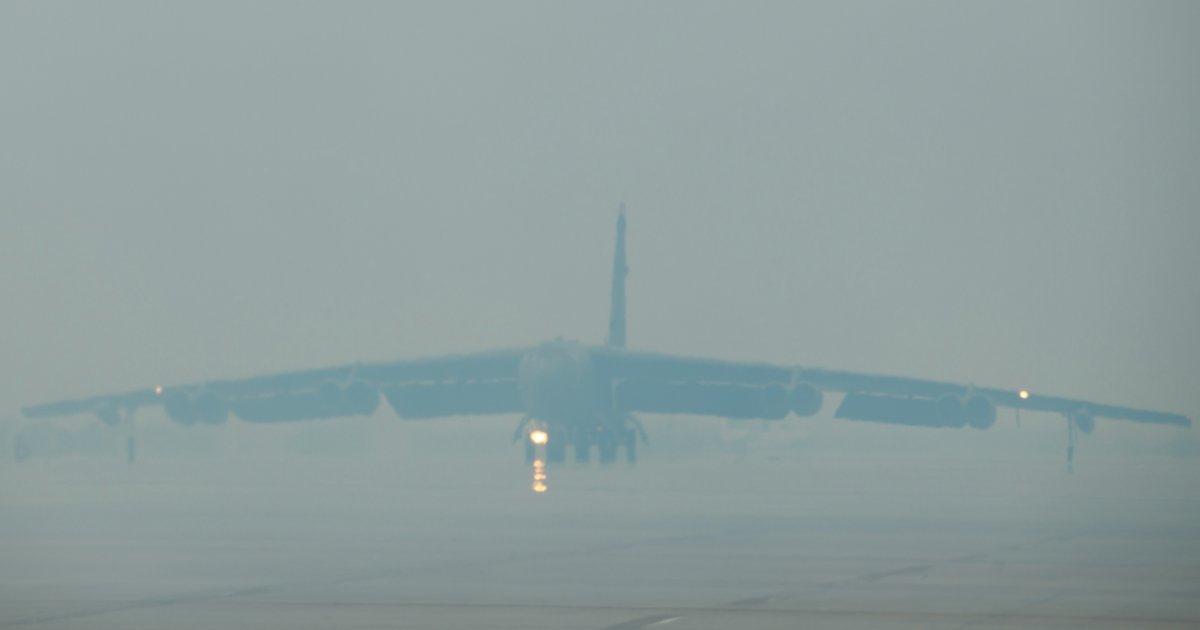
The U.S. Department of Defense (Pentagon) has announced that B-52 strategic bombers have begun their missions over Iranian airspace, marking the first time since the escalation of conflict in the region. This development comes as U.S. Defense Secretary Pete Hegseth confirmed that Iran still retains its missile launch capabilities, despite a full month having passed since the U.S. and Israeli military strikes.
This announcement highlights the escalating tensions in the Middle East, where fears of a larger military escalation that could impact regional stability are increasing. The decision has elicited mixed reactions in political and military circles, with some viewing it as a potential exacerbation of the situation, while others deem it necessary to deter Iran's destabilizing activities.
Details of the Event
The B-52 bombers are among the most prominent U.S. military aircraft, capable of conducting long-range strategic bombing operations. Their deployment in Iranian airspace is a controversial step, given their historical use in various previous conflicts. The U.S. Defense Secretary has stated that this move is part of a broader strategy to confront Iranian threats, which include its support for armed groups in the region.
Simultaneously, Iran continues to bolster its military capabilities, with reports indicating that it remains capable of launching long-range missiles, reflecting its ability to respond to any military escalation. This dynamic places the region in a state of ongoing tension, with fears of a comprehensive conflict on the rise.
Background & Context
Historically, U.S.-Iranian relations have been marked by increasing tensions since the Islamic Revolution in 1979, with the U.S. accusing Iran of supporting terrorism and developing a nuclear program. These tensions have led to a series of economic and military sanctions imposed by Washington on Tehran, significantly impacting the Iranian economy.
In recent years, these tensions have escalated further, particularly following the U.S. withdrawal from the nuclear agreement in 2018. Since then, the region has witnessed numerous military incidents, including attacks on Saudi oil facilities and assaults on commercial vessels in the Arabian Gulf.
Impact & Consequences
This step by the United States represents a significant escalation in the ongoing conflict and may provoke military responses from Iran. Should military escalation occur, it could further destabilize the region, affecting oil prices and global markets.
Moreover, this escalation could impact U.S. relations with its allies in the region, as some countries may find themselves in a difficult position between supporting the U.S. or maintaining their relations with Iran. This situation could lead to new divisions in regional alliances.
Regional Significance
Given the current situation, the rising tensions between the U.S. and Iran may have direct effects on neighboring Arab countries. Gulf states, for instance, may feel a greater threat from Iranian activities, prompting them to enhance their military capabilities and cooperate more closely with the U.S.
Furthermore, any military escalation could affect maritime navigation in the Arabian Gulf, which could negatively impact Arab economies reliant on oil. Under these circumstances, Arab countries must exercise caution in their dealings with this volatile situation.
In conclusion, the situation in the Middle East remains complex, with overlapping political and military interests. The escalation of tensions between the U.S. and Iran could have far-reaching implications for regional stability, necessitating all parties involved to work towards de-escalation and avoid military confrontation.