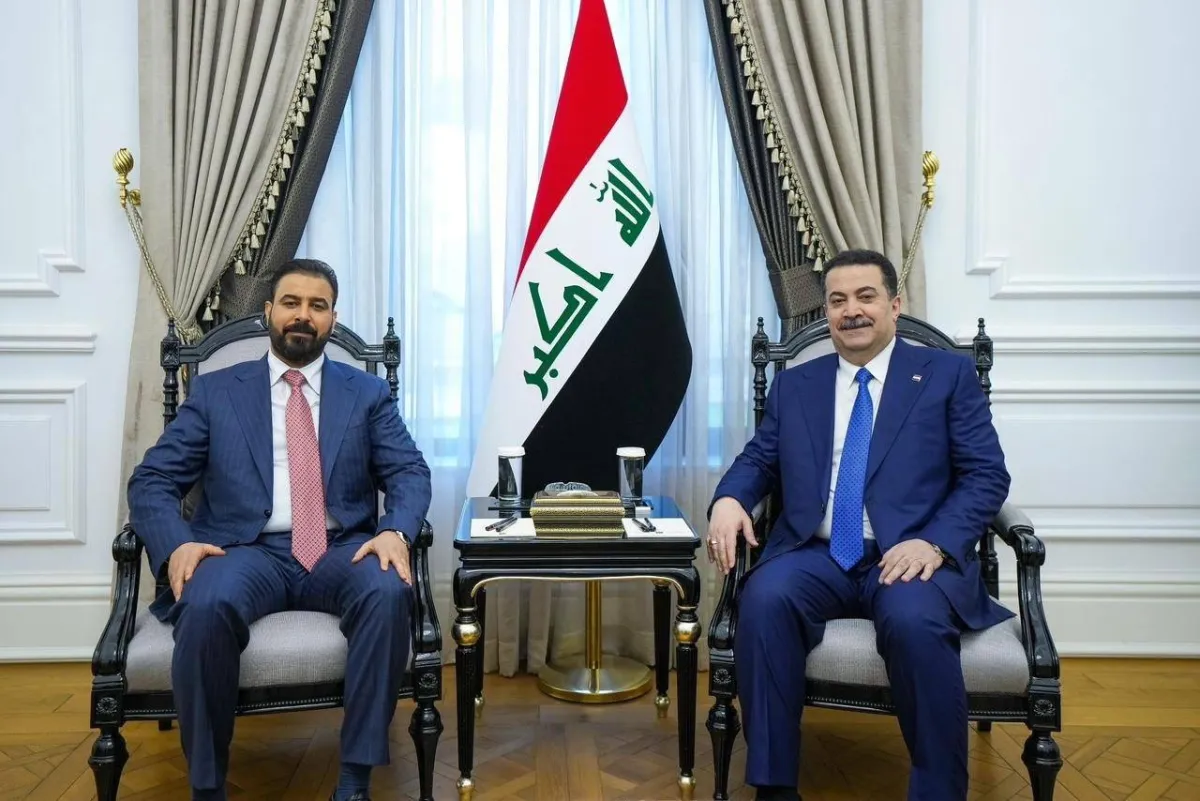
The United States has expressed its cautious support for Iraqi Prime Minister-designate Ali Al-Zaydi, as challenges related to forming his government continue to escalate, particularly regarding the influence of armed factions and U.S. sanctions imposed on individuals linked to them.
On Wednesday, the U.S. mission in Baghdad stated that it supports Al-Zaydi's efforts to form a "government capable of meeting the aspirations of all Iraqis," reaffirming its backing for objectives that include preserving sovereignty, enhancing security, combating terrorism, and building a stable economy.
Details of the Event
This U.S. stance comes after Al-Zaydi was nominated by the Shiite "Coordination Framework" following the withdrawal of both Mohammed Shia' al-Sudani and Nouri al-Maliki, effectively ending a political crisis that lasted nearly five months since the elections held in late 2025.
According to informed political sources, Al-Zaydi agreed to the nomination after setting conditions regarding the independence of the government formation, including limiting the participation of armed factions in the cabinet and granting him the freedom to choose his ministers without direct interference.
Context and Background
No public official confirmations have been issued from Al-Zaydi's office regarding these conditions, while the "Coordination Framework" announced that it has granted the Prime Minister-designate the space to choose his cabinet, emphasizing criteria of competence and integrity.
The role of armed factions represents a sensitive issue in Iraqi politics, especially as some of their leaders are linked to U.S. sanctions. The U.S. Treasury Department had announced financial rewards for information about faction leaders, such as Abu Hussein al-Hamidawi, leader of the "Hezbollah Brigades"; Abu Alaa al-Walai, leader of the "Sayyid al-Shuhada Brigades"; and Haider al-Gharawi, leader of "Ansar Allah al-Awfiya".
Impact and Consequences
Analysts say that this security context adds complexity to Al-Zaydi's mission, as he seeks to balance the demands of internal political forces with the requirements of the international community. The U.S. position reflects a "non-opposition stance while keeping the process under observation," according to political science professor Yasin al-Bakri.
For his part, Talib Mohammed Karim confirmed that U.S. support for Al-Zaydi "reflects increasing pragmatism," explaining that the acceptance criterion is now linked to the behavior of the upcoming government, not its leader's identity. This support is understood as conditional acceptance based on performance testing in regional balance and security cooperation issues.
Impact on the Arab Region
President Nizar Amadi Al-Zaydi has been officially tasked with forming the government after a prolonged stalemate in political consensus. Observers believe that his success will depend on his ability to manage a delicate balance between the influence of political forces, including armed factions, and the pressures of the international community, especially the U.S., at a time when Iraq faces ongoing security and economic challenges.
As consultations for forming the government begin, the issue of including or excluding factions, along with the implications of U.S. sanctions, remains one of the most prominent issues that could determine the shape of the upcoming government and the nature of its foreign relations.