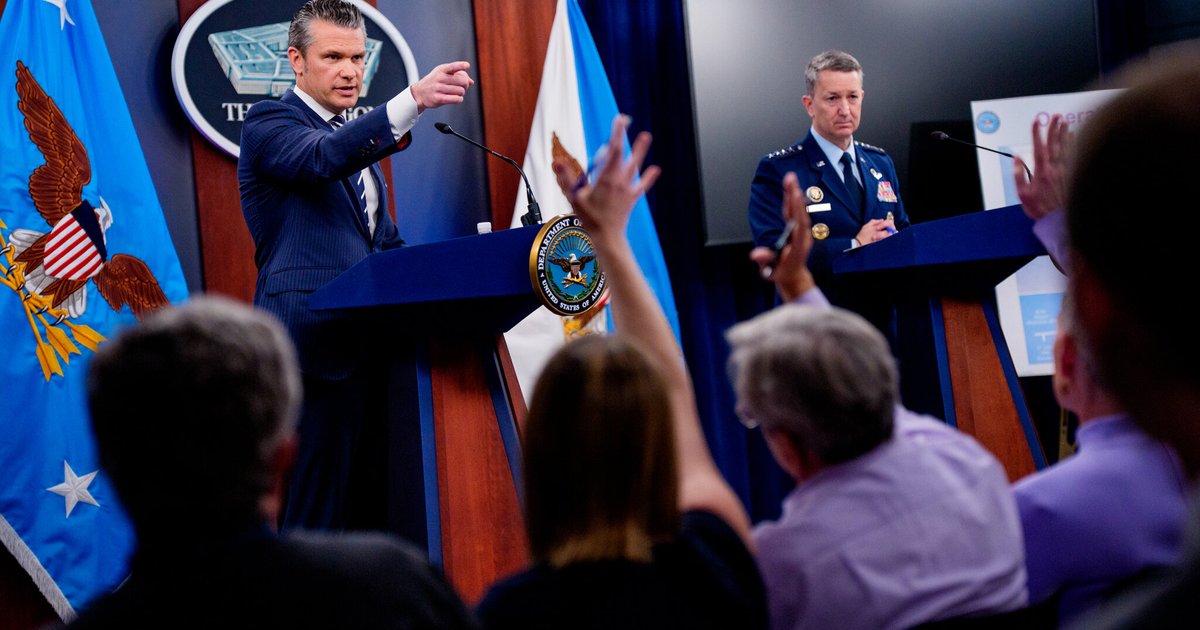
In a press statement, U.S. Defense Secretary Mark Esper confirmed that the morale of American soldiers deployed in the Middle East remains high, noting that these soldiers are striving to end the conflict with Iran for the sake of their children and grandchildren. Esper told reporters, "These soldiers want to end this fight for their children and grandchildren. This is about history, and it’s about legacy."
Esper also issued stern warnings to the Iranian government, which he referred to as the "new regime," indicating that the time has come to reach an agreement. He added, "If Iran is wise, it will come to a deal," emphasizing that President Donald Trump "is not joking."
Details of the Statement
Esper's remarks come at a sensitive time as tensions escalate between the United States and Iran. He indicated that talks with Iran are "active" and "gaining momentum," but added that the U.S. will continue to use military force as leverage during negotiations. This statement reflects the American strategy that relies on military threats as a means to influence Iran's behavior in the region.
Esper also affirmed that American soldiers feel a responsibility toward future generations, reflecting their deep commitment to their mission in the Middle East. This statement serves as a call for the United States to adopt a more cautious policy toward Iran, especially amid the tense conditions in the region.
Background & Context
Historically, U.S.-Iranian relations have seen increasing tensions since the Islamic Revolution in Iran in 1979. These tensions have led to multiple conflicts, including wars in Iraq and Syria, where Iran has played a pivotal role in supporting armed groups. In recent years, the United States has increased its military presence in the Middle East as part of its strategy to counter Iranian influence.
In 2018, President Trump withdrew from the nuclear deal with Iran, escalating tensions further. Since then, the U.S. has imposed stringent economic sanctions on Iran, significantly impacting its economy. Nevertheless, Iran continues to seek to bolster its influence in the region, complicating the situation even more.
Impact & Consequences
Esper's statements are indicative of the current U.S. strategy toward Iran, which relies on military threats as a negotiating tactic. This approach could lead to an escalation of tensions in the region, as Iran may respond to these threats by increasing its military activities. Furthermore, the continuation of these policies could affect the stability of the entire region, raising the likelihood of new conflicts.
Moreover, the rising morale of American soldiers may signal a greater willingness on the part of the U.S. to conduct military operations in the region, potentially escalating the conflict. At the same time, military pressure could push Iran to negotiate, but this depends on how the Iranian government responds to these threats.
Regional Significance
The tensions between the United States and Iran directly impact Arab countries, especially those suffering from internal conflicts or tensions with Iran. Countries like Iraq, Syria, and Lebanon are significantly affected by U.S. and Iranian policies. Any escalation in the conflict could have negative repercussions on security and stability in the region, increasing the suffering of the people.
In conclusion, the situation in the Middle East remains complex, with political and military interests overlapping. It is crucial for Arab countries to closely monitor these developments and work to enhance their internal stability to face any potential repercussions.