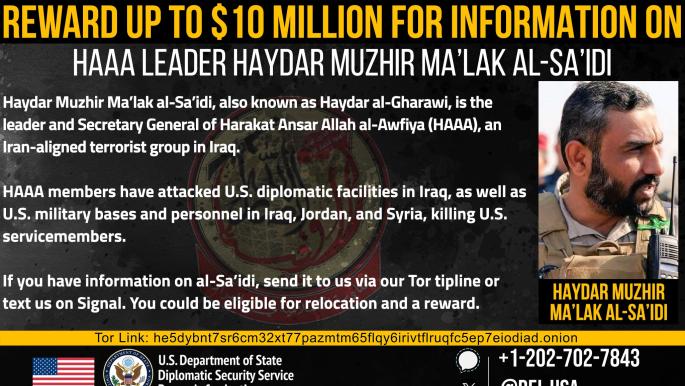
Haidar Al-Gharawi has become a prominent figure in the Iraqi landscape, classified as one of the leaders sought by the United States. Al-Gharawi is recognized as a leader of Iraqi factions that Washington lists as terrorist organizations, highlighting the security and political challenges currently facing Iraq.
Concerns are growing over the rise of terrorist activities in Iraq, where armed factions intertwine with tense political situations. Al-Gharawi is part of this complex scenario, as Iraq grapples with multiple challenges related to internal security and stability.
Details of the Event
Haidar Al-Gharawi is one of the military leaders associated with numerous armed operations in Iraq. His designation as a terrorist leader by the United States reflects international concerns about the influence of armed factions on regional security. This classification indicates that Al-Gharawi plays a significant role in the internal conflicts plaguing Iraq, complicating the Iraqi government's efforts to achieve stability.
The armed factions in Iraq are part of the social and political fabric, with their interests overlapping with regional and international agendas. Al-Gharawi's classification as a terrorist may have repercussions on the relations between Iraq and the United States, in addition to impacting the internal security situation.
Background & Context
Since 2003, Iraq has witnessed radical changes in its political and security structure, with invasions and wars leading to the emergence of multiple armed factions. In recent years, the intensity of conflicts among these factions has escalated, exacerbating security conditions. Al-Gharawi, as one of the prominent leaders, represents a part of this ongoing struggle.
Historically, the armed factions in Iraq have been linked to many political events, playing a significant role in resisting the American occupation, but they now pose a major challenge to the Iraqi government. Al-Gharawi's designation as a terrorist reflects the complexity of these dynamics.
Impact & Consequences
The designation of Haidar Al-Gharawi as a terrorist may increase pressure on the Iraqi government, as it will face greater challenges in dealing with armed factions. This classification could also affect international support for Iraq, as concerns about instability will likely rise.
Moreover, this designation may lead to an escalation of military operations against armed factions, increasing the likelihood of new conflicts in the country. The current situation requires an effective governmental response to address these challenges.
Regional Significance
The case of Haidar Al-Gharawi exemplifies the challenges faced by Arab countries in confronting armed factions. The rising tensions in Iraq may impact stability in neighboring countries, as security crises can spill over borders.
The current conditions in Iraq require greater international attention, as stability in Iraq is vital for regional security. Arab countries must cooperate to face the common challenges posed by armed factions.
In conclusion, Haidar Al-Gharawi remains a symbol of the ongoing conflict in Iraq, as his status as a wanted leader by the United States reflects the significant challenges the country faces in its pursuit of stability.