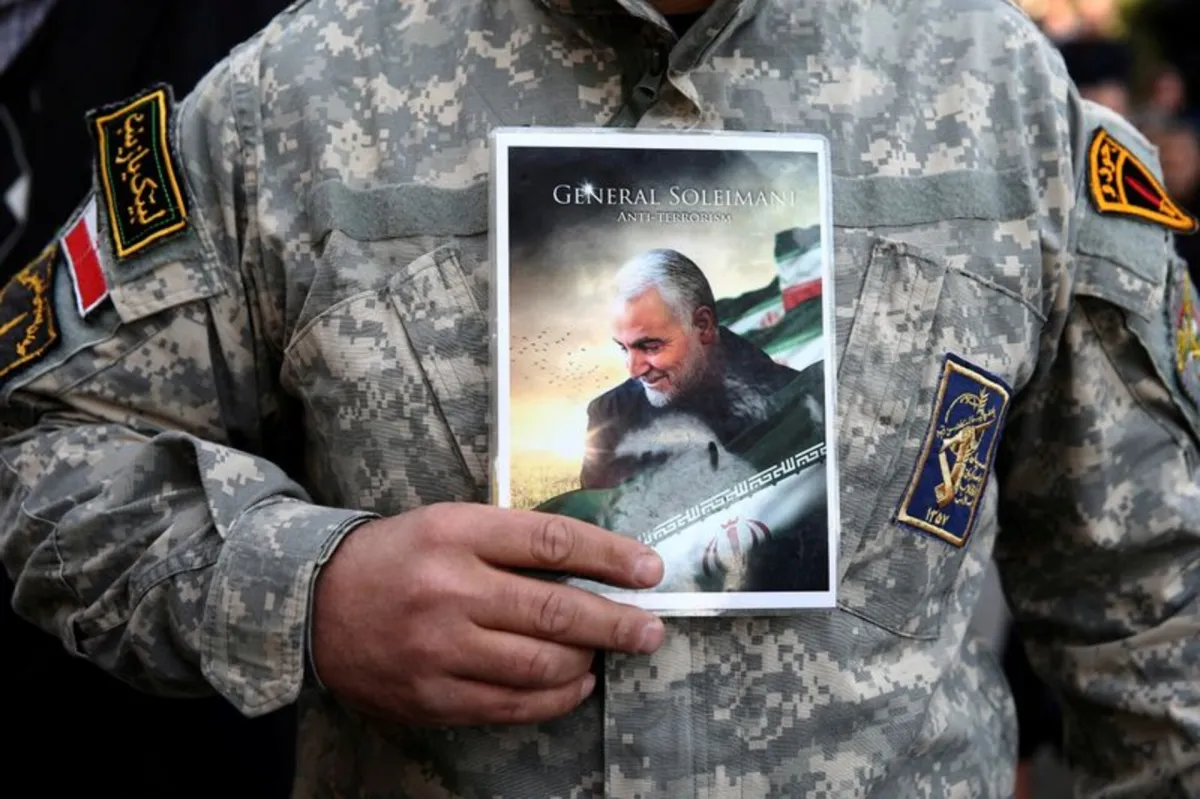
The U.S. State Department announced on Saturday the detention of two relatives of the former commander of the Iranian Quds Force, Qassem Soleimani, who was killed in a U.S. airstrike in Iraq in 2020. This detention came after Secretary of State Marco Rubio revoked their residency.
According to a statement from the department, federal agents detained the relatives, one of whom was identified as Hamida Soleimani Afshar, who was accused of publicly supporting Iran. This action is part of the U.S. administration's hardline policy towards individuals linked to the Iranian regime, especially following the death of Soleimani, who was considered one of Iran's most prominent military leaders.
Details of the Incident
This step comes at a time when tensions between the United States and Iran are escalating, as the U.S. administration seeks to take stringent actions against individuals it deems connected to the Iranian regime. The relatives were detained at a sensitive time, as relations between the two countries are increasingly strained, particularly with Iran continuing to develop its nuclear program.
This action is seen as part of a broader strategy aimed at undermining Iran's influence in the region, as the United States seeks to bolster the security of its allies in the Middle East, including Israel and Gulf states. The detention of the relatives has elicited mixed reactions in U.S. political circles, with some viewing these measures as a reflection of the U.S. administration's commitment to countering Iranian activities, while others argue that it could lead to heightened tensions.
Background & Context
Qassem Soleimani, who was killed in January 2020, served as the commander of the Quds Force in the Iranian Revolutionary Guard, which is the military arm of the Iranian regime. Soleimani was responsible for Iranian military operations abroad, including support for armed groups in Iraq, Syria, and Lebanon. The United States considered Soleimani a threat to national security, leading to the decision to assassinate him.
Following his death, relations between the United States and Iran deteriorated significantly, as Iran retaliated against his assassination with revenge operations, including attacks on U.S. forces in Iraq. Since then, the U.S. administration has taken a series of actions against individuals and entities linked to the Iranian regime, including the imposition of economic sanctions.
Impact & Consequences
The detention of the relatives could have repercussions for U.S.-Iranian relations, potentially escalating tensions between the two countries. Iran is expected to respond to this action, which may intensify the conflict in the region. Additionally, these measures could affect negotiations regarding the Iranian nuclear program, as the United States seeks to pressure Iran to comply with international demands.
Moreover, this step may strengthen the position of hardliners in Iran, who view the United States as seeking to undermine the Iranian regime. This could lead to increased popular support for the regime, complicating U.S. efforts to achieve its objectives in the region.
Regional Significance
These developments are particularly significant for the Arab region, where Iran plays a pivotal role in many regional conflicts. The escalation of tensions between the United States and Iran may impact security and stability in countries such as Iraq, Syria, and Lebanon, where Iranian-backed armed groups are present.
Furthermore, these events could affect relations between Arab countries and Iran, as some nations seek to strengthen their alliances with the United States to counter Iranian influence. At the same time, these developments may increase divisions within the region, complicating efforts to achieve peace and stability.
In conclusion, the detention of the relatives of the late Quds Force leader Qassem Soleimani reflects the ongoing tensions between the United States and Iran and indicates that the conflict between the two countries remains far from resolution, placing the Arab region in a state of uncertainty.