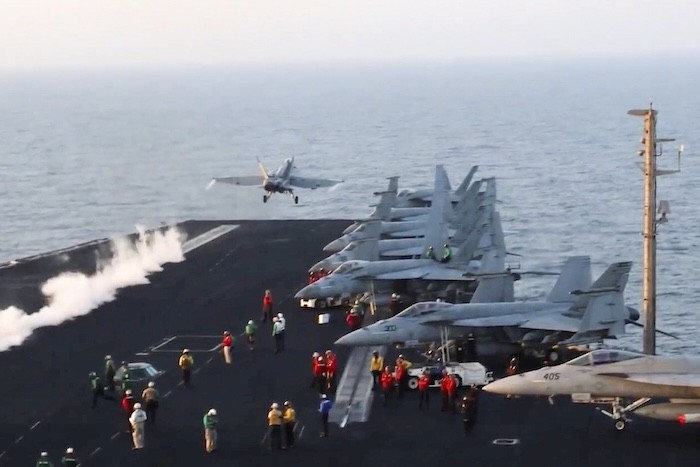
The U.S. warship Tripoli (Libya), carrying Marine forces, has reached the Middle East, yet it has not approached the Arabian Gulf or the Strait of Hormuz. This situation raises questions about how these forces might cross the strait given the escalating tensions in the area.
Field data indicates that the positioning of Tripoli near the aircraft carrier Abraham Lincoln may have strategic implications, as the primary objective is believed to be the protection of Bab el-Mandeb and compensating for the shortfall of U.S. forces in the region.
Details of the Event
The Tripoli, regarded as one of the modern warships, has arrived in the operational area of the Middle East as part of bolstering the U.S. military presence. However, its failure to approach the Strait of Hormuz reflects the challenges faced by U.S. forces in this context, as the strait is a vital point for oil transport and global trade.
The tensions in the region, particularly between the United States and Iran, complicate U.S. forces' ability to take bold steps to cross the strait. This situation highlights the strategic challenges the United States faces in maintaining maritime security in this sensitive area.
Background & Context
The Strait of Hormuz is one of the most important maritime passages in the world, through which approximately 20% of the world's total oil passes. Historically, the strait has witnessed numerous crises and tensions, especially in U.S.-Iran relations. In recent years, tensions have notably escalated, making the crossing of U.S. forces through the strait a sensitive and complex issue.
These developments come at a time when the United States is seeking to enhance its military presence in the region, particularly after its withdrawal from Afghanistan. However, the challenges it faces in the Strait of Hormuz may reflect the difficulty in achieving its strategic objectives in the Middle East.
Impact & Consequences
If U.S. forces manage to cross the Strait of Hormuz, it could lead to a shift in the balance of power in the region. Conversely, if they are unable to do so, it may strengthen Iran's position and increase tensions in the area. Additionally, any escalation in the situation could impact oil prices and global markets.
The potential consequences also include effects on U.S. relations with its allies in the region, as an inability to cross the strait may be seen as a sign of weakness in U.S. military presence in the Middle East.
Regional Significance
Developments in the Strait of Hormuz directly affect Arab countries, especially those that rely on oil as a primary source of revenue. Any escalation in tensions could lead to rising oil prices, impacting Arab economies and increasing economic pressures.
Furthermore, the security situation in the region may affect trade and tourism movements, increasing the challenges faced by Arab countries in achieving stability and development.
In conclusion, the issue of U.S. forces crossing the Strait of Hormuz remains open to many possibilities, necessitating close monitoring by stakeholders in the region.