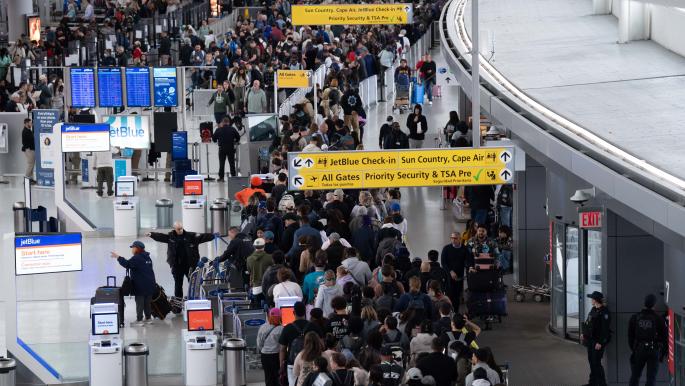
U.S. Immigration Police will deploy personnel at airports starting Monday, according to Tom Homan, immigration advisor to President Donald Trump. This decision is part of the current administration's strategy to enhance the security of American borders and monitor the flow of migrants.
This initiative follows reports of a notable increase in the number of undocumented immigrants in recent times. In this context, Homan stated, "Our teams will ensure that immigration practices comply with existing laws while protecting border security."
Details of the Deployment
The new deployment of immigration officials will target various areas, with major airports such as Los Angeles International Airport and John F. Kennedy Airport in New York expected to be included. This measure aims to enable immigration officers to conduct necessary checks and verify the status of travelers who may potentially be undocumented immigrants.
This step is part of a series of strict policies implemented by the Trump administration since it took power in 2017, where more stringent measures in dealing with immigrants have been enacted. Previous administrations had followed more lenient policies, which sparked broad debate among supporters and opponents of these measures.
Background & Context
Historically, immigration policy in the United States has been a controversial topic, with debates surrounding the desire to maintain national security versus the human rights of migrants. The United States is among the countries receiving a large number of migrants from various nationalities, and its immigration policy has faced criticism for violating migrants' rights, both from human rights organizations and some members of Congress.
This security deployment comes at a time when the world is experiencing an increasing crisis with migration resulting from economic and political conflicts in many countries, posing challenges for governments to manage both humanitarian and security issues.
Impact & Consequences
The decision to deploy security personnel at airports may have wide-ranging effects on how the United States handles the issue of immigration. This measure could increase tensions between the administration and some immigrant communities, potentially deepening social divisions and affecting relations between America and other countries.
Moreover, this decision may lead some migrants to avoid traveling to the United States or seek alternative means of entry, impacting the economy and tourism. At the same time, while this measure may deter some from considering illegal immigration to America, it could also exacerbate the humanitarian conditions for migrants.
Regional Significance
For Arab countries, this action represents part of the international trends currently seen in immigration policies, especially amidst the multiple crises facing the region. Traditional destinations for Arab migrants, such as the United States, may experience notable changes in reception conditions, prompting individuals to consider new options.
This trend may increase challenges for Arab governments in dealing with return migrants or those seeking new havens, as effective strategies are required to provide an environment conducive to coexistence and integration. Thus, this event reflects the complexity of immigration issues in our modern era.
In conclusion, this security move marks a significant shift in the United States' perspective on immigration, which could reshape the relationship between Americans and migrants in the years to come.