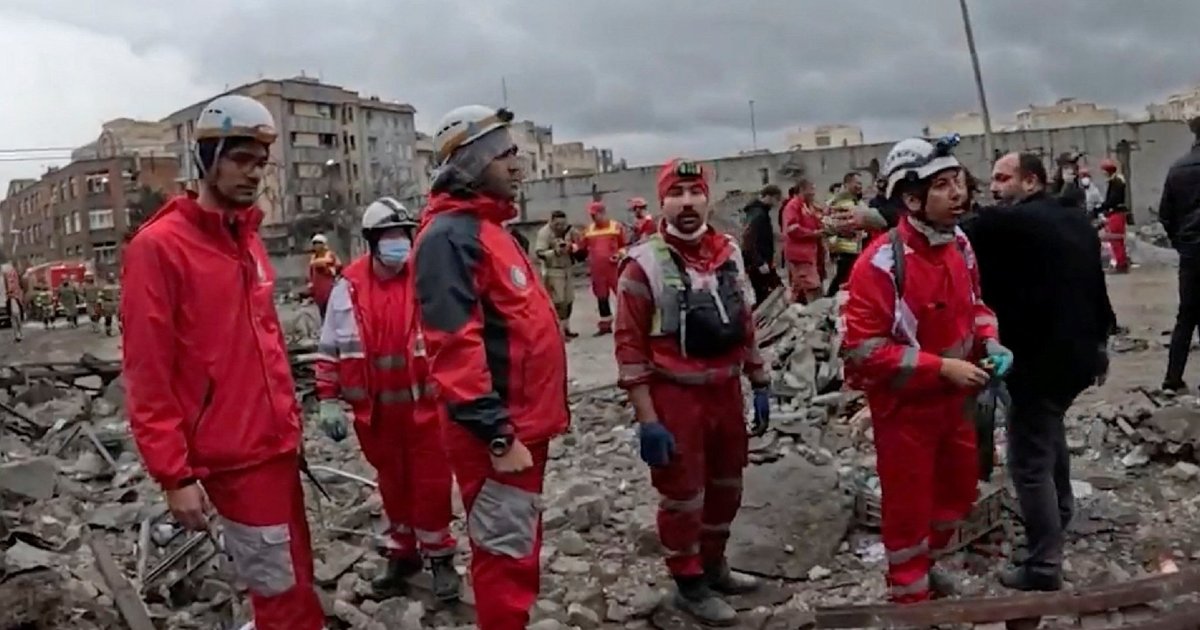
The Iranian Red Crescent announced that airstrikes conducted by the United States and Israel targeted several areas in Iran, including industrial facilities and residential complexes. The strikes, which occurred earlier this week, hit strategic sites such as a steel factory in Isfahan and Shahid Haghani Port in Bandar Abbas, as well as facilities in Bushehr Province and other regions.
The organization stated in a post on the platform "X" that these sites are considered civilian in nature and described them as prohibited targets under international humanitarian law. However, the organization did not provide details regarding the number of casualties or the damage inflicted on the targeted sites.
Details of the Incident
These airstrikes come at a sensitive time, as the region is witnessing increasing tensions between Iran and both the United States and Israel. Previous reports confirmed that a separate strike targeted another steel facility near Isfahan, raising questions about the true objectives of these attacks.
It is noteworthy that these strikes are part of an ongoing escalation between Iran and the West, with Tehran accusing the U.S. and Israel of attempting to undermine its stability. Iran has condemned these attacks, considering them a blatant violation of international laws.
Background & Context
Historically, relations between Iran and the West have been fraught with increasing tensions since the Islamic Revolution in 1979. These tensions have led to economic sanctions imposed on Iran, significantly impacting its economy. In recent years, these tensions have intensified with the rise of Israeli military activities in the region, as Israel targets what it perceives as threats from Iran and its allies.
The recent airstrikes also occur in the context of escalating disputes over Iran's nuclear program, as Western nations seek to prevent Iran from developing nuclear weapons. These dynamics have led to increased military provocations, threatening regional stability.
Impact & Consequences
Analyses suggest that these airstrikes could lead to greater escalation in tensions between Iran and the West, increasing the likelihood of military conflict. Additionally, targeting civilian facilities may provoke strong international reactions, as international law considers such actions a violation of human rights.
Moreover, these events could impact global markets, particularly in the energy sector, as Iran is one of the largest oil producers in the world. Any escalation in the conflict could lead to fluctuations in oil prices, affecting the global economy.
Regional Significance
The recent developments in Iran are of significant importance to Arab countries, as any escalation in the conflict could impact regional security. Many Arab nations, especially those sharing borders with Iran, are closely monitoring the situation, as any escalation could lead to undesirable repercussions in the region.
These events also highlight the need for comprehensive dialogue among all concerned parties, as military solutions will only exacerbate the situation. It is crucial for Arab nations to adopt a unified stance calling for peace and stability in the region.