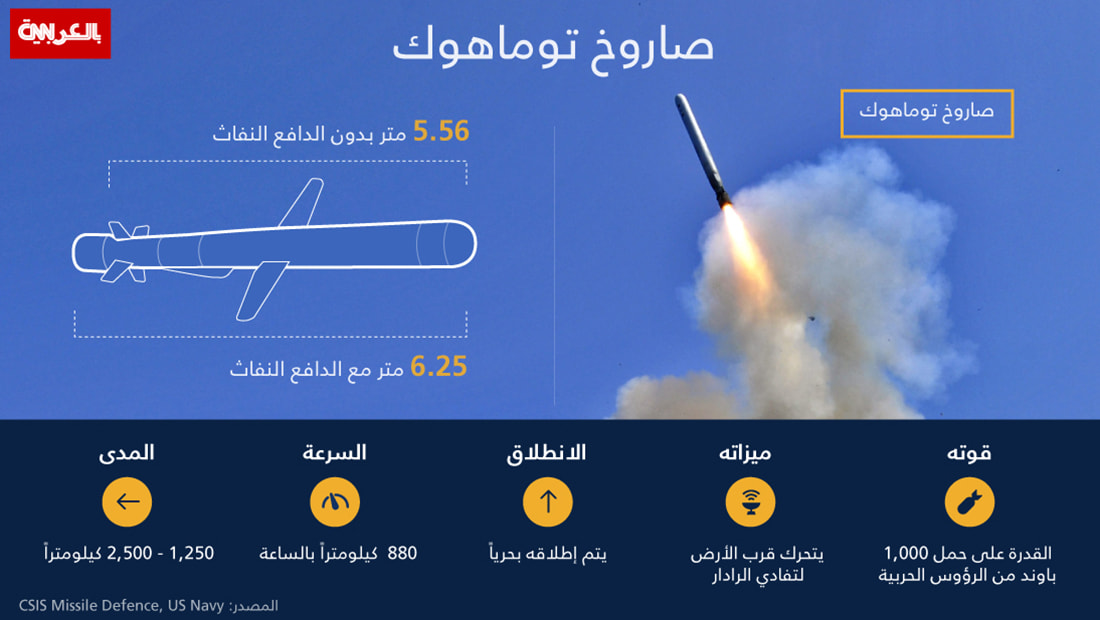
A report from The Washington Post on Friday, citing informed sources, revealed that the US military has launched over 850 Tomahawk cruise missiles during a period of just four weeks of war with Iran. This intensive use of precision weapons has raised concerns among some officials at the US Department of Defense (the Pentagon), prompting internal discussions on how to ensure a future supply of these missiles.
Tomahawk missiles are among the most prominent weapons used by the United States in military operations, known for their high accuracy and ability to strike targets with pinpoint precision. However, the current rate of use raises questions about the available stockpiles and the US military's ability to continue conducting similar military operations without a shortage of these weapons.
Details of the Event
According to reports, the missiles launched were part of a military strategy aimed at achieving specific objectives in Iran, targeting military sites and strategic centers. These military operations have demonstrated the United States' capability to execute precise strikes, reflecting the advancement of American military technology.
Nonetheless, this extensive use of missiles presents new challenges for US military leadership, as they must consider how to replenish stockpiles and ensure the availability of these weapons in the future. This situation may also impact the United States' future military plans in the region.
Background & Context
These developments come at a sensitive time when relations between the United States and Iran are increasingly strained. Recent years have seen a rise in conflicts between the two sides, starting with the US withdrawal from the Iranian nuclear deal in 2018, followed by stringent economic sanctions against Iran.
The current conflict reflects escalating military tensions in the region, with both the United States and Iran seeking to bolster their influence. This has led to heightened concerns in the region, especially among neighboring Arab states that fear the repercussions of any military escalation.
Impact & Consequences
The intensive use of Tomahawk missiles could have profound implications both militarily and politically. Militarily, this could increase tensions between the United States and Iran, potentially dragging the region into a wider conflict.
Politically, this use may affect relations between the United States and its allies in the region, as some may feel uneasy about the escalation of the conflict. Additionally, this situation could contribute to strengthening hardline positions within Iran, complicating negotiation efforts.
Regional Significance
Considering the potential impact on the Arab region, the escalation of conflict between the United States and Iran could lead to increased instability in the Gulf Arab states. These countries may feel a greater threat due to military tensions, prompting them to enhance their military capabilities or seek new alliances.
Moreover, any military escalation could affect oil prices and financial markets, negatively impacting Arab economies that heavily rely on oil revenues. Therefore, the current situation requires close monitoring by Arab leaders, who must take proactive steps to ensure regional stability.
In conclusion, the situation between Iran and the United States remains under close scrutiny, as fears of military escalation grow, potentially affecting security and stability across the entire region.