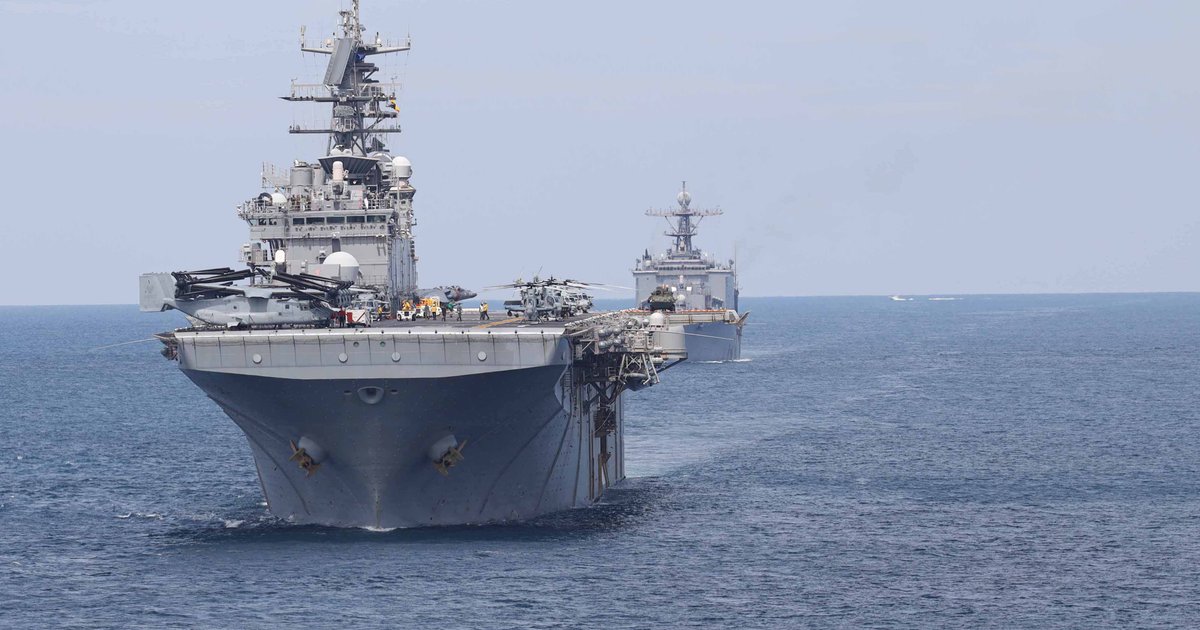
A U.S. military ship, bearing the name Tripoli, is heading towards the Middle East, raising questions about the implications of this name in the current geopolitical context. Tripoli, which has a long history of conflicts and disputes, symbolizes many historical events that have shaped the region.
This move comes at a sensitive time, as tensions in the Middle East are on the rise, and the ship is considered part of the U.S. military strategy in the area. The ship carries the name of the Libyan capital, which has witnessed significant political and military events in recent years, reflecting the United States' interest in the situation in North Africa.
Details of the Event
The ship, which is part of the U.S. fleet, carries a group of troops and military equipment, preparing to undertake multiple missions in the region. This step is believed to be part of enhancing the U.S. military presence to address increasing security challenges, including threats from armed groups and regional conflicts.
Tripoli, which has historically been a center for trade and culture, has also seen internal and external conflicts, making it a point of interest for many global powers. The name itself carries strong connotations, being associated with a history of struggle and the fight for independence and sovereignty.
Background & Context
Historically, Tripoli has been the center of many significant political events, from the Ottoman era to Italian colonialism, and then the Libyan revolution in 2011. All these events have contributed to shaping the Libyan national identity and have impacted international relations in the region.
In recent years, Libya has experienced internal conflicts that have led to the division of the country, making it a topic of many international discussions. The United States, as a superpower, seeks to maintain its interests in the region, which explains its increasing focus on Tripoli.
Impact & Consequences
This move could escalate tensions between regional and international powers, as some countries view the U.S. military presence in the area as a threat to their security. At the same time, this step may enhance the United States' ability to influence political events in Libya and the region at large.
The current situation in the Middle East demands a swift and effective response from major powers, making it crucial to monitor the movements of U.S. military ships and their impact on the security situation in the region.
Regional Significance
This step is seen as an indicator of the continued external interventions in Arab affairs, raising concerns among Arab nations regarding national sovereignty. Such interventions may exacerbate current crises and heighten existing conflicts.
In conclusion, Tripoli remains a historical symbol with profound implications, reflecting the challenges faced by the region amid increasing geopolitical tensions. Arab nations must work to enhance cooperation among themselves to address these challenges.