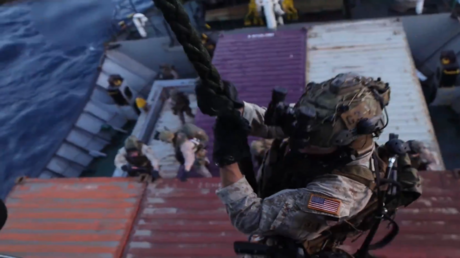
On Tuesday, US Marine Corps forces boarded the commercial vessel 'Blue Star III' in the Arabian Sea, suspecting it of attempting to violate the sanctions imposed on Iran. This operation signifies a new escalation in tensions between the United States and Iran, as Washington seeks to enhance its security measures in the region.
This operation comes at a sensitive time, as concerns grow over Iran's maritime activities, believed to include arms smuggling and the transport of prohibited materials. The US Central Command has confirmed that this operation aims to protect regional security and ensure that sanctions against Tehran are not violated.
Details of the Incident
The boarding operation was conducted after careful surveillance of the vessel, where US forces detected suspicious movements indicating the potential transfer of illegal shipments. The operation was executed with the involvement of drones and warships, reflecting the high readiness of US forces to confront any potential threats.
It is noteworthy that the 'Blue Star III' was en route to an undisclosed destination, which heightened suspicions regarding the nature of its cargo. The ship was detained for a short period before being inspected by US forces.
Background & Context
Historically, relations between the United States and Iran have been marked by increasing tensions, especially following Washington's withdrawal from the nuclear agreement in 2018. Since then, the US has imposed a series of economic sanctions on Iran, significantly impacting its economy and exacerbating conditions in the region.
In recent years, Iranian maritime activities in the Arabian Gulf have increased, with several incidents reported concerning arms smuggling. These activities have prompted the United States to bolster its military presence in the region, further intensifying tensions between the two parties.
Impact & Consequences
The recent operation could lead to greater escalation in confrontations between the United States and Iran, as Tehran may respond to this action with similar measures. Additionally, this escalation could affect maritime traffic in the region, increasing risks to global trade.
Moreover, these events may increase pressure on neighboring countries, which are striving to maintain stability amid these tensions. Any military escalation could also impact global oil prices, reflecting on the global economy as a whole.
Regional Significance
These events are significant for the Arab region, as any escalation between the United States and Iran could affect regional security. Neighboring Arab countries, such as Saudi Arabia and the UAE, are closely monitoring these developments, as any escalation could lead to negative repercussions on their stability.
Furthermore, these events may reopen discussions regarding maritime security in the Gulf, necessitating greater cooperation between Arab nations and the United States to ensure the safety of maritime navigation and protect economic interests in the region.