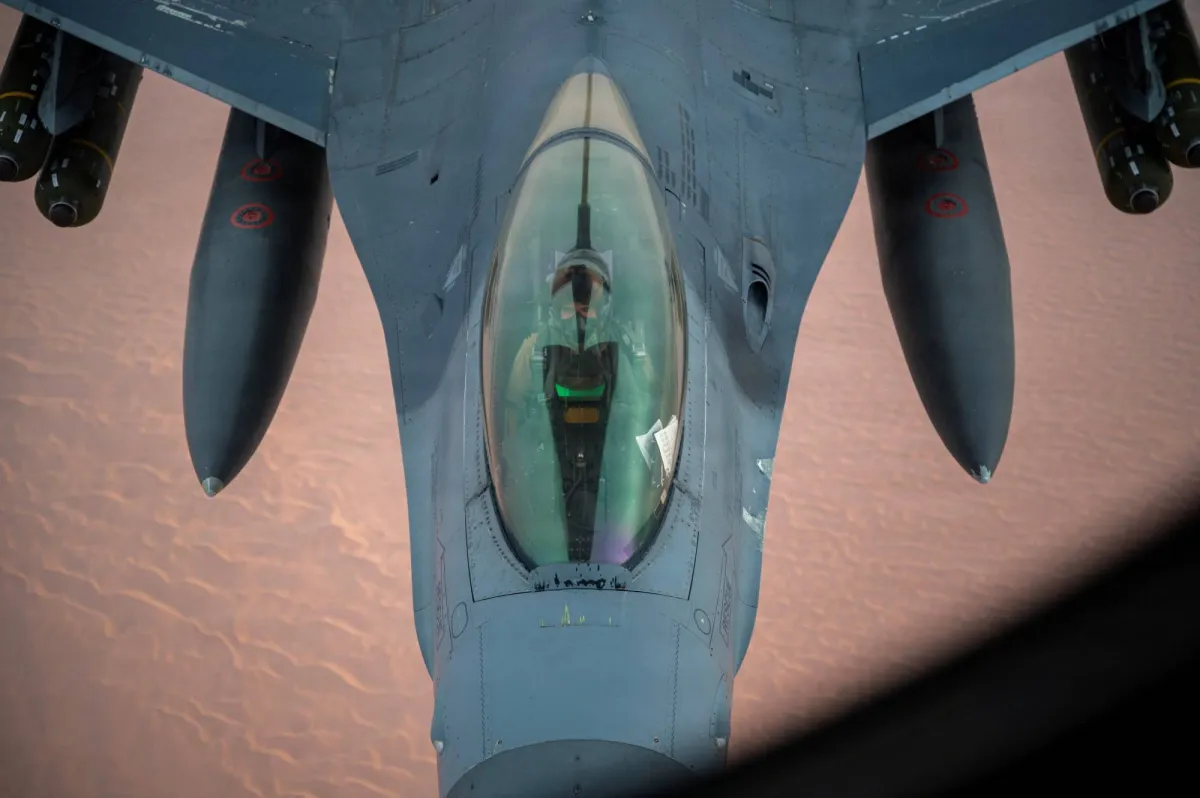
The United States and Iran are engaged in a frantic race to locate one of the American pilots after their plane crashed within Iranian territory, in an incident that is the first of its kind since the war began on February 28. The Iranian armed forces announced that they shot down the aircraft, which was an F-15-I bomber.
In contrast, American media reported that one of the pilots parachuted out and was extracted from Iran in a special operation carried out by special forces in the southwestern part of the country, while the fate of the second pilot remains unknown.
Details of the Incident
After five weeks of war launched by the United States and Israel against Iran, this incident represents a setback for the U.S. Air Force. The situation became more complicated after Iran announced that it had hit another American aircraft, a support plane that later crashed in the Gulf. The New York Times reported that the aircraft went down near the Strait of Hormuz, and its pilot was rescued.
In a swift reaction, the White House revealed that President Donald Trump was informed of the loss of an aircraft in southwestern Iran. In an interview with NBC, Trump confirmed that this incident “does not change anything at all” regarding the possibility of negotiations with Tehran to resolve the conflict affecting the global economy.
Context and Background
These events come at a sensitive time, as tensions between the United States and Iran escalate. Since the beginning of the war, there have been concerns about the escalation of the conflict, especially after the economic and political pressures facing Iran. Tehran has shown its readiness to confront any threats, complicating the situation in the region further.
The crash of the American plane also reflects the challenges faced by U.S. forces in the region, where military operations on Iranian territory are considered complex and dangerous. Military experts have indicated that U.S. special forces always keep units ready to rescue pilots who go down in hostile territories.
Impact and Consequences
This incident could significantly affect relations between the United States and Iran, as it may lead to an escalation of military tensions. The loss of a pilot in a sensitive area like Iran could provoke varied reactions from the involved parties, including U.S. allies in the region.
Moreover, the continuation of military operations in the area could impact regional stability and increase the likelihood of new conflicts erupting. At the same time, Iran may exploit this incident to bolster its internal position, potentially leading to an escalation of nationalistic rhetoric against the United States.
Significance for the Arab Region
These events are particularly significant for Arab countries, as any escalation in the U.S.-Iranian conflict could affect regional security. Arab nations, especially those close to Iran, are closely monitoring the situation, as increasing tensions could lead to economic and security repercussions.
There are also concerns that these events could increase divisions within the region, potentially impacting peace and stability efforts. Under these circumstances, Arab countries must adopt cautious positions to safeguard their interests and security.
In conclusion, developments in this conflict remain of great interest, as their outcomes may determine the future of international relations in the region.