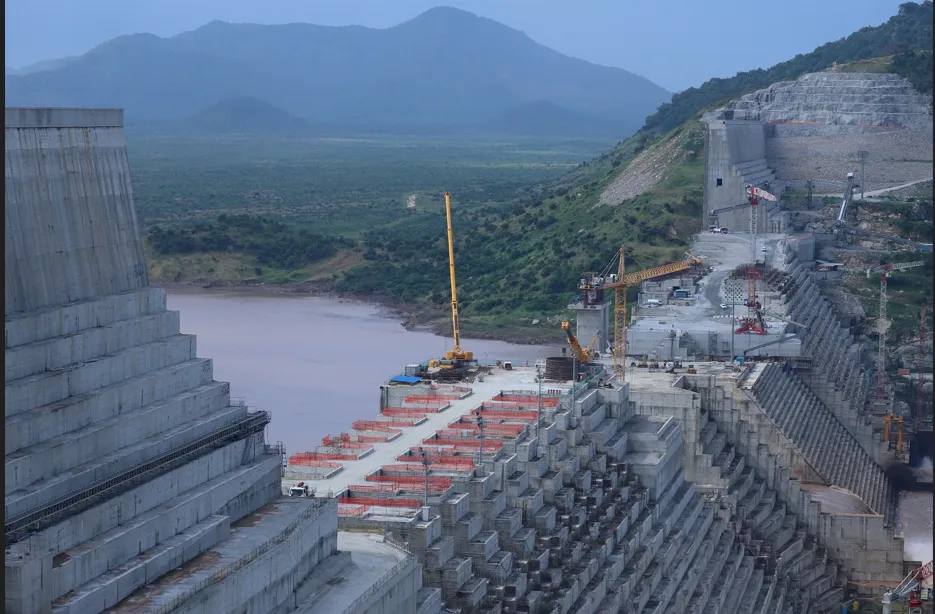
Cairo is anticipating a new American approach to resolve the Ethiopian Grand Renaissance Dam dispute, as an informed Egyptian source has confirmed attempts to revive the Washington document in a modified format. This development comes at a time when negotiations between Egypt and Ethiopia are at a standstill, increasing the significance of this new path.
The source clarified that the new approach is being prepared by the American side and is based on amendments to a previous document that was the subject of negotiations among the three parties: Egypt, Ethiopia, and Sudan, under U.S. sponsorship. It was noted that the U.S. State Department has currently stepped back from the file, which has returned to the Treasury Department, raising questions about Washington's seriousness in resuming mediation.
Details of the Event
In statements made to the Middle East newspaper, the source indicated that the U.S. State Department believed that positions still needed to be clarified, and it had sent an official from the State Department to Egypt following an invitation from former President Donald Trump. However, matters returned to square one. The source confirmed that the U.S. Treasury Department has made significant progress on this file and will be responsible for drafting the new proposals before presenting them to the Trump administration.
This new path builds on what is known as the “Washington Declaration Document,” which was presented by President Trump to the three parties during his previous term. Egypt signed the document, while Sudan withdrew, and Ethiopia did not ratify it, leading to a halt in negotiations at that time. The source emphasized that rephrasing some ideas contained in the document could be a positive step towards reaching a legally binding agreement that guarantees the water rights of all parties involved.
Background & Context
Historically, Washington sponsored negotiations on November 6, 2019, through a meeting hosted by the U.S. Treasury Department, which included the foreign ministers of Egypt, Ethiopia, and Sudan. The joint statement at that time stipulated holding four technical rounds at the level of water ministers, aiming to reach an agreement on the rules for filling and operating the dam by January 15, 2020. However, discussions continued for a longer period without achieving tangible results.
In January 2020, technical and legal teams were tasked with preparing the final text of the agreement, but Ethiopia was absent from the final meeting, leading Egypt to sign the draft agreement in principle. This situation complicated the crisis further, as Ethiopia continued to fill the dam without reaching a final agreement with the downstream countries.
Impact & Consequences
Concerns are growing in Egypt regarding the impact of the Grand Renaissance Dam on its water rights, as the Nile River is considered its main lifeline. The Egyptian Ministry of Irrigation confirmed that the halt in negotiations with Ethiopia resulted from the absence of political will on the Ethiopian side, complicating the crisis further. Meanwhile, Addis Ababa asserts that the dam aims at development and not harm to the downstream countries.
Abbas Sharaki, a professor of geology and water resources at Cairo University, pointed out that the United States is capable of resolving the issue in a short period, and current solutions may be easier than in previous years, as the main disagreements regarding the initial filling years of the dam's reservoir have been resolved.
Regional Significance
The Grand Renaissance Dam crisis is considered one of the vital issues affecting water security in the Arab region. Tensions between Egypt and Ethiopia could lead to political and economic repercussions for Nile Basin countries. Additionally, the resumption of U.S. mediation may open the door to new solutions, but the biggest challenge remains achieving consensus among the concerned parties.
In conclusion, hope rests on the new American path, as Egyptians hope that the proposed ideas will align with their fair position, ensuring their water rights and achieving peace in the region.