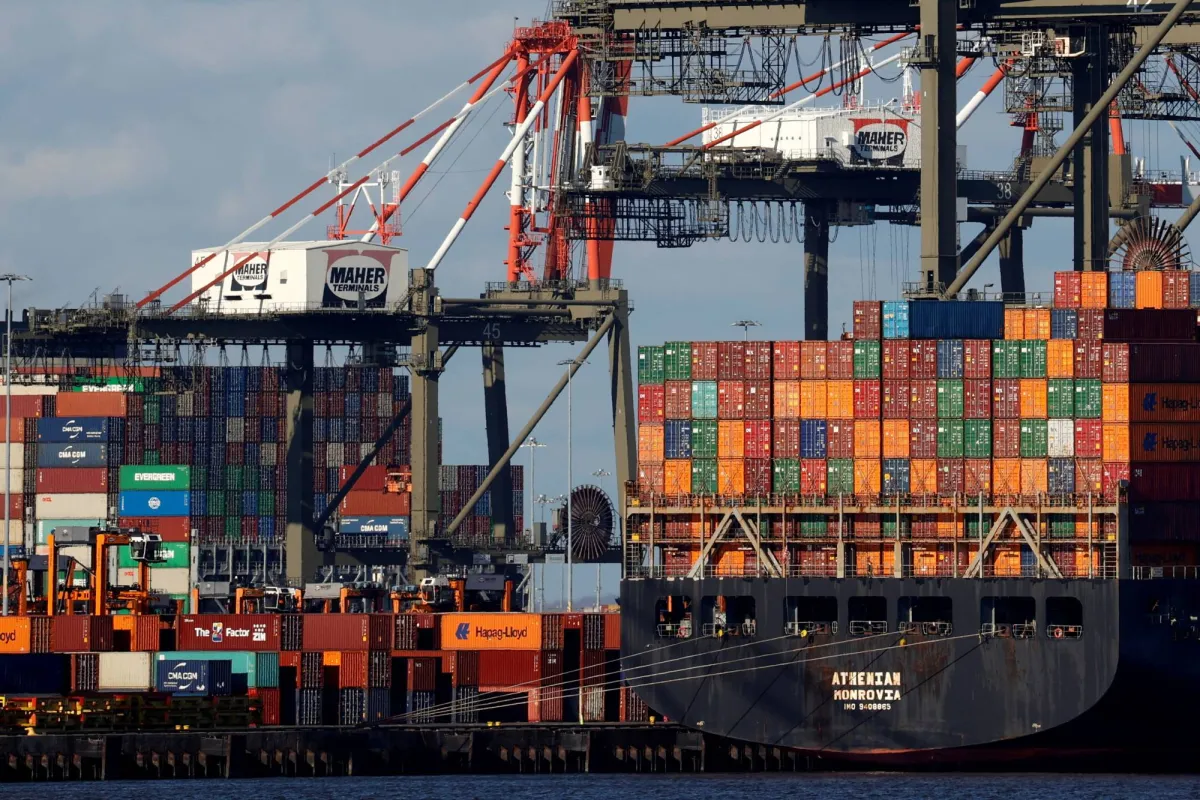
The trade deficit of the United States widened in February, but at a rate lower than analysts' expectations, according to government data released on Thursday. The Department of Commerce reported that the total deficit rose by 4.9% to $57.3 billion, amid increases in both imports and exports.
Despite this, the ongoing debate surrounding the tariff program adopted by former President Donald Trump continues to cast a shadow over trade activity in the world's largest economy. This data comes at a time when the US Supreme Court recently overturned a wide range of tariffs imposed in late February. Since then, Trump has turned to alternative routes to impose a temporary 10% tariff on imports, alongside launching investigations targeting dozens of countries, paving the way for the re-imposition of permanent tariffs.
Details of the Event
According to surveys by Dow Jones Newswires and the Wall Street Journal, the February deficit was slightly lower than expectations, which indicated around $62 billion. In terms of components, US exports rose by 4.2% to $314.8 billion, driven by goods such as non-monetary gold and natural gas. In contrast, imports increased by 4.3% to $372.1 billion, supported by rising imports of products such as computers and semiconductors.
In a related context, new weekly claims for unemployment benefits in the United States have declined, indicating a continued decrease in layoff rates and relative stability in the labor market during March, despite warnings of negative risks stemming from the ongoing war in the Middle East. The US Department of Labor announced on Thursday that initial claims fell by 9,000 claims to 202,000 claims after seasonal adjustment for the week ending March 28, compared to economists' expectations surveyed by Reuters at 212,000 claims.
Context and Background
Claims have ranged from 201,000 to 230,000 claims since the beginning of the year, a range that reflects, according to economists' descriptions, a labor market characterized by low employment and layoff rates. This stagnation is partly attributed to the ongoing uncertainty related to the high tariffs imposed by former President Donald Trump on imports. The average job growth in the non-farm private sector has been around 18,000 jobs per month during the three months ending in February, a relatively weak rate.
Economists believe that the shrinking labor supply, resulting from tightened immigration policies during Trump's administration, acts as a brake on employment growth. Additionally, the ongoing war between the United States, Israel, and Iran, which has entered its first month, has added further uncertainty for businesses. Trump pledged on Wednesday to intensify strikes on Iran, heightening concerns about the conflict's repercussions.
Consequences and Impact
Despite expectations for a rebound in job growth of about 60,000 jobs in March, according to a Reuters survey, some economists warned that this improvement may be temporary, given the war's repercussions that have driven global oil prices up by more than 50%. The average retail price of gasoline in the United States has surpassed $4 per gallon this week, for the first time in over three years.
Non-farm jobs fell by 92,000 jobs in February, partly affected by strikes in the healthcare sector and adverse weather conditions. The unemployment rate is expected to stabilize at 4.4% in the coming period. The Bureau of Labor Statistics is set to release the employment report for March on Friday, noting that Good Friday is not a public holiday in the United States.
Impact on the Arab Region
The Arab region is directly affected by economic developments in the United States, as any decline in US growth may negatively impact the economies of Arab countries that heavily rely on exports to the US market. Additionally, rising oil prices due to conflicts in the region may contribute to increasing inflationary pressures in Arab countries, necessitating urgent economic measures.
In conclusion, the US economic situation remains under scrutiny, as concerns grow over the ongoing war's effects on economic stability, raising questions about the future of trade and jobs in the coming months.