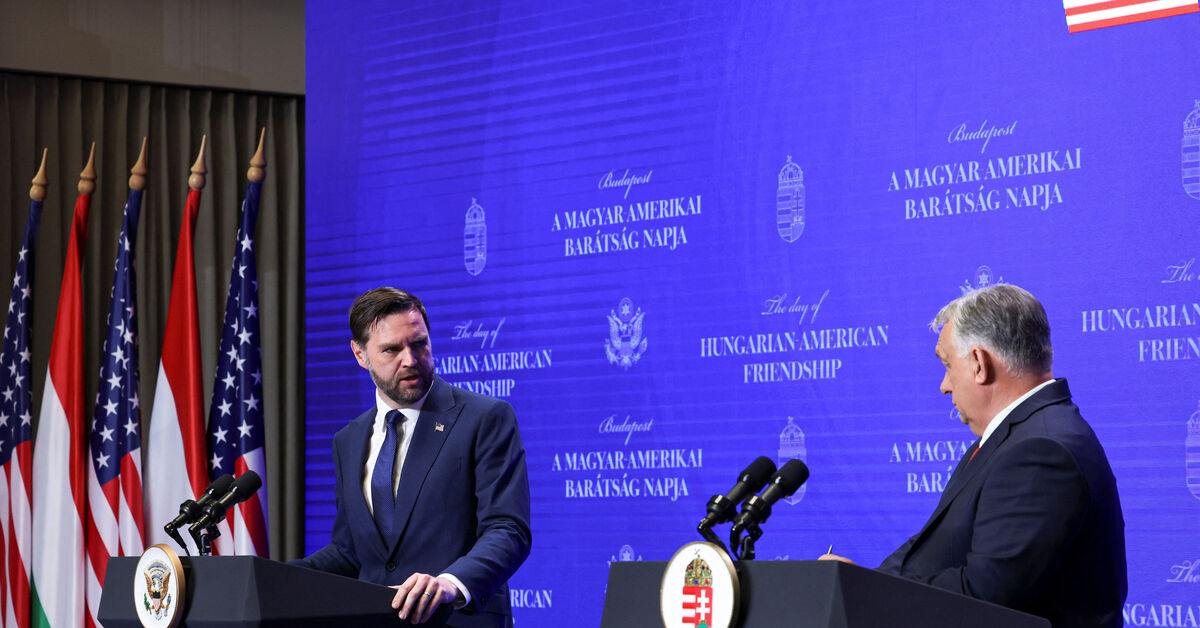
During a joint press conference in the Hungarian capital, Budapest, U.S. Vice President JD Vance strongly criticized what he described as the 'shameful' interference by the European Union in the Hungarian elections, emphasizing his country's support for Prime Minister Viktor Orbán, who is considered an ally of former President Donald Trump in defending Western values.
Vance's remarks came at a sensitive time as Hungary approaches elections that could impact the future of its relations with the EU, which has criticized Orbán for his controversial policies.
Details of the Event
During the conference, Vance pointed out that foreign interventions in the internal affairs of nations constitute a violation of national sovereignty. He argued that the EU's stance reflects a lack of respect for the popular will in Hungary, raising questions about the EU's intentions in supporting democracy.
Vance further added that Orbán represents a model for defending Western values in the face of global challenges, commending his efforts to preserve Hungary's cultural identity. These statements come at a time when pressure on Orbán from Brussels is increasing due to his policies regarding immigration and press freedom.
Background & Context
Historically, Hungary has experienced escalating tensions with the EU since Orbán came to power in 2010. His government has been accused of undermining democracy and human rights. These policies have led to sanctions imposed by the EU, intensifying disputes between the two sides.
In recent years, Hungary has become a focal point in discussions about European identity and national sovereignty, as Orbán seeks to bolster his position as a defender of traditional values against what he perceives as threats from immigration and multiculturalism.
Impact & Consequences
Vance's statements serve as a clear endorsement of Orbán in the face of European pressures, which may encourage other EU member states to adopt similar stances. This support could strengthen Orbán's position in the upcoming elections and increase the likelihood of his controversial policies continuing.
On the other hand, this American support may exacerbate tensions between Hungary and the EU, undermining Brussels' ability to enforce its policies on member states. Additionally, this situation could raise concerns among other countries in the region facing similar challenges.
Regional Significance
In terms of international relations, these developments may influence how Arab countries deal with issues of sovereignty and democracy. The American support for Orbán could be seen as a model for some Arab regimes seeking to consolidate their power against external pressures.
Moreover, these events could open the door for new discussions on managing relations between Arab countries and the EU, especially in light of shared challenges related to immigration and security.
In light of these developments, the question remains about how these dynamics will affect the future of relations between Hungary and the EU, and whether they will influence domestic policies in Arab countries.