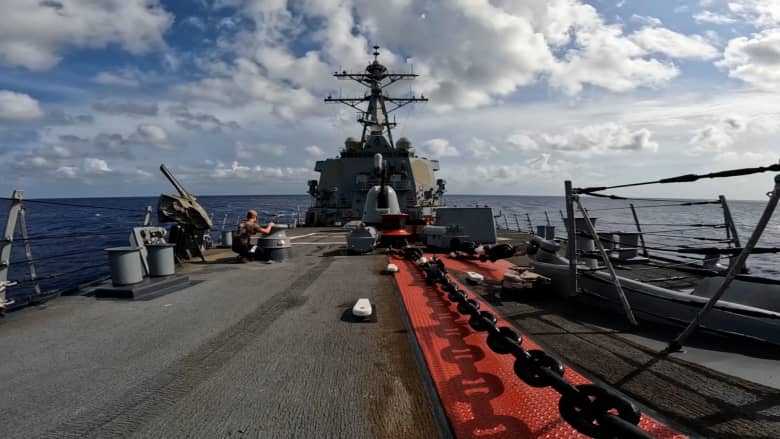
Satellite images have detected a U.S. warship known as the USS Tripoli, carrying a unit of U.S. Marines on its way to the Middle East. The ship made a stop at Diego Garcia, which is considered a strategic military base for the United States, located in the heart of the Indian Ocean.
This move comes at a sensitive time as the region experiences increasing tensions, with U.S. military maneuvers raising concerns among regional countries. The presence of the ship in this area serves as a clear message from Washington regarding its readiness to bolster its military presence in the Middle East.
Details of the Event
Images captured by satellites show that the USS Tripoli has stopped at Diego Garcia, a naval base known for its role in U.S. military operations. The ship, considered one of the latest warships, carries a unit of Marines, reflecting the United States' intention to enhance its military capabilities in the region.
This step is part of a broader strategy aimed at securing U.S. interests in the Middle East, especially amid increasing tensions with Iran and ongoing conflicts in Syria and Yemen. This military maneuver also demonstrates the U.S. commitment to supporting its allies in the region, such as Saudi Arabia and Israel.
Background & Context
Historically, Diego Garcia has been a center for U.S. military operations since the 1970s, serving as a launch point for operations in the Middle East. In recent years, the importance of this base has increased amid rising regional tensions, making it a strategic point for the United States.
These military movements come at a time when the Middle East is undergoing radical changes, with escalating security challenges, including threats from armed groups and regional conflicts. In this context, U.S. military actions are seen as part of a broader strategy aimed at maintaining stability in the region.
Impact & Consequences
These military maneuvers could escalate tensions in the region, as some countries may interpret them as provocations. This move is likely to affect relations between the United States and regional countries, particularly those concerned about the increasing U.S. military presence.
Moreover, these actions may provoke reactions from armed groups in the region, increasing the likelihood of escalation. If the United States continues to strengthen its military presence, we may witness changes in the security dynamics of the Middle East.
Regional Significance
For Arab countries, the presence of U.S. warships in the region is seen as an indicator of Washington's commitment to the security of its allies, but at the same time, it may lead to increased tensions with countries opposing this presence. For instance, Iran may perceive these moves as targeting it, potentially escalating conflict in the region.
Ultimately, this event highlights the importance of monitoring military developments in the region, as any move by the United States can significantly impact security and stability in the Middle East.