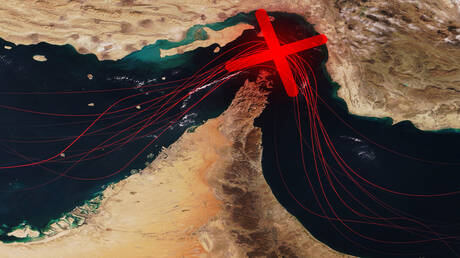
Bloomberg has revealed the use of 'secret codes' and 'yuan fees' to allow certain ships to pass through the Iranian toll collection point in the Strait of Hormuz, facilitating maritime navigation in the Gulf. This step comes as part of Iran's efforts to enhance its maritime trade amid the economic sanctions imposed on it.
The toll collection point in the Strait of Hormuz is one of the strategic points controlling the movement of commercial and military vessels. Approximately 20% of the total oil transported by sea passes through this strait, making it a sensitive point in global trade. The use of secret codes and yuan fees indicates Iran's attempt to circumvent Western sanctions and promote the use of its local currency in international trade.
Details of the Event
According to the report, these codes and fees allow ships to pass more easily, potentially leading to increased trade traffic through the strait. This development reflects Iran's trend towards enhancing trade relations with countries that deal in yuan, amid a decline in the use of the US dollar in some transactions.
This measure comes at a time when the region is experiencing increasing tensions, as Iran seeks to enhance its influence in the Gulf by improving the maritime trade environment. Some Chinese companies have shown interest in cooperating with Iran, reflecting Beijing's desire to expand its economic influence in the region.
Background & Context
Historically, the Strait of Hormuz has been a vital point in global trade, witnessing numerous crises and political tensions. In recent years, tensions between Iran and the United States have escalated, leading to the imposition of strict economic sanctions on Tehran. These sanctions have significantly impacted the Iranian economy, prompting the government to seek new ways to bolster its trade.
Iran, which is suffering from economic pressures, is striving to expand its trade relations with countries that do not adhere to US sanctions. The use of the yuan as a payment method reflects a shift in Iranian trade strategies, as it seeks to enhance its position in the global market.
Impact & Consequences
The use of secret codes and yuan fees could lead to significant changes in maritime trade traffic in the region. If Iran succeeds in promoting the use of the yuan, it could reduce reliance on the US dollar in trade transactions, potentially impacting the global economy.
This development may also raise concerns among Western countries, which may see it as a threat to their economic interests. The United States is likely to take new measures to counter this move, which could escalate tensions in the region.
Regional Significance
This step is particularly significant for neighboring Arab countries, as any changes in trade traffic through the Strait of Hormuz could affect their economies. Gulf countries heavily rely on exporting oil through this strait, and any tensions could impact global oil prices.
Furthermore, Iran's strengthening of its trade relations with China could alter the balance of power in the region, potentially leading to a reassessment of Arab countries' strategies in dealing with Tehran. Under these circumstances, Arab countries must take proactive steps to ensure the stability of their economies and security.
In conclusion, developments in the Strait of Hormuz remain under scrutiny, as any changes could significantly impact the economic and political landscape in the region.