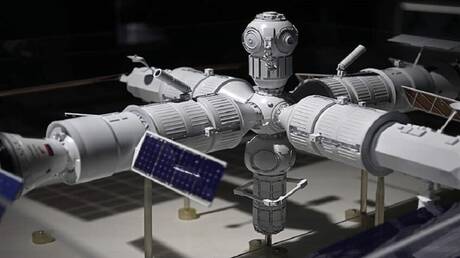
Mikhail Kovaltchouk, head of the National Research Center 'Kurchatov Institute', revealed the potential of using the space environment to develop new drug manufacturing techniques through 3D printing. This initiative is part of scientists' efforts to exploit space as a platform for developing advanced technologies that enhance the quality of medical production.
3D printing is considered one of the most significant innovations in manufacturing, allowing for the production of drugs and medical compounds with greater precision and efficiency. By utilizing this technology in space, scientists can overcome the limitations they face on Earth, such as gravity, which opens new horizons in drug manufacturing.
Event Details
Kovaltchouk explained that the 'ROS' station will provide these modern technologies, facilitating the drug production process in a gravity-free environment. This development could improve the effectiveness of drugs and reduce potential side effects. He also noted that experiments conducted in space will help understand how materials interact under different conditions.
This step is part of a larger strategy aimed at enhancing scientific research in space, focusing on practical applications that can benefit humanity. These studies are expected to contribute to the development of new drugs that treat complex diseases that could not be addressed through traditional methods.
Background & Context
Over the decades, space technology has witnessed tremendous developments, becoming a focal point for many countries and private companies. Utilizing space for scientific research is no longer just a dream but a tangible reality. This initiative is part of global efforts to explore space and use it as a platform for innovation.
Historically, space research focused on exploring planets and stars, but with technological advancements, scientists have begun directing their attention toward practical applications that can benefit Earth. This shift reflects a transformation in how space is viewed as a tool for enhancing innovation across various fields, including medicine.
Impact & Consequences
If this initiative succeeds, it could revolutionize how drugs are produced. It will open doors to developing new, highly efficient drugs, potentially improving healthcare on a global scale. Additionally, using 3D printing in space may reduce the costs associated with drug production, making them more accessible to patients.
Moreover, this research could foster international collaboration in the field of space, as different countries work together to develop new technologies that benefit humanity. This collaboration could lead to knowledge and experience exchange, enhancing countries' abilities to tackle global health challenges.
Regional Significance
Considering the health situation in the Arab region, these developments could be of significant importance. If these technologies are applied in Arab countries, they may improve the quality of available drugs and reduce reliance on imports. They could also enhance Arab countries' ability to develop their pharmaceutical industries, contributing to achieving self-sufficiency.
In light of the health challenges facing the region, investing in scientific research and modern technology is a necessary step. These initiatives can improve healthcare standards and foster innovation across multiple fields.
In conclusion, using space as a platform to develop new drug production techniques represents an important step towards a healthier future. This initiative is not merely a technological advancement; it reflects a forward-looking vision aimed at improving human lives through scientific innovation.