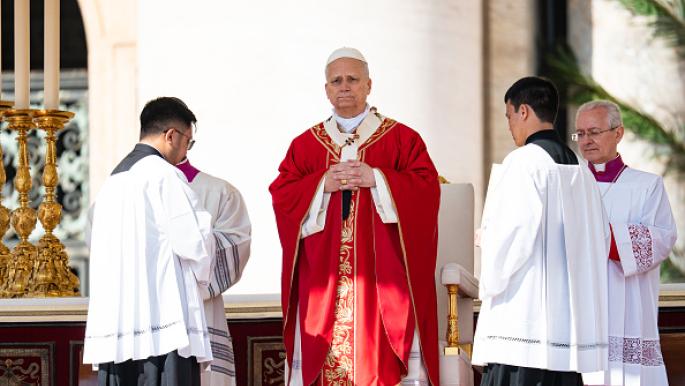
Pope Leo XIV has delivered a scathing critique of leaders who justify wars through religion, emphasizing that the Lord does not accept their prayers. These statements come at a critical juncture as the war in Iran enters its second month, exacerbating the humanitarian and political crises in the region.
In his address, the Pope called for an immediate halt to violence, asserting that using religion as a pretext for war cannot be justified in any form. His words reflect a deep concern over the escalation of armed conflicts and their impact on vulnerable communities, particularly in the Middle East.
Details of the Event
The Pope's remarks come at a time when the conflict in Iran is intensifying, with the war now in its second month showing no signs of abating. The past months have witnessed a surge in violence, leading to a worsening humanitarian situation and an increase in civilian casualties.
The Pope also pointed out that the prayers offered by leaders who wage wars do not reflect the true spirit of religion but rather distort it. These statements arise at a time when the use of religion as a tool to justify military actions is on the rise, raising questions about the morality and legitimacy behind such actions.
Background & Context
Historically, wars have often been used as a means to achieve political and economic objectives, frequently justified through religious rhetoric. In many conflicts, religious sentiments have been exploited to mobilize crowds and support military operations, exacerbating humanitarian crises.
In the case of Iran, the current war is part of a broader struggle involving several regional and international powers. These conflicts have affected stability in the region, leading to worsening economic and social conditions.
Impact & Consequences
The repercussions of the current war extend beyond Iran, impacting regional security and heightening tensions among neighboring countries. The continuation of the conflict could lead to an influx of refugees, placing additional pressure on host countries.
Moreover, using religion as a means to justify wars may lead to greater divisions within communities and increase feelings of hatred and intolerance. These dynamics could further exacerbate humanitarian crises and complicate efforts to achieve peace and stability in the region.
Regional Significance
The Pope's statements hold particular significance for Arab countries, many of which are grappling with internal and external conflicts. The use of religion as a tool to justify wars could worsen situations in these nations, complicating peace efforts.
The Pope's call for an end to violence may open the door for broader dialogue among conflicting parties, potentially contributing to peaceful settlements. Given the current circumstances, such calls are essential for achieving stability in the region.
In conclusion, the Vatican Pope's statements reflect a profound concern over the use of religion as a pretext for wars and call for an end to violence. This message carries great importance in light of current conditions, as collective efforts are needed to achieve peace and stability in the region.