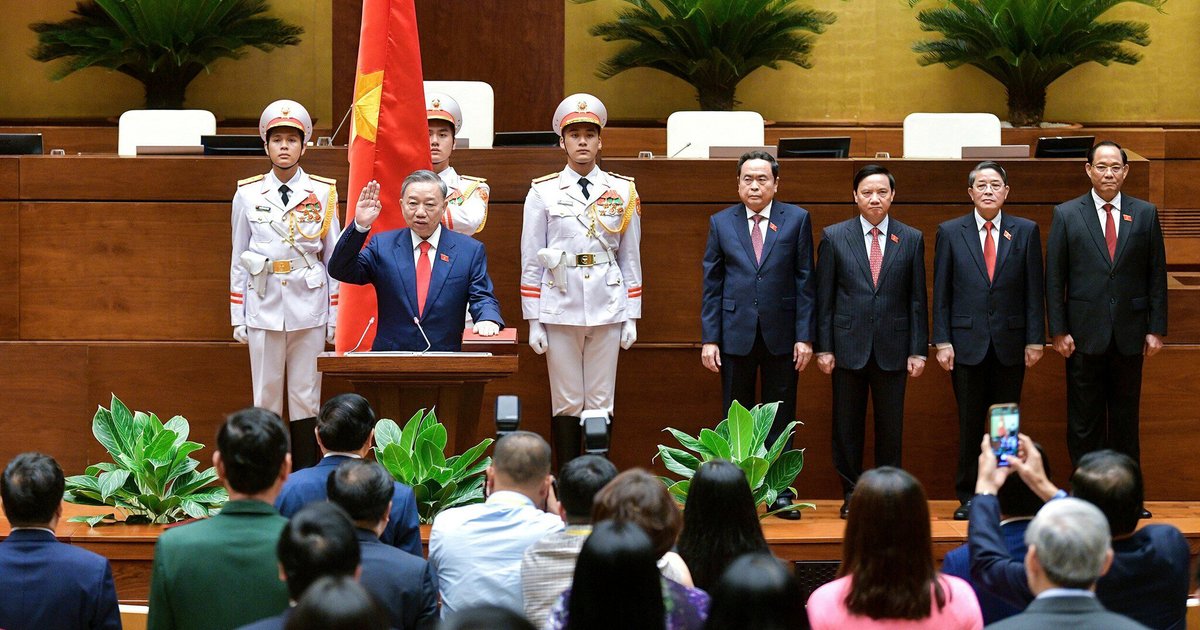
In a historic move, the Vietnamese parliament unanimously elected To Lam, General Secretary of the Communist Party, as the country's president for a new five-year term on Tuesday. This election reflects the significant trust Lam has within Vietnamese political circles, coming shortly after he assumed office in 2024.
To Lam took on the presidency at a critical time, aiming to enhance economic and social development in the country. Lam was sworn in at the National Assembly, marking the beginning of a new leadership period coinciding with ambitious goals aimed at transforming Vietnam into a high-income nation by 2045.
Details of the Election
To Lam's second presidential term is seen as a continuation of the policies he initiated during his previous tenure. He became the General Secretary of the Communist Party following the death of his predecessor Nguyen Phu Trong in 2024, which added to his responsibilities as one of the country's leading figures. At 69 years old, Lam has a long history in Vietnamese politics, having held several high-ranking positions, including Minister of Public Security.
During his previous presidency, Lam managed numerous key policies aimed at boosting economic growth and improving living standards in the country. Local reports indicate that Lam launched several administrative reforms aimed at enhancing government efficiency and reducing bureaucracy.
Background & Context
Historically, Vietnam has undergone significant transformations since the start of economic reforms in the 1980s, leading to remarkable economic growth. However, the country still faces numerous challenges, including corruption and social discrimination. As the leader of the Communist Party, To Lam seeks to address these issues through the implementation of comprehensive reform policies.
Under his leadership, long-term goals have been set, such as achieving Vietnam's status as a high-middle-income country by 2030. These goals reflect the Vietnamese government's vision for sustainable development and the enhancement of international partnerships.
Impact & Consequences
The election of To Lam as president is a significant step in reinforcing political stability in Vietnam. It is expected that the economic and social policies he initiated will continue, potentially leading to increased foreign investments and improved trade relations with other countries.
Moreover, the continuity of leadership under To Lam may strengthen Vietnam's ability to face global challenges, including climate change and economic crises. These policies are anticipated to contribute to enhancing Vietnam's position as a leading nation in Southeast Asia.
Regional Significance
Vietnam is one of the countries striving to strengthen its economic ties with Arab nations. To Lam's new policy could open new avenues for cooperation between Vietnam and Arab countries, particularly in trade and investment.
Furthermore, Vietnam's political and economic stability could serve as a model for Arab nations seeking to achieve sustainable development and enhance international partnerships.
The election of To Lam for a new term represents a turning point in Vietnam's history, reflecting the government's commitment to achieving ambitious goals in development and prosperity. Vietnam is expected to continue enhancing its position on the international stage, benefiting the Arab region through increased cooperation and trade exchange.