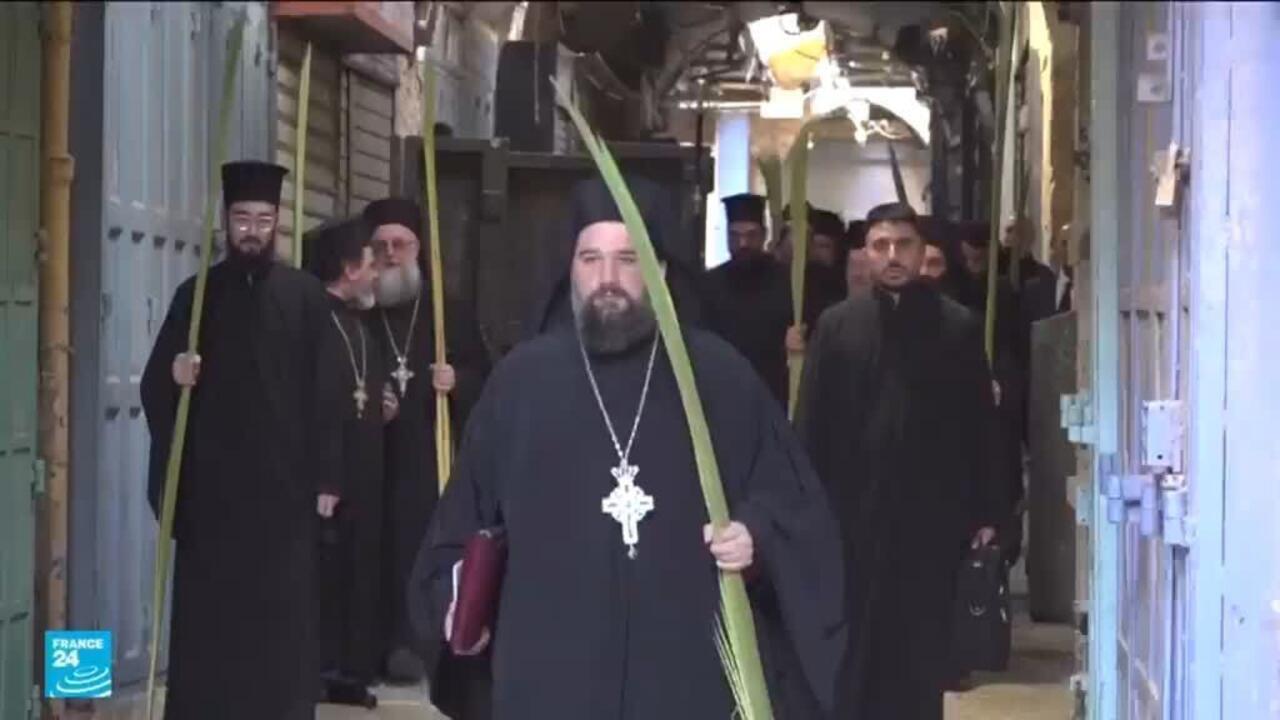
Amid heightened security tensions, Palm Sunday celebrations in East Jerusalem were marked by a notable absence of joy. Movement restrictions prevented worshippers from reaching the tomb of Christ at the Church of the Holy Sepulchre, leading to an atmosphere devoid of the usual festive spirit associated with this holiday.
In the alleys of the Old City, where the Church of the Holy Sepulchre serves as a significant spiritual center for Christians, a war-like atmosphere overshadowed the scene. Although believers looked forward to celebrating Easter, political and security tensions thwarted their plans, negatively impacting the morale of the attendees.
Event Details
This year's Palm Sunday celebrations coincided with escalating tensions in the Palestinian territories, where East Jerusalem witnessed heightened security measures. Movement restrictions made it difficult for many believers to access holy sites. Some attendees noted that this atmosphere reflects the daily struggles faced by Palestinians in their lives.
Despite these challenges, some attempted to celebrate the holiday in their surroundings, with a few believers gathering in local churches. However, attendance was significantly lower compared to previous years, highlighting the substantial impact of the security situation on spiritual and social life.
Background & Context
Historically, Palm Sunday is considered one of the important Christian holidays, celebrated a week before Easter. This holiday commemorates Christ's entry into Jerusalem, an event celebrated with great joy worldwide. However, in recent years, celebrations in Jerusalem have increasingly been affected by political and security tensions.
These celebrations coincide with the escalating Israeli-Palestinian conflict, where Palestinians face restrictions on their movement and freedom of worship. This reality reflects the challenges faced by Christian communities in the region, who strive to maintain their traditions amidst difficult circumstances.
Impact & Consequences
The impact of these conditions extends beyond the celebrations, affecting the daily lives of Christians in the Palestinian territories. With increasing restrictions, the Christian community faces challenges in preserving its identity and culture. The absence of joy in the celebrations may lead to feelings of frustration and hopelessness among younger generations.
On the other hand, these conditions may affect relations between different communities in the region. Tensions could exacerbate divisions, making it difficult to build bridges of understanding and peaceful coexistence between Palestinians and Israelis.
Regional Significance
The situation in Jerusalem serves as an indicator of broader tensions in the Arab region. Ongoing conflicts affect the stability of neighboring countries, making it essential to seek peaceful solutions to the conflict. Additionally, events in Jerusalem raise widespread concern among Arab nations, which closely monitor the developments.
Ultimately, Palm Sunday celebrations in Jerusalem remain a symbol of hope and resilience, as believers strive to uphold their traditions in challenging circumstances. However, the current situation necessitates greater international efforts to support peace and stability in the region.