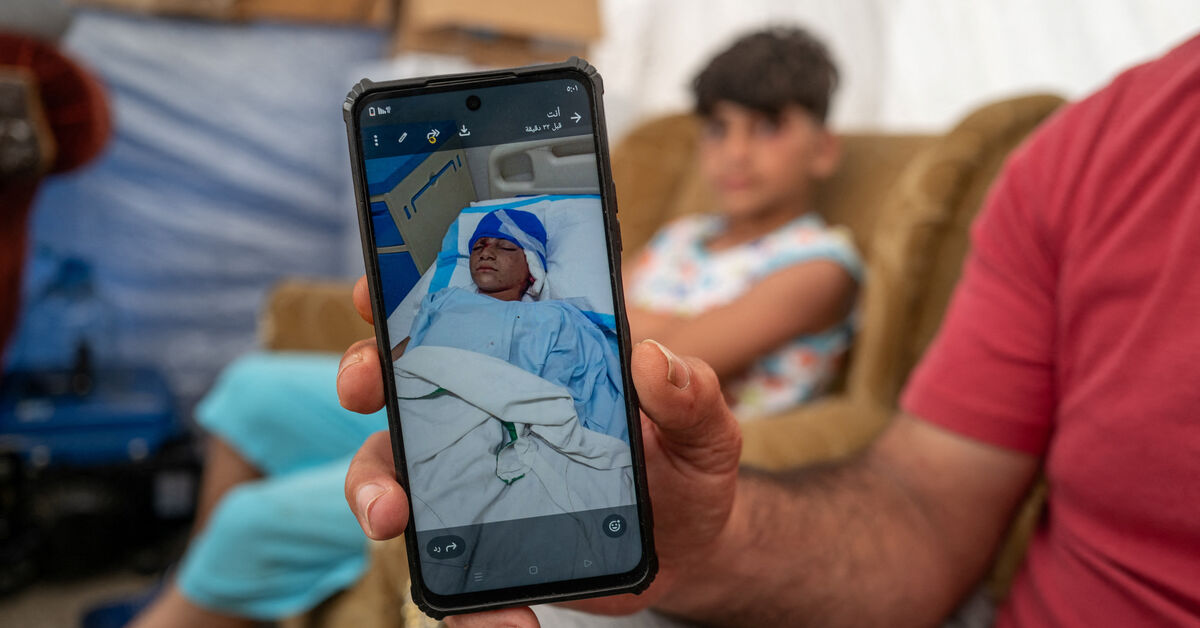
Nearly two months after the outbreak of war, Rabi Khreis, a father of seven, finds it difficult to recognize his new life. He used to secure a living through his car workshop in southern Lebanon, but now he lives in a tent in the capital Beirut, struggling for survival.
In the early hours of March 2, the Khreis family fled their hometown in Khiam after learning that the armed group Hezbollah had fired at Israel, escalating the conflict into a full-blown war.
Living Conditions of the Khreis Family
The Khreis family resides in a small tent, facing harsh conditions. Rabi states that he worked hard to provide a decent life for his family, but the war has changed everything. They lost their home and became displaced, which has intensified their daily suffering.
Reports indicate that many other families are experiencing the same situation, as the number of displaced individuals in Beirut continues to rise with the ongoing conflict. These families suffer from shortages of food and water, threatening their lives on a daily basis.
Background & Context
Historically, Lebanon has witnessed numerous armed conflicts, but the current war comes at a particularly sensitive time. Since 1975, Lebanon has endured multiple wars and conflicts, affecting the country's stability and leading to a deterioration of economic and social conditions.
Khiam is one of the areas significantly impacted by the conflict, known for being a quiet region before the war erupted. However, recent events have turned the situation upside down, forcing many to flee in search of safety.
Impact & Consequences
Reports confirm that the current conflict has far-reaching implications for Lebanon and the broader region. As the number of displaced individuals increases, humanitarian crises are expected to worsen, putting additional pressure on the Lebanese government and humanitarian organizations.
The conflict also affects relations between Lebanon and its neighbors, with rising concerns about a larger escalation that could lead to external interventions, threatening regional stability.
Regional Significance
The situation in Lebanon serves as a mirror reflecting the challenges faced by many Arab countries. Humanitarian crises and armed conflicts are not new to the region, but the situation in Lebanon highlights the urgent need for regional and international cooperation to resolve these crises.
Ultimately, the Khreis family remains a living example of the suffering experienced by many families in Lebanon, calling for urgent action from the international community to assist them and provide the necessary support.