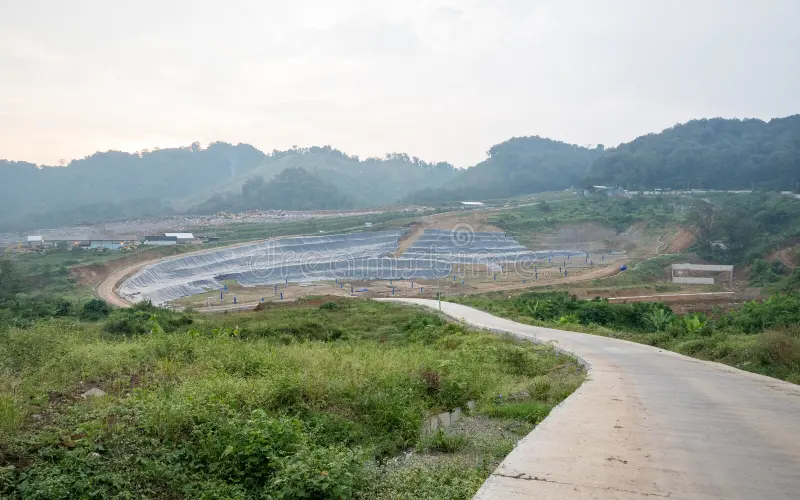
Teddy Rosmawan, a member of the West Java Environmental Committee, has warned that the capacity of the Sarimukti waste processing site, located in West Bandung Regency, is nearing its limit, with less than a year left to accommodate waste. These warnings come at a critical time as the site is under increasing pressure on its capacity, threatening to trigger a significant waste crisis in the region.
Speaking in Bandung, Rosmawan confirmed that the fifth region, which serves as the last disposal point for waste, has already exceeded its maximum limits. He noted that reports and monitoring indicate that the site is close to being full, necessitating urgent measures.
Event Details
The Sarimukti site is considered one of the most important waste processing facilities in West Java, receiving large quantities of waste from surrounding areas. However, the TPPAS Legok Nangka project, which is supposed to serve as an alternative to the Sarimukti site, will not be completed until 2029, creating a potential gap of up to four years.
This situation poses a significant risk, as failing to take immediate action could exacerbate the waste crisis, potentially turning it into an environmental emergency in the region. Rosmawan has called on the local government to take concrete steps, including enhancing the waste sorting system at the source.
Background & Context
Historically, Indonesia has faced significant challenges in waste management, being one of the world's largest producers of plastic waste. In recent years, the pressure on waste processing facilities has increased due to rapid population growth and urban expansion, worsening the problem.
Studies show that Indonesia produces approximately 64 million tons of waste annually, placing immense pressure on the existing infrastructure. While the government seeks to improve waste management, challenges remain, especially in urban areas like Bandung.
Impact & Consequences
If immediate action is not taken, the situation at Sarimukti could lead to outbreaks of diseases and foul odors, negatively affecting public health and quality of life. The accumulation of waste may also result in water and soil pollution, posing a long-term environmental threat.
It is crucial for the local government to collaborate with civil society to raise awareness about the importance of waste sorting and recycling, as these efforts can help alleviate pressure on waste processing sites.
Regional Significance
The waste crisis in Indonesia serves as a cautionary tale for Arab countries facing similar challenges in waste management. Many Arab nations suffer from inadequate waste processing infrastructure, signaling the potential for similar crises. Therefore, it is essential for Arab countries to adopt effective waste management strategies, including investment in new technologies and enhancing environmental awareness.
In conclusion, waste management must be a top priority for governments worldwide, including in Arab nations, to ensure a healthy and sustainable environment for future generations.